Blog

  • What Is Golf Handicap and How You Can Calculate It

    What Is Golf Handicap and How You Can Calculate It

    A golf handicap is a numerical measure that represents a golfer’s potential playing ability based on the tees played for a given course. It’s a crucial element in the game of golf, allowing players of varying skill levels to compete on a level playing field.

    Essentially, a handicap system makes the game fair and competitive by adjusting each player’s score to reflect their ability, enabling golfers with different levels of experience and skill to compete against each other in a balanced manner.

    Understanding Golf Handicap

    The golf handicap is designed to reflect a golfer’s potential ability by taking into account their past performance, particularly their best scores. It’s a dynamic figure that can change with every round played, intended to provide an equitable basis for competition.

    Historically, the concept of a golf handicap dates back to the 20th century, evolving significantly over the years. The system was standardized to ensure consistency across different regions and golf courses.

    The introduction of the World Handicap System (WHS) in 2020 marked a significant milestone, unifying six different handicap systems into a single global standard, making it easier for golfers to play and compete anywhere in the world.

    How to Calculate Your Golf Handicap

    Calculating a golf handicap under the World Handicap System (WHS) involves several key components:

    • Handicap Index: A measure of a player’s demonstrated ability calculated against the Slope Rating of a golf course of standard playing difficulty.
    • Course Rating: Indicates the difficulty of a golf course for a scratch golfer under normal course and weather conditions.
    • Slope Rating: Measures the relative difficulty of a course for bogey golfers compared to scratch golfers.

    To calculate your Handicap Index under the WHS, you would start by taking a minimum of your best 8 scores from the most recent 20 rounds.

    Calculate Golf Handicap

    Then, adjust these scores based on the difficulty of the courses played, using the Course and Slope Ratings. This adjusted figure is then averaged to produce your Handicap Index.

    Here’s a simplified step-by-step guide to give you an idea of the calculation process:

    • Record your scores: Keep track of your scores from at least 20 rounds.
    • Adjust for course difficulty: Use the Course and Slope Ratings to adjust your scores.
    • Select your best scores: Choose the 8 best adjusted scores.
    • Calculate the average: Find the average of these scores.
    • Apply the handicap formula: The average is then multiplied by a predetermined factor (usually 0.96) to calculate your Handicap Index.

    This formula and process have been designed to be fair and equitable, allowing golfers of all levels to gauge their improvement over time and compete on an even footing, regardless of the course.

    High Handicappers

    Definition and Range: High handicappers are golfers with a higher handicap, typically indicating that they are less experienced or skilled. In the golfing community, high handicappers often have a handicap index of 20 and above. This range signifies that, on average, these golfers shoot 20 strokes over par or more.

    Challenges and Tips for Improvement: High handicappers typically struggle with consistency, distance, and accuracy. To improve, focusing on fundamentals like grip, stance, and swing mechanics is crucial.

    Taking lessons from a golf professional, practicing regularly, particularly on weak areas, and playing with better golfers to learn from their techniques can also be beneficial. Additionally, using equipment suited to their skill level can help in making the game more enjoyable and reducing scores.

    Drivers for Beginners and High Handicappers

    Importance of the Right Driver: For beginners and high handicappers, selecting the right driver is crucial for game improvement. The correct driver can help in achieving more distance and accuracy off the tee, making the game more enjoyable and potentially lowering scores.

    Features to Look For:

    • Forgiveness: Drivers with a large sweet spot can reduce the impact of off-center hits, making them more forgiving.
    • Adjustability: Some drivers offer adjustable features like loft and lie angles, as well as weights that can be moved to manage ball flight and biases.

    Recommended Drivers:

    Drivers that are often recommended for beginners and high handicappers include models known for their forgiveness and adjustability.

    While specific models and brands continuously evolve, looking for the latest drivers from reputable brands with these features is advisable. Brands like TaylorMade, Callaway, and Ping often design drivers with high handicappers in mind.

    Wrapping Up

    Understanding and calculating your golf handicap is a pivotal part of the game that aids in personal improvement and ensures fair competition. It provides a benchmark for tracking progress and setting realistic goals.

    For high handicappers and beginners, actively using the handicap system to gauge improvements while selecting equipment that complements their skill level can significantly enhance their golfing experience.

    Encouragement, patience, and consistent practice, coupled with the right tools and knowledge, pave the way for continuous improvement and enjoyment of the game.

  • How to Hit a Driver as a Complete Beginner Golfer

    How to Hit a Driver as a Complete Beginner Golfer

    Embarking on the journey of golfing, especially for beginners, is filled with both excitement and challenges. One of the most thrilling aspects for many is learning to hit the driver, a club designed for distance and power.

    However, mastering the driver is also one of the more daunting tasks for newcomers. The ability to drive the ball effectively is crucial for game improvement, setting the tone for each hole and potentially lowering your score. Success with the driver can boost confidence and significantly enhance the golfing experience.

    Understanding the Driver

    The driver holds a unique place in a golfer’s bag. It’s typically the largest club, with the biggest head and the longest shaft, designed to hit the ball the furthest.

    Unlike other clubs meant for precision or getting out of tricky situations, the driver’s main purpose is to achieve maximum distance and speed, setting up a favorable position on the fairway.

    Fundamentals of the Golf Swing

    Basic Stance and Grip: Properly holding the driver and positioning your body are foundational to a successful golf swing. Begin with a stance that is wider than shoulder-width to ensure stability.

    The grip on the driver should be firm yet relaxed, with hands placed on the club so that when you look down, you can see a couple of your knuckles on your lead hand. This grip and stance form the basis of control and power in your swing.

    The Swing Mechanics: Breaking down the golf swing into stages helps in understanding and mastering each part.

    • Backswing: Start by rotating your shoulders while keeping your lower body stable, drawing the club back in a smooth, controlled motion.
    • Downswing: Initiate the downswing with a slight shift of your lower body towards the target, followed by your arms bringing the club down.
    • Impact: The moment of truth where the clubhead meets the ball. Your focus should be on hitting through the ball, not just making contact.
    • Follow-Through: Complete the swing with a full rotation of your body, ending with the majority of your weight on your front foot and the club over your lead shoulder.

    Each of these stages plays a crucial role in the overall effectiveness of your swing with the driver. Practicing and refining these mechanics are key to improving your ability to drive the ball.

    By understanding the unique characteristics of the driver and mastering the fundamentals of the golf swing, beginners can start to overcome the challenges and enjoy the excitement of hitting long and powerful drives.

    Common Mistakes to Avoid

    When learning to hit a driver, beginners often encounter a few common pitfalls that can hinder their progress. Recognizing and correcting these errors early can significantly improve your game:

    • Over-swinging: Trying to hit the ball too hard can lead to loss of control and decreased accuracy. Focus on a smooth, controlled swing where power comes from technique rather than brute force.
    • Incorrect Ball Position: Placing the ball too far back or too forward in your stance can affect the angle and trajectory of your shot. The ball should be positioned just inside the lead foot to promote upward contact.
    • Poor Grip: An incorrect grip can lead to a lack of control and power. Ensure your grip is neither too tight nor too loose, and that your hands work together as a unit.
    • Lack of Follow-Through: Failing to complete your swing can rob your drive of distance. Ensure you finish with your chest facing the target and your weight shifted forward.

    Tips for Practicing with a Driver

    Improving your driver swing takes practice and patience. Here are some practical tips for beginners:

    • Start with a Solid Foundation: Before hitting balls, spend time working on your stance, grip, and swing mechanics without a ball. This helps build muscle memory for the correct movements.
    • Use Video Analysis: Recording your swing can provide valuable insights into areas that need improvement. Compare your swing to instructional videos or consider getting feedback from a coach.
    • Practice Drills: There are many drills designed to improve specific aspects of the driver swing. For example, the “whoosh” drill, where you swing a driver upside down to hear the whoosh of the clubhead at the bottom of the swing, can help with timing and speed.
    • Gradual Progression: Start by hitting balls at a driving range with a focus on technique rather than distance. Gradually increase your swing speed as you become more comfortable and consistent.

    Choosing the Right Driver

    Selecting the right driver is crucial for beginners, as the right club can help mitigate common issues and improve overall performance. Consider the following factors:

    • Shaft Flex: The flexibility of the shaft affects the trajectory and distance of your shots. Beginners often benefit from a more flexible shaft to help launch the ball higher and farther.
    • Loft: The angle of the driver’s face controls the trajectory. A higher loft (10.5 degrees or more) can make it easier to hit the ball in the air and reduce side spin, which often causes a slice.
    • Clubhead Size: Larger clubheads are more forgiving on off-center hits, making them a good choice for beginners. Look for drivers with a clubhead volume of 460 cubic centimeters (the maximum size allowed).

    By avoiding common mistakes, practicing effectively, and choosing the right equipment, beginner golfers can significantly improve their ability to hit a driver. Remember, golf is a game of patience and persistence, and improvement comes with time and practice.

    Best Drivers for a Slice

    Introduction to a Slice: A slice is a common golf shot that curves significantly to the right for a right-handed golfer, and to the left for a left-handed golfer.

    This often-unwanted outcome usually results from an open clubface at impact, coupled with an outside-in swing path. For beginners, a slice can be a frequent frustration, reducing both distance and accuracy on the course.

    Recommendations for Drivers

    To mitigate a slice, certain drivers are designed with features like offset heads, adjustable weights, and technology to promote straighter shots.

    While specific recommendations can change as new models are released and tested, as of my last update, several drivers are noted for their slice-correcting abilities:

    • TaylorMade SIM Max D Driver: Known for its draw-bias design, this driver can help golfers reduce slice tendencies by promoting a right-to-left ball flight (for right-handed golfers).
    • Callaway Mavrik Max: Offers adjustability with interchangeable weights to aid in correcting a slice. Its large sweet spot also makes it forgiving for beginners.
    • Ping G410 SFT: Specifically designed to straighten out slices, the SFT (Straight Flight Technology) model has additional weight in the heel and a more flexible face to help close the clubface at impact.
    • Cobra F-Max Airspeed Offset: This driver features an offset design which helps golfers square the clubface more easily at impact, reducing the chances of a slice.

    When choosing a driver, it’s beneficial for beginners to visit a professional fitter. A fitting session can help identify the best club for your swing characteristics, including those that can help correct a slice.

    Takeaway

    For beginner golfers struggling with a slice, remember that improvement comes with patience, practice, and sometimes, the right equipment.

    Experimenting with your technique and possibly upgrading to a driver designed to combat slicing can make a significant difference in your game.

    Keep practicing, stay patient, and consider professional advice to ensure you’re using the best equipment for your swing.

    Mastering the driver is a journey, but with persistence, you can enjoy the rewards of longer, straighter drives.

  • Should I Use A Tee With An Iron In Golf? Yes Or No

    Should I Use A Tee With An Iron In Golf? Yes Or No

    Golf, a sport rich in tradition and technique, invites players of all levels to continually refine their skills and strategy.

    One nuanced aspect of the game, the use of a tee when hitting an iron, stands out as a point of contention and curiosity among enthusiasts.

    This decision, seemingly minor, holds considerable impact on a golfer’s performance, influencing both the ball’s flight and the player’s confidence on the course.

    As the golf community expands, with millions embracing the sport annually, understanding the implications of teeing up with an iron becomes essential.

    This exploration aims to shed light on the intricacies of this choice, guiding both new and seasoned players towards making informed decisions that enhance their game.

    The Delicate Balance: To Tee Or Not To Tee With An Iron

    The decision to use a tee with an iron in golf is akin to walking a tightrope, balancing between tradition and technique, between the purist’s perspective and the pragmatist’s approach.

    This balance is not about right or wrong but about understanding and applying the nuances of golf to enhance one’s play.

    In golf, every shot counts, and how one begins their play on each hole can set the tone for the entire game.

    Using a tee with an iron, particularly on par 3 holes or in specific course conditions, can significantly affect the outcome of a shot.

    However, this practice is mired in debate, with arguments for and against it rooted in the fundamentals of golf, player preference, and the endless quest for perfection on the green.

    Yes Or No: The Ongoing Debate

    Utilizing a tee with an iron encapsulates a fundamental golfing paradox.

    On the one side, proponents argue that teeing up—even minimally—can offer a cleaner launch, reduce the risk of turf interference, and provide a slight advantage in controlling the ball’s flight and landing.

    This approach is seen as leveraging every available rule and tool for optimal play, particularly beneficial for beginners or those struggling with consistency.

    Conversely, traditionalists might see the practice as unnecessary or even detrimental in the long run, advocating for mastering iron shots from the ground to better prepare for the variety of shots required across a round of golf.

    They argue that the skill in iron play comes from the ability to adapt to the lie as it is found on the course, suggesting that reliance on a tee could hinder the development of a more versatile and resilient game.

    In navigating this debate, one may turn to the wheel of decision— yes or no wheel —where the answer may not be as binary as it seems.

    Instead, the decision to use a tee with an iron might best be approached as a strategic choice, influenced by factors such as course conditions, the player’s skill level, and specific challenges of each hole.

    The Case For Teeing Up: Strategic Advantages

    Advocates for using a tee with an iron highlight several strategic advantages that can refine a golfer’s game.

    Firstly, teeing up, even slightly, can offer a consistent starting point, reducing variables such as turf condition and moisture that might affect the shot.

    This consistency is crucial for beginners and seasoned players alike, aiming for precision and control.

    The slight elevation of the ball can facilitate a cleaner contact, potentially improving the ball’s trajectory and spin.

    This method might not dramatically alter the game for every player, but it provides an opportunity to maximize the shot’s potential, especially on challenging courses where every advantage counts.

    The Purist’s Perspective: Skills Over Shortcuts

    On the other side of the debate, purists argue for the development of a golfer’s skill set without reliance on tees for iron shots.

    They posit that learning to play the ball as it lies teaches essential skills and adaptability, preparing players for the diverse challenges golf courses present.

    This perspective is not just about tradition but about honing one’s game to perform under any condition.

    The argument extends to the belief that overcoming the unpredictability of the lie is part of the sport’s essence, cultivating a golfer’s ability to assess, adapt, and execute shots with precision, regardless of the starting point.

    Tee Time: A Guide To Women’s Golf Leagues

    Women’s golf leagues offer a fantastic way for female golfers of all skill levels to connect, learn, and enjoy the game.

    These leagues are designed to cater to a diverse range of preferences, from those seeking competitive play to those looking for a more social and relaxed golfing experience.

    Here’s a closer look at what these leagues offer, focusing on their structure, benefits, and the communities they foster.

    LPGA Amateur Golf Association: Empowering Women Golfers

    The LPGA Amateur Golf Association stands out as a vibrant community that connects women golfers across the globe.

    With over 15,500 members spread over 130 chapters worldwide, this association is a testament to the growing enthusiasm for women’s golf. It offers a platform for women of all abilities to learn, play, and enjoy golf through various organized events, both local and national.

    The essence of the LPGA Amateurs is its inclusivity, providing an environment where beginners and seasoned players alike can find a welcoming community and a home in golf.

    Spark Golf: Making Golf Accessible And Fun

    Spark Golf takes a unique approach by organizing 9-hole social golf leagues at over 2,000 courses throughout the U.S. and Canada.

    Its mission is to make golf casual, fun, and slightly competitive. The leagues are designed to be welcoming to players of all skill levels, emphasizing a friendly competition atmosphere.

    What sets Spark Golf apart is its flexibility; there are no upfront costs, and players can join leagues for free, opting to pay for league rounds weekly or save by prepaying for credit at a discount.

    This model offers a convenient way to play golf in a social setting, connecting local community members and fostering new friendships on the course.

    Indian Peaks Ladies’ League: A Community Of Passionate Golfers

    At Indian Peaks Golf Course, the Ladies’ League exemplifies a successful model for attracting and retaining women golfers.

    Founded in 2003, the league has grown to be one of the most popular in Colorado, boasting over 200 members.

    It caters to golfers of all abilities, offering a fun, friendly, and professional-run environment.

    Members have the flexibility to play 18 or 9 holes each week, with the option to form their own groups or be paired for a fun foursome.

    The league is known for its supportive atmosphere, where competition is balanced with camaraderie.

    Special discounts on golf shop merchandise and social events after rounds add to the appeal, making it a sought-after league for women in the area.

    Key Takeaway

    In the nuanced world of golf, the decision to use a tee with an iron is more about strategic choice than a simple yes or no answer.

    It encompasses a blend of tradition, technique, and personal preference, aiming to enhance play based on the golfer’s skill level and course conditions.

    On one side, teeing up offers a cleaner launch and reduced turf interference, beneficial especially to those seeking consistency and control.

    Conversely, mastering iron shots from the ground fosters adaptability and resilience, essential for navigating the unpredictability of golf courses.

    Similarly, women’s golf leagues like the LPGA Amateurs, Spark Golf, and the Indian Peaks Ladies’ League underscore the sport’s inclusivity and community spirit, offering diverse experiences from competitive play to social gatherings.

    These leagues not only promote the game among female golfers but also forge connections and friendships, making golf a more accessible and enjoyable sport for women worldwide.

    Whether teeing up with an iron or participating in a women’s league, golf remains a sport rich in opportunities for personal growth, skill enhancement, and community building.

  • 7 Best Golf Balls for Mevo Plus

    7 Best Golf Balls for Mevo Plus

    The best golf balls for the FlightScope Mevo Plus are the Titleist RCT golf balls. These golf balls are specifically designed with features that contribute to improved accuracy in ball data readings with Mevo Plus. Other great options for optimal performance with the Mevo Plus include Titleist TruFeel Golf Balls, Vice Tour, and Bridgestone e6 golf balls.

    The Mevo Plus launch monitor is one of my favorites due to its affordability and precise capture of swing metrics. It was one of my first launch monitors, and it proved highly functional in offering valuable data for refining my swings. However, I needed to correct certain ball data metrics when using specific golf balls. In my search for new golf balls, I found information on Titleist’s website indicating that radar-based launch monitors like the Mevo Plus have been validated with RCT in indoor environments. Intrigued by this validation, I decided to give Titleist RCT balls a try.

    Titleist balls, particularly the Titleist Pro V1× RCT 2023 Golf and the Titleist AVX RCT 2022 Golf Balls, have proven excellent companions for my Mevo Plus. These balls consistently deliver accurate data, impressive distance, and a satisfying feel. After experimenting with various options, I have compiled a list of the top 7 golf balls that performed exceptionally well with my Mevo Plus.


    In the rest of this article, I’ll discuss the distinctive features that make these golf balls optimal for use with the Mevo Plus launch monitor. I’ll provide insights into their performance during testing, outline the advantages they offer, and touch upon any drawbacks associated with each ball. Let’s begin.


    Specification comparison

    These golf balls are crafted with specific features that optimize their compatibility with the Mevo Plus, ensuring precise results to improve your gameplay. Here’s a comparison of the key specifications of each ball, providing a quick overview to help you decide on your preferred choice.


    Golf Ball Titleist Pro V1× RCT Golf Balls Titleist: AVX RCT Golf Balls Titleist Pro V1x Left Dash RCT Golf Balls Titleist Tour Speed Golf Balls Titleist TruFeel Golf Balls Vice Tour golf balls Bridgestone e6 golf balls
    Construction 4-piece 3-piece 4-piece 3-piece 2-piece 3-piece 2-piece
    Cover Urethane Elastomer Cover Urethane Elastomer Cover Urethane Elastomer Cover Urethane cover reformulated 2.0 TruFlex cover Surlyn Surlyn
    Dimple Number 348 348 328 346 376 392
    Price $69.99 $69.99 $69.99 $39.99 $24.99 $25 $24.99


    Titleist Pro V1× RCT 2023 Golf Balls


    These golf balls are designed for compatibility with radar-based launch monitors, such as the Mevo Plus. They provide outstanding distance and exceptional greenside spin, making them particularly suitable for golfers with lower swing speeds. However, it’s worth noting that they come with a premium price tag and may not be the most cost-effective option, especially for beginners on a budget.


    Features

    Designed for golfers prioritizing total performance with a preference for higher flight and increased spin, the high-flex casing layer adds speed and ensures low long-game spin on full shots.


    The sphere-tiled 348-tetrahedral dimple design further contributes to the ball’s overall aerodynamics and performance. This contributes to longer distances, a more consistent flight, and excellent drop-and-stop greenside control.


    The soft cast urethane cover plays a crucial role in the overall performance of the Pro V1x, providing outstanding greenside spin that aids golfers in achieving lower scores. The high-gradient dual core, featuring a larger inner core as a central engine, promotes high speed and reduces long-game spin.


    Performance


    The Pro V1X golf balls have impressed me with their outstanding performance in distance, green control, and durability, surpassing most other golf balls.


    While they might be on the pricey side, these are the balls to grab if you’re looking to gain distance. The higher launch and increased spin contribute to a high-flying performance that I find remarkable. I’ve had no issues with them being picked up by my Mevo Plus, and the feel of the ball is awesome.


    The Pro V1X provides a great flight and is responsive around the greens, adding to the overall positive experience.


    For those concerned about visibility on the course, the yellow Pro V1X stands out as a preferred choice. I find the yellow color much easier to track than white golf balls.


    While I appreciate the consistent performance, it’s worth noting that the Pro V1X may generate a bit too much spin for those using certain iron models, like the t100 irons.


    I’ve noticed that they are slightly harder and offer a “clickier” feel compared to the Pro V1 balls. However, the Pro V1X provides a noticeable improvement in the launch and spin of the irons, especially evident in wedge shots around the greens.


    I do acknowledge that the cost is a drawback. It is more expensive than most other alternatives, at $5.


    Despite this, the Pro V1X provides reliable and impressive performance, particularly when paired with the Mevo Plus.


    What I liked:

    • Outstanding distance and exceptional greenside spin.
    • Superior performance in terms of distance, green control, and durability.
    • Easily picked up by Mevo Plus.
    • The yellow color option enhances visibility on the course.


    What I didn’t like:

    • Slightly harder than other alternatives.
    • A higher price tag may not be the most cost-effective option.
    • It may generate a bit too much spin for certain iron models.

    Titleist: AVX RCT Golf Balls

    Like all Titleist RCT balls, this particular ball is designed to deliver exceptional performance when used with launch monitors such as the Mevo Plus. It offers a low spin and a softer feel. However, it’s important to note that these balls fall on the more expensive side and may not be the most durable option among Titleist balls.

    Features

    The AVX RCT features an internal radar reflective marker that enhances signal capture, providing more accurate spin data.


    The cover of the AVX RCT showcases a new dimple pattern, with a reduction of four dimples to 348 in a tetrahedral dimple design. The primary goal is to stabilize the ball’s flight, improving accuracy and consistency.


    Titleist has introduced a new core formulation in this ball, making the outer region of the core stiffer to generate high speed and reduce long game spin. The high-flex casing layer promotes high ball speed and minimizes spin on long shots.


    Additionally, the softer cast urethane elastomer cover system increases greenside spin and control, contributing to an improved overall feel around the greens.


    Performance

    The AVX RCT was impressive in lowering spin, increasing distance, and minimizing those frustrating pop-ups. What truly stands out is its soft feel around the greens, providing exceptional control and allowing for quick stops.


    With a mid-high flight and low spin, this ball enabled me to dictate its landing zone for precise second shots. While it’s a premium ball, the AVX feels remarkably close to a Pro V1, but with significantly less spin. The vibrant yellow color adds flair and makes it easier to spot on the course. The reduced spin has proven beneficial for my drives by introducing some roll-to-attach shots.


    Despite its fantastic feel and performance, durability is a notable downside. After just one round, the balls take on a dingy beige color, seemingly due to the paint wearing away. The AVX doesn’t quite match the durability of premium balls like the Pro V1.


    For those who favor a low-spin, soft-feeling ball, the AVX is a top-notch choice. Its flatter trajectory caters to those who hit the ball high and may not suit those seeking maximum spin. It’s longer than the Pro V1 while still excelling around the green.

    If hitting longer and straighter off the tee is your priority and you’re willing to compromise some backspin on approach shots, the AVX is the perfect fit. Additionally, its length off the tee and softness around the greens make it an excellent choice for senior players.


    What I liked:

    • Low spin and softer feel
    • Offers increased distance and minimizes pop-ups.
    • Soft feel and exceptional control.
    • Flatter trajectory for players who hit the ball high.
    • Suitable for senior players, it prioritizes longer and straighter tee shots.
    • Good Greenside Spin


    What I didn’t like:

    • They are the more expensive options in Titleist balls.
    • Not the most durable
    • improves backspin on approach shots for longer drives.
    • Not suitable for higher swings


    Titleist Pro V1x Left Dash RCT Golf Balls

    These balls stand out for their remarkable distance and impressive greenside spin. Additionally, they offer exceptional durability and contribute to enhanced ball flight. However, it’s important to note that they tend to be harder than many alternative golf balls on the market.


    Features

    The Pro V1x Left Dash RCT golf ball is purposefully crafted for radar-based launch monitors, ensuring the most precise golf ball data for indoor golf experiences. Featuring a firm cast urethane elastomer cover system, this ball is designed for durability and a consistent feel on the course.


    The ZG Process Core is a central component, likely aimed at optimizing speed and control. The fast, low-spin casing layer contributes to lower spin rates, which is especially beneficial for improved control in the long game. With a spherically-tiled 328 tetrahedral dimple design, the ball’s aerodynamics are finely tuned to enhance lift and reduce drag, resulting in a more reliable and stable flight.


    Performance

    I found these balls surprisingly easy to work around the greens. Admittedly, they may feel a bit firm with a slower swing, but the extra yardage they provide on a well-paced swing is truly remarkable.


    I’ve seen a significant distance gain of about 5 to 10 yards off my driver, now allowing me to drive an impressive 255 yards. Although these balls are a bit harder than other Pro V1, this hardness translates to increased durability, making them well worth the price. While it takes a few holes to get the feel around the green due to their hardness, once you adjust, these balls perform exceptionally well in various weather conditions, be they calm or windy.


    While they may not be the go-to for shorter hitters, switching to these balls could surprise you if you have an average to slightly higher swing speed (around 93 mph or higher).


    Beyond the feel advantage, I’ve found that these balls tend to lower my handicap from tee to green. They offer a fantastic feel with irons, especially short irons, displaying a good ball flight and effective resistance against the wind.


    What I liked:

    • Remarkable distance and impressive greenside spin.
    • Exceptional durability for extended use.
    • It is easy to work around the greens despite the high compression.
    • Great feel with irons, especially short irons.


    What I didn’t like:

    • Harder feel compared to many alternative golf balls.
    • It’s not the best choice for shorter hitters.
    • It’s not the most affordable ball.


    Titleist Tour Speed Golf Balls

    If you’re searching for a ball that offers a bit less spin while providing good distance, these balls could be the right choice. They excel at putting and delivering a satisfactory level of distance. However, it’s important to note that they have a harder feel than many other alternatives. Additionally, their durability is lacking.

    Features

    The core design of this ball is propelled by cutting-edge technology, aiming to achieve maximum speed on full-swing shots. The proprietary thermoplastic urethane cover is a standout feature, specifically engineered to generate greenside spin.


    The 346 quadrilateral dipyramid dimple design is another noteworthy element. This design is meticulously crafted to provide a penetrating flight for long distances while maintaining a tight dispersion pattern. The dimple configuration aims to optimize aerodynamics, resulting in a trajectory that maximizes distance and precision.


    Additionally, a fast ionomer casing layer is introduced to contribute to penetrating flight during long-game shots, enhancing distance while maintaining precise scoring control.


    Performance

    While the Titleist Tour Speed Golf Balls don’t reach the heights of premium balls like the Pro V1, they deliver ample distance and spin without the premium price tag. It’s the ball I reach for when the risk of losing a dozen doesn’t leave me worried.


    The Tour Speed shines off the tee with a penetrating trajectory and consistent direction. I recently played in 55 MPH winds, which perfectly handled the conditions. The soft feel around the greens is a standout feature, making it versatile for various shots. It felt superior inputting, providing a promising feel.


    I appreciate the distance the Tour Speed offers, and I like that it spins a bit less around the greens than the Pro V1. It gives my chips and pitches a nice run on the ground.


    In cooler temperatures, I’ve noticed the Tour Speed provides slightly more distance compared to the Pro V1 without feeling like I’m hitting a rock. It has less spin with short irons and around the greens, but that’s an acceptable trade-off for me.


    However, this might not be the best fit if you prefer a softer ball. It’s worth noting that for a “cheaper” ball, the Tour Speed comes with a relatively high price tag. Spending more to get the Pro V1x or AVX might be worth considering.


    The tour speed just doesn’t offer enough value for money, and there are less expensive balls that offer similar performance.


    What I liked:

    • Good combination of less spin and ample distance.
    • Consistent and penetrating trajectory off the tee.

    What I didn’t like:

    • Harder feel compared to many alternatives.
    • Not the most durable
    • Less spin with short irons and around the greens.
    • a considerably higher price compared to some other options in its category.


    Titleist TruFeel Golf Balls

    These balls provide a great combination of spin, distance, and a soft feel, making them a solid choice. Their affordability is a definite plus, appealing to budget-conscious players. However, it’s important to note that while they excel in spin, distance, and feel, there are compromises regarding overall control of the course.


    Features

    This ball features a reformulated 2.0 TruFlex cover, with thinner balls resulting in an improved feel and excellent control around the greens. This modification enhances the playing experience by providing a softer touch while maintaining precision in short-game situations.


    The spherical 376 tetrahedral dimple design is a notable feature, contributing to a penetrating ball flight and increased distance.


    The larger and faster TruTouch core is another key element, designed to generate longer distances while offering excellent control around the greens. This core formulation likely aims to balance power off the tee and responsiveness on approach shots.


    Performance

    I appreciate the alignment aid on these balls, especially for putting. Surprisingly, they perform better around the green than other non-tour balls I’ve tried.


    They offer a soft feel, excellent control around the green, and remarkable durability even in tough situations like sand and trees.


    They might not match the performance of pricier balls like the ProV1 or TP5, but considering their price range, they deliver good value.


    The yellow ball is a nice plus for increased visibility on the course. These balls feel long off the driver and soft around the greens. I’ve even noticed a few extra yards compared to cheaper alternatives, and they provide a good spin around the greens. Even better, I played four rounds without losing a single ball.


    I did, however, notice they play a bit squishy and shorter off the tee. I think these balls are excellent for their value, and I would recommend them if you are looking for more affordable balls.


    What I liked:

    • Excellent combination of spin, distance, and soft feel. Budget-friendly options
    • Alignment aids in better putting.


    What I didn’t like:

    • There is less control over the course.
    • Slightly squishy and shorter off the tee.


    Vice Tour Golf Balls

    These balls might not be the softest, but they compensate for this with remarkable durability, impressive distance, and an appealingly budget-friendly price point. This combination of durability, distance, and affordability positions these balls as a practical choice for players who prioritize performance and longevity without breaking the bank.


    Features

    The three-piece construction of these balls incorporates a Soft Energy Speed Core, contributing to a well-balanced flight and delivering good distance. The 392-dimple design enhances stability, particularly in windy conditions, while promoting higher flights.


    The closed alignment line is a notable feature designed to aid in better aiming on the course. Additionally, the durability of the Surlyn cover is highlighted as impressive, ensuring the ball can withstand the rigors of play over time.


    Performance

    I gave the Vice Tour balls a shot, and they indeed live up to their reputation for low driver spin and high spin with irons and wedges. While chipping with them, it feels like the ball is being “cut” by the wedge, delivering a unique experience.


    They perform well with every club, offering impressive distance on drives, good control with long and mid irons, and reliable chipping performance.


    However, the drawback is the distinct feel of the ball; it’s akin to hitting on a hard shell, reminiscent of an eggshell without cracking. Surprisingly, though, it manages to hold the greens during chipping, and I couldn’t discern a significant difference in spin between the Tour and Pro versions.


    The Vice Tour balls also exhibit signs of wear more quickly than others, necessitating more frequent changes. Additionally, the cover is notably soft and prone to scratches, affecting its overall durability. The feel off the face is firmer, which suits my preference for well-struck irons and wedges, but it might not be the choice for those seeking a softer feel akin to the Callaway Chrome Soft.


    What I liked:

    • Budget-friendly price point.
    • Alignment aids in better aiming.


    What I didn’t like:

    • Not the softest feel.
    • Not the most durable ball
    • Limited spin on greens compared to softer alternatives.


    Bridgestone e6 golf balls


    These balls have a standout feature: they fly straighter than other options, providing excellent distance. However, they do fall short in terms of greenside spin. On the positive side, they are known for being affordable, making them a budget-friendly choice.


    Features

    The recently introduced 2-piece construction, featuring a low compression core, is crafted to achieve high ball speed while retaining a soft feel.


    With an enlarged and softer core, the ball undergoes faster compression, resulting in increased distance off the clubface. This economical two-piece ball offers comprehensive performance across various aspects of the game.


    Including an alignment arrow on the side is practical for aligning putts or tee shots. Despite its budget-friendly price, the ball imparts a sensation and performance akin to more expensive alternatives. It is also available in yellow, making it suitable for autumn and winter play or adding a vibrant touch to your game.


    Performance

    I’ve noticed a good distance off the tee with these balls, and what I appreciate most is that they don’t feel like I’m smacking a stone.


    The e6, being a lower-spin, softer compression ball, has contributed to straighter shots down the fairway by reducing that left or right spin.


    For the colder months, I’ve found the Bridgestone e6 to be my go-to. While it might not offer as much spin on the greens, I prefer this ball’s overall feel in winter conditions.


    I’ve observed that they tend to go a bit straighter compared to other balls I’ve played. However, the yellow version scuffs quite easily, which can be a bit bothersome. I specifically wanted a soft ball that wouldn’t break the bank and came in color for easy identification during league play, and these e6 balls fit those criteria perfectly.


    They’re easy to spot on the course and deliver solid distance, particularly on drives. Considering their affordable price, these balls have played well for me. They don’t feel rock-hard like other distance balls, offering a good balance of performance and value.


    What I liked:

    • Straight flight for excellent distance.
    • Affordable, making them budget-friendly.
    • High ball speed and a soft feel.
    • Practical alignment aids in enhanced accuracy.


    What I didn’t like:

    • Limited greenside spin.
    • It’s not the most durable; it scuffs easily.


    Closing Remark

    Each ball discussed in this article enhances the overall golfing experience when used with the Mevo Plus. The Titleist Pro V1× RCT Golf Balls stand out with impressive distance and greenside spin despite a higher price and a slightly firmer feel. Opting for the AVX RCT Golf Balls gives you a soft feel, low spin, and good distance, but it comes at a premium cost with potential durability compromises.


    Bridgestone e6 golf balls deliver a straight flight and affordability but have limited greenside spin and durability concerns. Each option caters to specific preferences, allowing you to tailor your Mevo Plus experience based on your desired performance and budget considerations.
  • Ping G2 Irons Specifications (Full Details)

    Ping G2 Irons Specifications (Full Details)

    Ping G2 irons offer forgiveness with large, perimeter-weighted heads. Available in standard, slower swing speed (G2 E.Z.) and ladies models (G2 L), all G2s feature steel shafts and a focus on off-center hits.

    Forged in 2003, PING’s G2 irons weren’t about looks but results. These babies were built for mid-to-high handicappers, offering easy forgiveness and smooth swing mechanics.

    I loved my G2s so much that I gifted them to my godson when he started playing. Even years later, they’re still helping him improve. That’s the beauty of these irons. If you want to boost your game and ditch the inconsistency, the G2s might be your secret weapon.

    Let’s review this iron’s specifications, key features, and other relevant information to help you determine if it’s a good fit for you.

    Ping G2 Iron Specifications

    • Construction: 16-4 Stainless Steel
    • Finish: Brushed
    • Target Handicap: 15 and up
    • Ball Flight: High
    • Offset: large but progressive
    Club Loft Lie Length Bounce Offset Weight
    3 Iron 21.00° 59.32° 38.750″ 2.00° 0.300″ D0
    4 Iron 23.80° 60.02° 38.250″ 4.00° 0.290″ D0
    5 Iron 27.00° 60.75° 37.750″ 6.00° 0.280″ D0
    6 Iron 30.50° 61.50° 37.250″ 7.50° 0.260″ D0
    7 Iron 34.30° 62.28° 36.750″ 9.00° 0.250″ D0
    8 Iron 38.30° 63.10° 36.250″ 10.00° 0.240″ D0
    9 Iron 42.50° 63.95° 35.750″ 11.00° 0.230″ D0

    How the Ping G2 Irons Work

    The G2 iron is made from a type of stainless steel called 16-4. Like all Ping irons, it’s created using a unique Ping casting technique that makes it solid yet soft.

    The heads of these irons are more significant than usual, with a thick sole. This oversized sole does two things:

    • It helps to make the ball fly higher by lowering the club’s center of gravity.
    • It prevents the club from digging too much into the ground when you swing.

    You’ll also notice a black piece at the back of the club’s cavity.

    This piece helps fine-tune the club head’s weight and moves the center of gravity away from the front of the face.

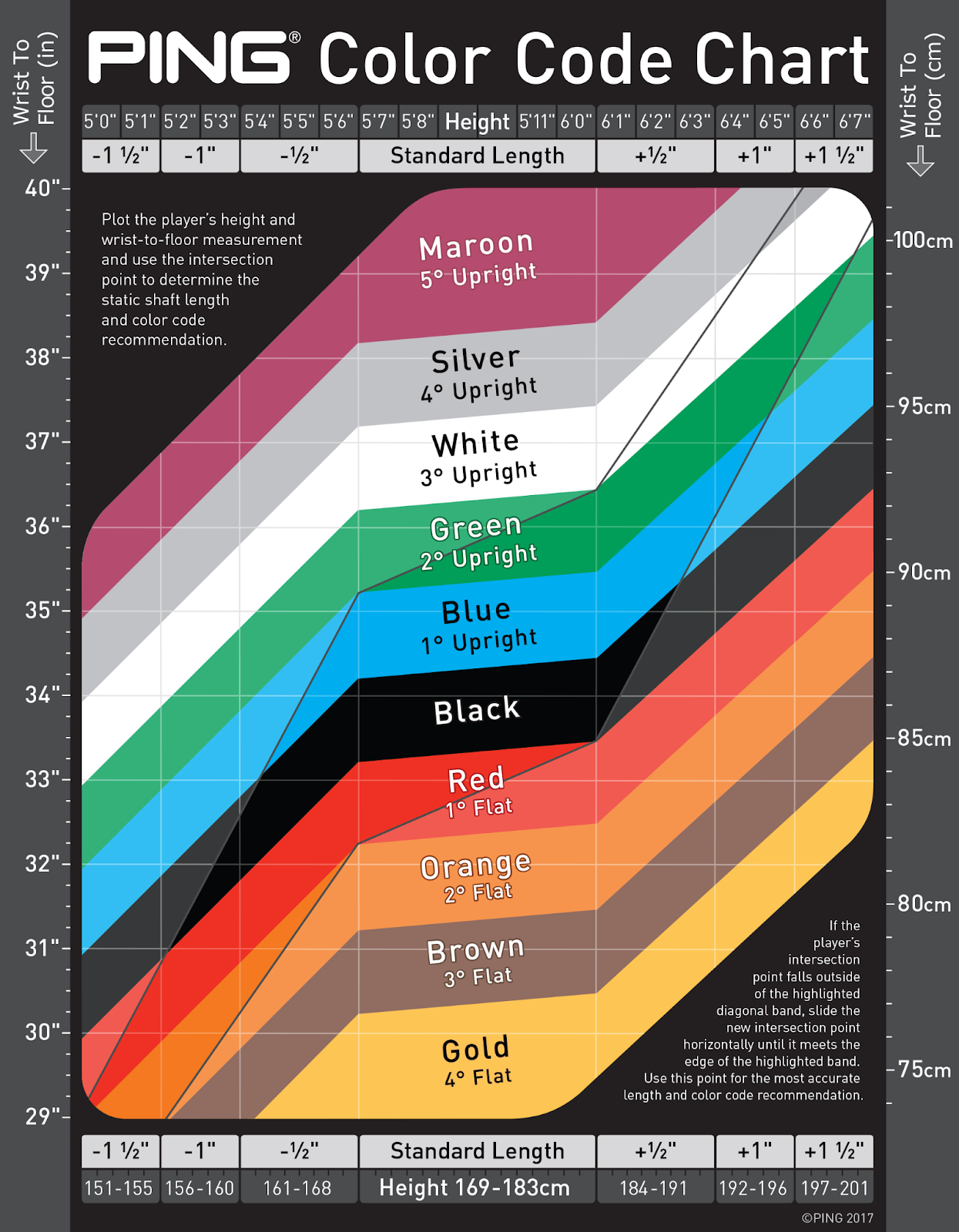
    Color Dots on Ping G2 Irons: Meaning

    When choosing a golf club from Ping, pay attention to the dot color on the club. This dot tells you the angle of the club’s tip, which affects how you swing it.

    You’ll probably want a club with an “upright” adjustment if you’re tall, while shorter folks might prefer a “flat” adjustment. This is because your height changes how you swing the club.

    The chart below from Ping shows the matching of each dot color to these specific angles. So, if you’re tall, pick the dot color that matches the “upright” grade, and if you’re short, go for the “flat” one.


    IMAGE


    Using a club that matches your height and swing style can significantly affect how well you play.


    That’s why someone might like a club like the three-iron from Ping—it fits them perfectly and helps them play their best on the course.

    Ping G2 Irons Performance Review

    The PING G2 irons are great for golfers because they’re easy to use and give a soft feel when you hit the ball.

    They have a design that spreads the weight around the edges of the club, making it more forgiving when you don’t hit the ball perfectly in the middle.

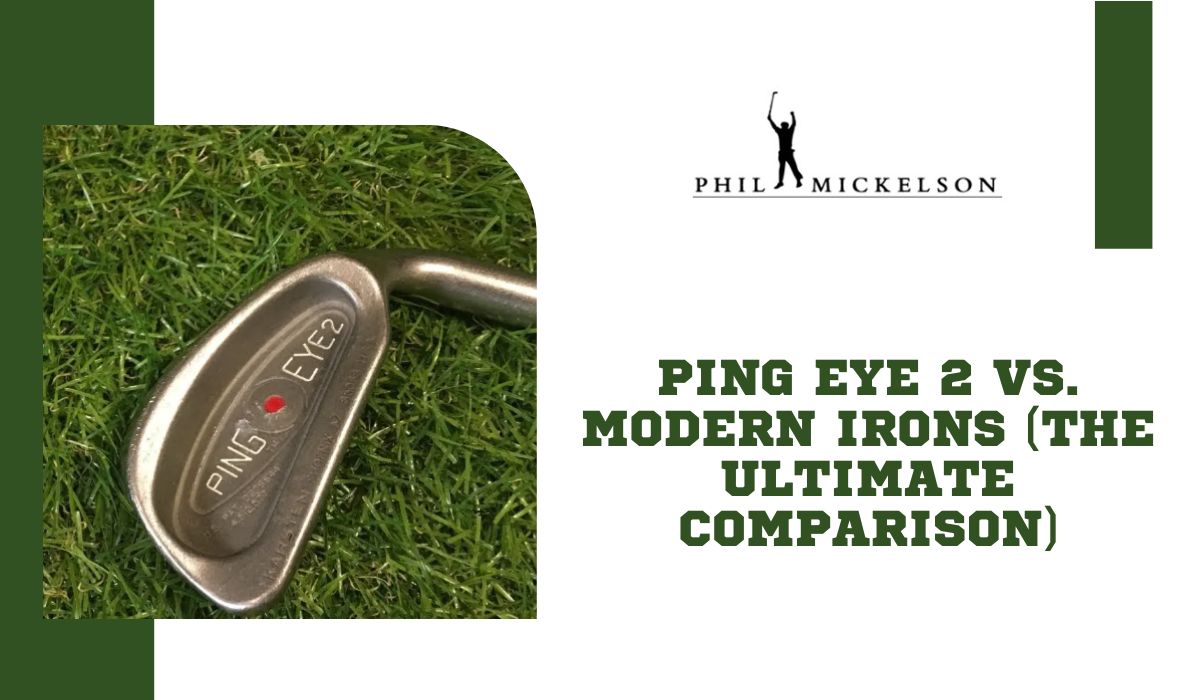
    This quickly reminds me of the classic PING Eye 2 irons.

    Each iron on the G2 set is subtly offset, promoting straight trajectories for improved accuracy.

    These irons are made with careful attention to detail, so they’re consistent in how far they hit the ball and how they react when you hit it. They’re also designed to help you strike the ball straighter, which is always a plus.

    If you struggle with hitting long irons (the ones with higher numbers like 2-iron or 3-iron), PING has notable replacements for them that are easier to use.

    These replacements have wider bottoms, which makes them glide through the grass more easily when you swing.

    Ping G2 Iron Shaft Specs

    The Ping G2 clubs come with two main types of shafts: the CS Lite steel shaft and the TFC 100 graphite shaft.

    The CS Lite is popular because it’s lightweight but strong and suitable for most players. The TFC shaft is better if you don’t swing the club as fast.

    The Ping G2 Iron has a regular steel shaft material measuring 37.25 inches. The Golf Pride Tour Velvet is a standard size. Is the grip capping the shaft?

    Ping G2 Irons Value Today

    I recently found a deal where someone is selling a set of Ping G2 irons (5-pw) for $300. They’re also throwing in a jet-speed hybrid and a three-wheel for $350

    The PGA value guide says the Ping G2 irons were worth about $78 in 2015, compared to the current market situation; the price seems fair. But since these irons are from 2003, like the Super Steels, I think I’d prefer to spend more on something newer.

    The seller mentioned that the back weights are missing on the nine and P.W. clubs. I’m not sure if this affects the deal’s value. I’m using Taylormade super steels, but I’m not a big fan of them.

    Interestingly, Ping G2 irons are becoming popular again. While enjoying my M3s, I wish I had a 3i instead of a G.W. I like their sole grind feature. It makes them very versatile.

    Ping G2 Irons Specifications Handicap

    The Ping G2 clubs are great for players between high and mid handicaps.

    P.S.: They all have the same basic design but are tweaked to suit different players.

    Final Thoughts

    There are many good things to say about the Ping G2 irons. From the specifications, you can quickly tell whether it’s a good fit for you.

    I lost my G2 clubs. I gave them to my godson a couple of years ago when he was big enough for adult-sized clubs, and he still uses them.

    After I got my own set, I brought my dad a G2-4 iron. He struggles with using hybrid clubs for some reason, but he likes and uses the G2

    As a player with a high handicap, you can’t go wrong with this one.


  • Callaway X20 Iron Review: Lofts and Specs

    Callaway X20 Iron Review: Lofts and Specs

    The loft options of the Callaway X20 irons range from 18.00° on the two iron to 41.00° on the nine iron. On specifications, the iron has a set makeup from 2 to 9: Uniflex, Stiff, and Regular flexes; 37.25 inches in length; steel and graphite shafts; and PW, GW, SW, and LW as additional clubs.

    Callaway irons have unique design features. They have notched perimeter weighting to make them more stable, a more extensive back cavity to forgive mistakes, and a system that lowers the center of gravity to make them more durable and reduce errors. However, it’s not a club for every kind of player.

    Before spending around $150 for the used set (that’s the deal you find these days), you’ll want to first know the lofts and specifications of the X20s to help further determine if it’s an excellent fit for your game and level of play.

    Callaway X-20 Iron Loft Specifications

    Here are the loft options in full detail for each club in the Callaway X20 iron set:

    Club Loft Lie Length Bounce Weight
    2 Iron 18.00° 60.00° 39.500″ 0.50° D2/D0 (steel/graphite)
    3 Iron 21.00° 60.50° 39.000″ 1.00° D2/D0 (steel/graphite)
    4 Iron 24.00° 61.00° 38.500″ 1.50° D2/D0 (steel/graphite)
    5 Iron 27.00° 61.50° 38.000″ 2.00° D2/D0 (steel/graphite)
    6 Iron 30.00° 62.00° 37.500″ 2.50° D2/D0 (steel/graphite)
    7 Iron 33.00° 62.50° 37.000″ 3.00° D2/D0 (steel/graphite)
    8 Iron 37.00° 63.00° 36.500″ 4.00° D2/D0 (steel/graphite)
    9 Iron 41.00° 64.00° 36.000″ 5.00° D2/D0 (steel/graphite)
    PW 45.00° 65.00° 35.500″ 7.00° D2/D1 (steel/graphite)
    AW 50.00° 65.00° 35.500″ 11.00° D2/D1 (steel/graphite)
    SW 55.00° 65.00° 35.250″ 11.00° D4/D3 (steel/graphite)
    LW 60.00° 65.00° 35.000″ 15.00° D4/D3 (steel/graphite)

    Callaway X20 Irons Specifications

    Set Makeup 2, 3, 4, 5, 6, 7, 8, 9
    Hand Availability Left, Right
    Flex Uniflex/Stiff/Regular
    Grip Golf Pride Multi Compound/Black Widow Tour Silk
    Length (6 iron) 37.25 inches
    Lie Standard
    Additional Clubs PW, GW, SW, LW
    Shaft Types Steel, Graphite
    Price The price for the entire set ranges from second-hand purchases. You can find the best deals on eBay, sold auctions starting at $150

    Callaway X20 Iron Performance Review

    These clubs have a reputation for style and performance, thanks to Callaway’s long-standing legacy of crafting top-notch golf equipment. The X-20 series comes in two versions: the standard and the Tour.

    While I can’t speak much for other clubs on the set, I’ve had much experience, particularly with the 4-iron through sand wedge, equipped with Callaway’s steel “uniflex” shafts.

    What sets these irons apart is their clever design.

    They’re built with features like “Extreme Notch Weighting,” which spreads the weight around the club head for better forgiveness and control.

    Plus, they have a lower center of gravity (CG) than previous models, making it easier to hit higher shots with more distance.

    Callaway’s “Core Technologies” signature is also on display here. This includes variable face thickness (VFT) for faster ball speeds, a design that redistributes weight for stability, and Tru-Bore Technology for a smoother feel.

    They’re especially great for average- to high-handicap players who want clubs that look good in their bag and feel comfortable swinging.

    These irons proved forgiving during testing, meaning even off-center hits stayed relatively on target. However, if you like to shape your shots, you might find it challenging with these clubs.

    I see the Callaway X-20 irons as a stylish and performance-driven option for golfers seeking consistency and improvement on the course.

    Callaway X20Irons: Pros and Cons

    Before rushing to buy the X20s, take note of these highs and lows of the club set:

    Pros 

    • The club set for the X20s is affordable.
    • The balance and feel are outstanding.
    • A low CG helps minimize errors.
    • Uniform impact across the face.

    Cons

    • Not quite as forgiving as comparative, newer irons (Ping G700, Mizuno JPX 900 Forged Irons, etc.)
    • Longer irons tend to launch relatively high.

    Callaway X-20 Irons Price

    You can still buy Callaway X-20 irons in many golf stores and online. Some people sell them for as little as $100 for the whole set.

    You might also see sets of X20s (from 4 iron to sand wedge) for about $175, or even find X-18s (from 3 iron to approach wedge) for around $150 if they’re in good shape.

    Just make sure to check their condition carefully before buying.

    Callaway X-20 Approach Wedge

    The Callaway X20 Approach Wedge is particularly useful for precise shots around the green.

    It fills the gap between the pitching and sand wedge, with a loft of around 50 to 52°.

    This loft strikes a balance, offering enough height and accuracy for most golfers. The club’s design maximizes forgiveness on off-center hits.

    Callaway X-20 Sand Wedge

    The Sand Wedge club among the Callaway X-20 iron sets is 35.25 inches long at the address.

    It uses the Callaway Stock Uniflex Flex Steel Shaft.

    The grip on this particular club is the Golf Pride New Decade Multi Compound Standard Grip.

    The loft and lie specs of the Sand Wedge Iron are 55.00° and 65.00°, respectively.

    Callaway X-20 Irons Release Date

    The Callaway X-20 irons came out in 2008, about 15 years ago. Even though they’re pretty old now, many golfers still love using them to improve their game. These irons are known for helping players lower their handicaps.

    Their continued popularity shows they’re still reliable and effective on the golf course. But, like many good old clubs, you can’t see them for sale. Most offers online are pre-owned.

    Final thought

    It was enjoyable hitting the Callaway X-20 irons. They look classy and sleek, not like beginner clubs.

    The narrower soles and compact heads let you hit aggressively with tight lies. Weighting in the club’s cavity boosts stability, even on off-center hits.

    They’re durable and perfect for serious learners. But there are better options for advanced players who need clubs for different types of shots.

    Now, what do you think?

    If you want to improve at golf, buying irons that make the game too easy, like the Callaway X-20s, is not a good idea.

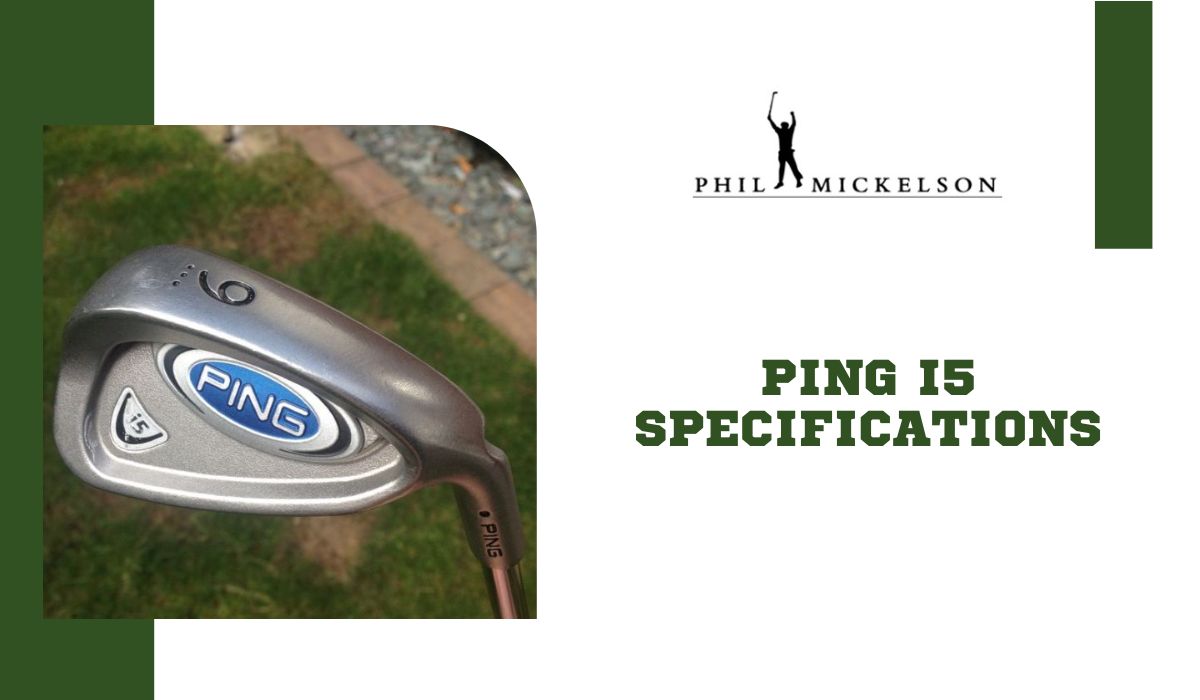
    It’s better to go for something in the middle, like the Ping I5’s. This is not to criticize anyone’s skill level; I’m just saying it’s wiser to avoid what some people in the golf community call “shovels.”

    What do you think? Let me know in the comments.

  • Bushnell Wingman Remote Not Working (Causes & Solutions)

    Bushnell Wingman Remote Not Working (Causes & Solutions)

    The main reasons for a malfunctioning Bushnell Wingman speaker remote are dead batteries, paring issues, app connectivity, or damage to the remote. Possible solutions include replacing batteries, clearing obstructions, ensuring a clear line of sight, or using a replacement remote.

    The Bushnell Wingman is a small speaker made for golfers who love music. It connects to your phone through Bluetooth and works with the Bushnell Golf app. This app helps you set up your golf course, keep track of your scores, and figure out distances to the next hole using GPS.

    While the speaker is easy to carry around, problems with the remote control have been a dominant frustration for many users.

    If your Wingman Remote isn’t working as it should, here are the possible causes and how you can troubleshoot them:

    5 Reasons Why Bushnell Wingman Remote Is Not Working (And Solutions)

    The small remote control of the Bushnell Wingman can be placed atop the speaker.

    You have to connect this remote to your phone using Bluetooth and the Bushnell Golf app, and the remote has just one button.

    If it’s not working, here are the common reasons and how you can fix it:

    1. Dead batteries

    Dead batteries are a common cause of remote control failure, and the remote of the Bushnell Wingman isn’t an exception.

    Over time, batteries lose their charge, rendering the remote control ineffective.

    This can happen gradually, resulting in a gradual decline in remote performance or, suddenly, a complete failure.

    Solution: Replace the battery of the Bushnell Wingman remote control.

    Step 1: Locate the grove on the remote control and pry into two halves apart.

    Step 2: Remove the old battery from the compartment.

    Step 3: Insert a new battery into the compartment. Please place it in the correct orientation.

    Step 4: Close the battery compartment securely by taking note of the groove at the sides and snapping it together.

    Here’s a video demonstrating these steps for better guidance:


    Step 5: Test the remote control by pressing the button to see if it now operates the speaker correctly. If not, proceed to the next possible cause.

    2. Obstruction Between the Remote and Speaker


    When objects or obstacles block the line of sight between the remote control and the speaker, the infrared (IR) signal emitted by the remote may be interrupted.

    This can prevent the remote control from communicating effectively with the speaker, leading to a lack of response.

    Solution: Remove any objects or obstacles blocking the direct line of sight between the remote control and the speaker.

    • There should be a clear path between the remote control and the IR sensor on the speaker, located on the front panel.
    • Reposition the speaker or remote control to improve the alignment.
    • Test the remote control again to see if the obstruction was the cause of the issue.


    If none of these solves the problem, the remote control is faulty. But before looking into that, check for a problem with the pairing.

    3. Pairing Problems

    Bluetooth pairing problems can arise for various reasons, such as incompatible devices, software glitches, or interference from other electronic devices. When you turn the speaker on, it reconnects to the last device it was paired with.

    So, if the remote is not working, it may be connected to a device you’re not currently using. Pressing both volume buttons together disconnects it.

    Solution: Reset the Wingman remote.

    • If you need to reset the Wingman, ensure it’s not connected to the charging cable.
    • Find a small pin, like a paperclip, and insert it gently into the reset button, a small hole to the right of the USB charging port.
    • Hold it for about 2 seconds until the LED light around the button turns off.

    4. Outdated Bushnell app for pairing

    Assuming you’re attempting to set up the Bushnell Wingman for the first time and you’ve successfully paired your phone with the Wingman speaker and remote, you may notice that as you exit your Bluetooth settings and return to the app, you won’t be able to proceed to the next step to finish the registration.

    Some people who have faced this problem try to delete and reinstall the app multiple times and turn Wingman on and off each time, but that doesn’t always work.

    You may still be able to play music through the Wingman, but the registration process on the app won’t be complete.

    Solution: Pair Bushnell Wingman Remote properly.

    Download the newer Bushnell Golf Mobile app. Many people facing this are those using the previous Legacy app.


    Here’s a video from Wingman on solving this issue using an iPhone or Android.

    5. Damaged Remote

    Physical damage to the remote control can occur due to accidental drops, impacts, or when you mishandle it.

    This damage may include cracked casings, broken buttons, or internal circuitry issues.

    Solution: 

    • Check the remote control for visible signs of physical damage, such as cracks, dents, or broken buttons.
    • Check if the single button on the remote is stuck or if debris accumulates underneath it.
    • You may need to clean the remote control if necessary.

    If the remote is damaged, you may have to order a replacement remote or resort to the button controls on the speaker in the meantime.

    Button Control on the Bushnell Wingman Speaker

    The central control for the Bushnell Wingman speaker is the detachable remote that connects to your phone via Bluetooth through the Bushnell Golf app.

    With just one button, you can get distance readings to the nearest hole on a golf course. You can hold the button for fun sound effects like applause or custom messages.

    However, when it stops working due to damage, you can use the easy-to-use controls on the speaker, but they are tricky to press.

    • When you turn it on, it reconnects to the last device it was paired with.
    • Pressing both volume buttons together disconnects it.
    • You can also hold them down to restart or skip tracks, but be careful because this might make you skip tracks accidentally while adjusting the volume.
    • The play button manages phone calls and EQ settings with single or double presses.

    Control and Lightning meaning on the Bushnell Wingman Speaker

    The speaker has a light ring that tells you different things.

    Ring color gestures  Meaning
    Orange Indoor mode
    Blinking orange slowly Outdoor mode
    Green Charging
    Blinking Orange Pairing mode or low battery
    A sound with three blinks When you turn up the volume all the way

    Meanwhile, the ring colour gesture doesn’t do anything when you turn the volume down.

    What battery does the Wingman Remote use?

    The Wingman remote comes with a CR-2032 battery that can be removed and swapped for a new one.

    Consider replacing it with a fresh, top-quality battery from brands like Panasonic, Duracell, or Energizer.


  • Is a 50-gram driver shaft too light?

    Is a 50-gram driver shaft too light?

    Is a 50-gram driver shaft too light?

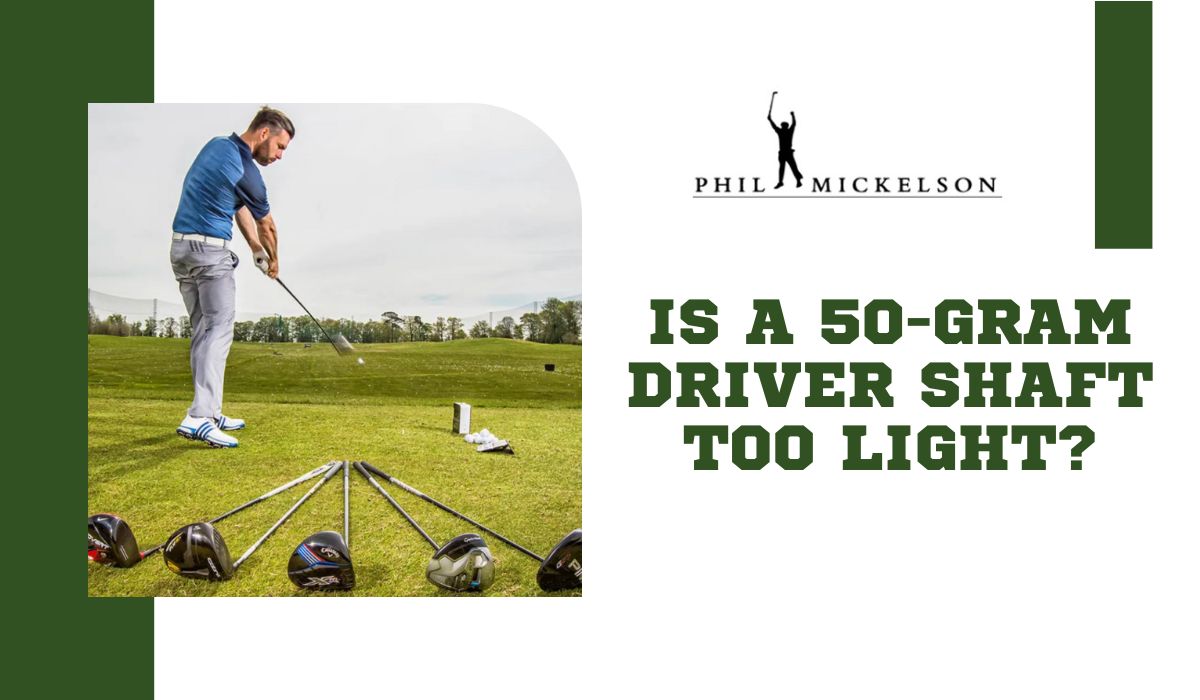
    Shafts that weigh 50 grams are very light and are popular among golfers who have trouble swinging the club fast. They also give a nice boost to the driving distance of senior players.

    I’ve always thought that, in terms of physique, a lighter shaft would translate into more club head speed, which may translate into 5 to 10 yards or more in the distance. However, I recently researched shaft weight selection more deeply and realized it all boils down to your swing speed.

    So, if you’re thinking of trying a 50-gram shaft for your driver and you’re hesitant because most OEM and aftermarkets are in the 60 to 70-gram range, that is normal.

    You want to be sure it’s the right driver shaft weight for your game. Read on to learn more about the 50-gram driver shaft.

    Specifications of 50-gram Gram Driver Shafts

    Details 50 Gram (1.76 oz) Shafts
    Players Beginners/Seniors
    Player Swing Speed Moderate
    Forgiveness Maximum
    Distance Moderate
    Control Maximum

    The Key Idea of Lighter Driver Shaft

    A lighter driver shaft helps you hit the golf ball more accurately and farther. Lighter beams make your swing faster, so you can hit the ball straighter and more powerfully.

    But there’s a downside.

    Lighter shafts are less forgiving. If you don’t hit the ball perfectly, it might not go as far as it would with a heavier rod.

    This makes more sense, especially when you consider the results from a test conducted by Golf WRX, which revealed that lighter shafts are best for experienced golfers who consistently hit the ball well.

    But what happens when you use a golf driver shaft that is too light?

    Using a golf driver’s’s’s shaft that’s too light can cause control and accuracy issues, leading to inconsistent shots and potential injury.

    While it might increase swing speed, it can sacrifice distance and control.

    Is 50-gram shafts too light?

    It depends on your swing speed. The 50-gram driver shaft is forgiving and easy to control when hitting your shots. These shafts are not too light for beginners and older golfers.


    • Beginners find them helpful because they’re easier to handle while learning the game.
    • As beginners get better at golf, they can switch to heavier shafts.
    • For older golfers, lightweight shafts are helpful because they might not swing the club as fast or as strongly as they used to.
    • Using a lightweight shaft helps them control the club better, making their shots more consistent.

    So basically, if you’re just starting golf or getting older and your swing isn’t as strong, a 50-gram driver shaft isn’t too light because it helps you control your shots better and makes the game easier to play.

    But then, you must seriously consider your swing speed and how it matches the driver shaft weight you want to use.

    It’s All About Your Swing Speed

    Choosing a heavier driver shaft makes you use more power, which increases your swing speed. This can help you hit better shots because your clubhead moves faster.

    But if you want a more accessible game and don’t need to hit the ball too hard, go for a lighter shaft.

    This is why swing speed is critical to knowing whether a 50-gram driver shaft is too light for you. Here’s a table to further help you identify this area:

    Average Swing Speed Driver Shaft Weight
    Less than 70 mph 40 Grams
    76-84 mph 50 Grams
    90-105 mph 60 Grams


    According to research from MyGolfSpy, golfers were tested using different shaft weights: one light at 55 grams and one heavy at 75 grams.

    Here’s what they found:

    • Most testers (80%) hit the ball farther with the lighter shaft.
    • However, more golfers (60%) got better overall distance with the heavier rod.
    • Also, 60% of players had faster ball speeds with heavier rods.
    • If you struggle to get the ball up in the air, a lighter post might be better for you.

    The best way to find the right weight for your driver shaft is by getting help from a pro. They’ll help you figure out what works best for you based on how you swing and play, with an emphasis on your swing speed.

    How Do You Know Your Swing Speed?

    The best way to know your swing speed is to use a launch monitor while hitting balls on the range. You can use the ones available at the local golf club or golf retail store if you don’t have any.

    How to Know If Your Driver Shaft is Too Light

    If your driver shaft feels too light, such that your wrists unhinge during your swing, it means the post is too light. This can cause issues with your swing path, like duck hooks and excessive draws.

    To fix this, Golf Digest coach Liam Mucklow recommends “switching to a heavier shaft for better control.”

    However, you can tell if the driver shaft is too flexible when the clubhead kicks up at impact and veers left (for right-handers).

    In other words, when you start having too many unwanted hooks, it can indicate a driver shaft that is too light or flexible.

    Understanding Driver Shaft Weight (Video)

    For a long time, graphite shafts have been popular in golf clubs. How heavy a post should have always been confusing for many players. Can lighter ones help golfers? How do you pick the right one?

    I like how golf equipment expert Michael Vrska explains all about shaft weight myths and how to choose the best equipment in this video:


    I’ve always stuck with shafts that weigh at least 60 grams for my driver.

    But Michael’s knowledge has me thinking about trying lighter ones this spring.

    In Summary

    Remember, it’s not just about looks when picking out a new driver. Pay attention to the shaft’s weight along with its flexibility and torque.

    Even small changes in weight, like 10 grams, can affect your swing—how it feels, how fast the clubhead moves, and how accurate your shots are.

    • It all depends on your swing speed, too. A 50-gram shaft will be too light if your swing speed is 90–105 mph.
    • A 50-gram driver shaft is excellent if you struggle with distance or want more consistency in your shots, giving you a forgiving club with a medium to high trajectory.
    • For more experienced players who want a lower ball flight but still some forgiveness, a 60-gram shaft is a good bet.
    • But this weight works well for most golfers.

    If you’re new to golf or still getting the hang of it, sticking with a 50-gram shaft can help you get better at hitting the ball where you want it to go.

    It’s perfect for moderate swing speeds (76–84 mph).


  • Ping Alta 55 vs. Tour 65 Shafts: Which Is Better?

    Ping Alta 55 vs. Tour 65 Shafts: Which Is Better?

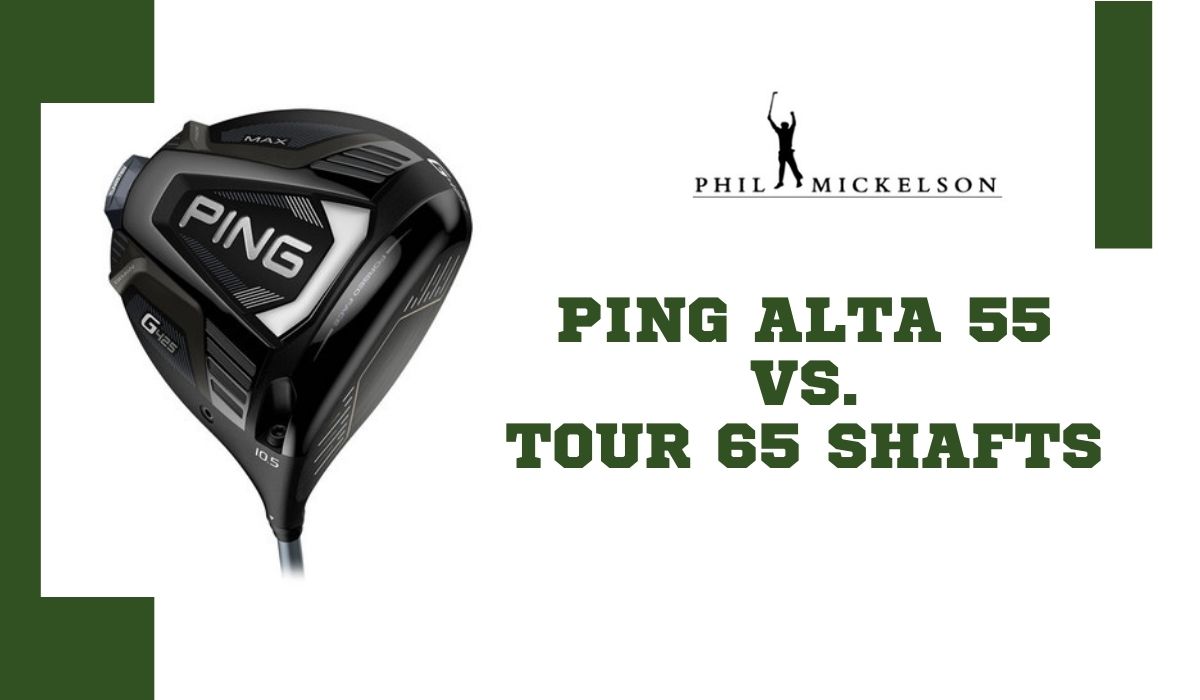
    The main difference between Ping’s Alta CB 55 and Tour 65 shafts is that the Alta 55 is a lightweight graphite shaft that is best suited for players who want improved launch and distance, while the Tour 65 will favour those who want more control and precision since it’s a mid-weight model.

    Recently, I broke the shaft on my Ping G400 (Alta CB 55 in Stiff) and needed a new one. The replacement I usually get costs about $100 online, but my local golf store offered me one from the newer Ping G425 for $60, including swapping the adapter.

    Out of curiosity, I decided to do comparative testing and more research to see if there would be a big difference if I went with the Tour 65 shaft instead. Then, I realized many players are similarly torn between these two shafts.

    In the rest of this article, you will learn about the specs, key features, pros, and cons of the Alta 55 and Tour 65 shafts; place them side-by-side to help you decide which is best for your game.

    Ping Alta 55 vs. Tour 65 Shafts Specs: Comparison Chart

    While the “Alta 55 vs. Tour 65” debate has been on a stretch, both shafts have identical profiles. Here’s a chart of the differences between the specifications of each shaft:

    Ping Alta 55 Ping Tour 65
    Flex options Soft Regular, Regular, Stiff and X-stiff Stiff
    Weight options 53.0g, 55.0g, 59.0g, and 63.0g 62 grams, 64 grams, or 66 grams
    Torque 5.9°, 5.0°, 4.9° and 4.2° 2.8 degrees
    Launch Mid – Low Low
    Spin Low
    Tip diameter 0.355 inches 0.355 inches (tapered)
    Butt diameter 0.58 or 0.60 inches 0.600 inches
    Material High-quality graphite High-quality graphite
    Length Allows for custom trimming and fitting Offered in different lengths to fit different clubheads

    Key Features of the Ping Alta CB 55 Shaft

    The Alta CB stands for “counterbalance,” which means it’s designed to help balance out heavier club heads.

    • When you place the Alta CB 55 shaft in your club, it changes color from copper to black, a nice extra touch.
    • You’ll often find the Alta CB Shaft as the standard option in the Ping G425 Driver and similar models like the G400, G410, G430, etc.
    • Depending on your play, you can choose between regular, stiff, and x-stiff versions of the Alta CB 55 shaft.
    • The shafts are mostly made of graphite.

    You can get the Alta CB for both irons and drivers, and they come in different colors, but black and red are the most common.

    Ping Alta CB 55 Shaft Pros and Cons

    If you’re not the best golfer and want a shaft that helps you hit the ball high up in the air consistently and feels excellent, you might want the Ping Alta 55. But before you buy it, here’s what you need to think about:

    PROS CONS
    More affordable than the Tour 65 It doesn’t offer as much control as its counterpart
    It gives you an improved distance You won’t get the speeds of the Tour 65 because it has been replaced with a better distance
    Best fit for players with slower swing speeds Not the best choice for lower handicappers
    It’s a lightweight shaft.
    It gives a higher launch angle.
    You can customise it freely.

    Key Features of the Ping Tour 65 Shaft

    The Tour 65 shaft, like its counterparts CB 55 and preceding the 75, is constructed from lightweight graphite.

    • It is offered in regular, x-stiff, and stiff versions.
    • The torque of the Tour 65 shaft varies between 2.7 and 3.6 degrees, providing options for different swing preferences.
    • The Tour 65 features Ping’s proprietary rib structure, focusing on stability during the swing and reducing unwanted vibrations.
    • The shaft has a stiff tip and a soft lower midsection for better feel and feedback.

    Within Ping’s G400 line, the Tour 2.0 Chrome 65 Shaft and Black 65 Shaft are available, both manufactured by UST Mamiya and Aldila under different parent companies.

    Ping’s strategy of sourcing from multiple suppliers minimizes potential supply disruptions.

    While the Tour 2.0 Chrome 65 and Black 65 shafts are similar in performance and features, some golfers perceive differences in feel.

    The chrome shaft tends to feel softer, whereas the black shaft feels stiffer, as confirmed by Ping’s assessments in the video below:

    Ping Tour 65 Shaft: Pros and Cons

    If you’re a low handicapper thinking about getting the Tour 65 shaft, let’s look at the good and bad things about it before you decide.

    PROS CONS
    A stiff tip provides a low launch and less spin, making it ideal for controlling ball flight. Some players don’t like the stiffness of the shaft because it can be harsh
    A solid choice if you want low-launch, low-spin ball flight It does not give high-launch or high-spin ball flight
    Consistent ball flight is due to the stability, thanks to the low torque. If you’re very intentional about a soft, responsive feel, the Tour 65 may be a little disappointing.
    The best option to achieve improved distance and accuracy

    Ping Alta 55 vs. Tour 65: Swing speed

    The Ping Tour 65 Shaft is best for golfers who swing fast and want their shots to fly low with less spin. It also provides reasonable control and stability.

    Experienced golfers who swing consistently and aggressively prefer getting the best distance and ball flight.

    The Tour 65 shafts are also suitable for players who want a solid feel when they hit the ball, giving them a stable swing.

    Meanwhile, for Alta 55 shafts, if your swing speed is between 90 and 95 mph, you should pick a regular, slightly stiffer, or stiff flex. Most golfers choose stiff shafts for fast swings and regular flex for slower swings.

    Even though the Alta CB 55 helps shots go high, it can lead to more missed hits and foul shots. Also, the spin between 3000 and 3300 is too high.

    Ping Alta 55 vs. Tour 65: Which One Should You Choose?

    If you swing the golf club slower and want help hitting the ball higher and farther, go for the Alta 55 shaft. But if you swing fast and want to focus on speed and control, go for the Tour 65 shaft.

    The answer is to get fit!

    You have to get a professional fitting to pick the right PING shaft for you. Alternatively, you can use the Ping Shaft App since it’s Ping.

    This app looks at your swing inputs, clubhead speed, downswing, and desired trajectory.

    Then, it suggests the best shaft from PING’s massive collection of over 1,000 options, including aftermarket options. This helps your fitter find the perfect shaft to improve how you drive the ball. You can learn more about Ping’s fitting help here.


  • Mitsubishi Diamana S+ 60 vs. 70: Which is Better?

    Mitsubishi Diamana S+ 60 vs. 70: Which is Better?

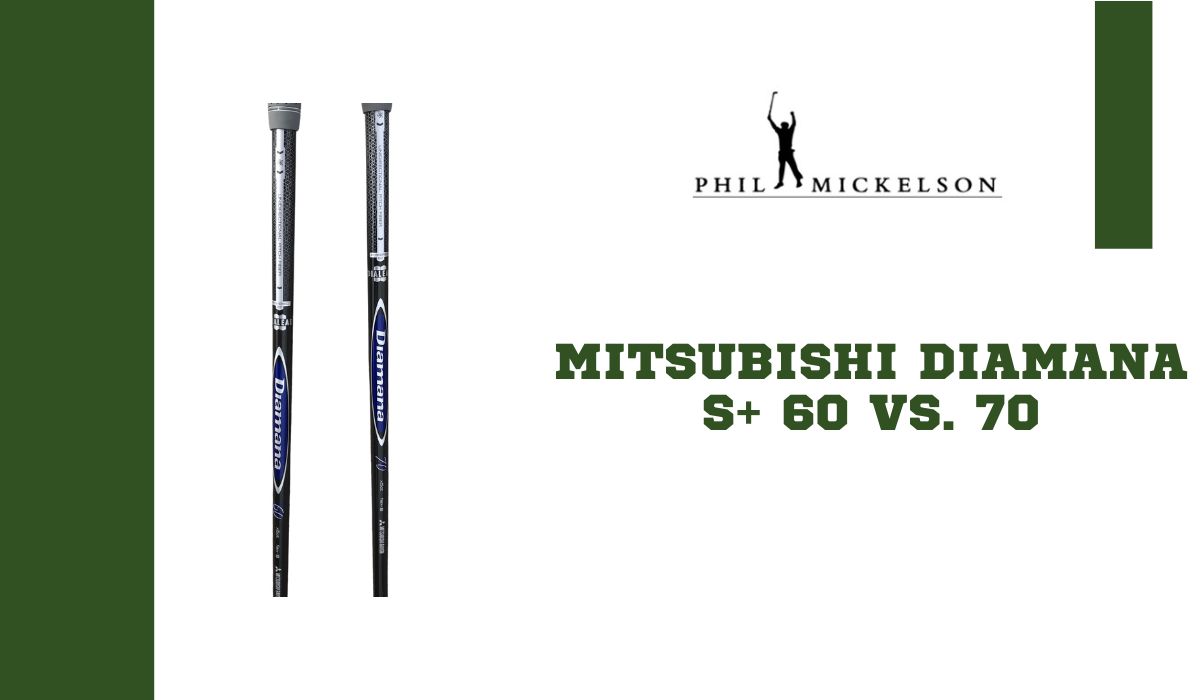
    The main differences between the Mitsubishi Diamana S+ 60 and 70 shafts come down to how heavy and flexible they are. The S+ 60 is lighter and more flexible, which can help you swing the club faster and hit the ball farther. S+ 70 is heavier and stiffer, giving you more control and accuracy when hitting the ball.

    The Mitsubishi Diamana S+ series, which includes the 60 and 70 models, is among the most popular shafts demanded by players who want a balance of power and control. However, it is easy to be torn between two options. I bought the S+ 60 and 70 shafts to try in my Ping G25.

    In the rest of this article, I have detailed the key features and specifications that make each shaft stand out and the things to look out for to help you identify which is best suited for your kind of game.

    Mitsubishi Diamana S+ 60 vs. 70 Specs: Comparison Chart

    Diamana S+ 60 Shaft Diamana S+ 70 Shaft
    Flexibility Mid- to Mid-High Mid– to Mid-High
    Trajectory High Mid
    Weight 59 grams 71 grams
    Tip Diameter 0.335 inches 0.335 inches
    Butt Diameter 0.600 inches 0.600 inches
    Torque 4.4 degrees 3.3 degrees
    Spin Mid-High Low-Mid

    Mitsubishi Diamana S+ 60 vs. 70: Main Differences

    The S+ 60 and S+ 70 shafts differ in weight and flexibility, giving golfers options to fit their swing preferences.

    • The S+ 60 shaft is lighter than the S+ 70 shaft. This means it can help you swing the club faster and hit the ball farther.
    • On the other hand, the S+ 70 shaft is a bit heavier, giving you more control over your shots and making them more accurate.
    • If you want more distance, go for the lighter S+ 60 shaft.
    • Choose the slightly heavier S+ 70 shaft if you prefer accuracy and control.

    So you can see that it’s all about what feels best for you on the golf course.

    Mitsubishi Diamana S+ 60 vs. 70: My Full Review

    First, the weight differences

    When you compare the Diamana S+ 60 and 70 shafts, you’ll notice one is lighter (the S+ 60) and the other is a bit heavier (the S+ 70). This weight difference affected how I swung and performed on the golf course.

    The S+ 60 feels light in my hands; I could swing faster and control my shots more easily.

    The S+70 feels more solid during the swing. In all fairness, this did help me hit the ball more accurately.

    The S+60 shines more in spin.

    During testing, the Diamana S+ 60 shaft made the ball go higher and spin more than the S+ 70 shaft.

    This will only help golfers who want their shots to go farther.

    On the other hand, the S+ 70 shaft makes the ball go lower and spin less, which can help golfers who hit the ball too high or with too much spin.

    So before deciding which to go for, you want to now think about how you hit the ball.

    The Diamana S+ 70 favours players with faster swing speeds.

    The Diamana S+ 60 shaft is made for golfers who swing the club at a moderate speed.

    It helps balance control and power by giving shots more height and spin, making them go farther and land more accurately.

    But it was straightforward to notice how the Diamana S+ 70 worked well for a player on the course with a faster swing.

    During testing, it kept the ball lower and with less spin. This made it easier to control and gave it a straighter path through the air.

    Contrary to popular opinion, the S+ 60 was more responsive than the S+ 70 shaft.

    The Diamana S+ 60 shaft is more flexible than the S+ 70, so it wasn’t surprising when it gave a smoother and more responsive swing.

    This flexibility increases the distance you hit the ball and makes your swing feel more effortless.

    The S+ 70 shaft is stiffer. You can trust it for stability and a consistent ball flight.

    It’s suitable for golfers who prefer a stronger, more controlled swing and want to ensure their shots stay on target.

    So, if you’re looking for a shaft that offers more whip and responsiveness, go for the S+ 60. But if you want stability and control in your swing, the S+ 70 might be your better choice.

    Both shafts did indeed affect my playing style differently.

    During testing, the slower swinger on the golf course had trouble getting enough distance with a heavy, stiff S+ 70 shaft.

    Now, think about it: if you slice the ball (sending it off course to the right for a right-handed player), you could do better with the stability of the S+ 70 shaft.

    On the other hand, a golfer who hooks the ball (sending it to the left for a right-handed player) might benefit from the forgiving nature and higher launch angle of the S+ 60 shaft.

    Why It’s Hard to Pick Between the S+ 60 and 70 Easily

    These two options share vital features that make it hard to spot which outperforms the other easily.

    Both shafts offer stability and control, meaning you can confidently hit accurate shots. They also provide a smooth feel and give feedback so every swing feels good and helps you improve.

    Secondly, they both help you launch the ball high, giving your shots an excellent trajectory on the course.

    With a high launch angle, these shafts deliver striking trajectories that set you apart on the course.

    Mitsubishi Diamana S+ 60 vs. 70: So Which Is Better?

    It all boils down to what you want from the sticks.

    If you swing the golf club slower and more smoothly and want the ball to go higher with some spin for forgiveness, go for the Diamana S+ 60 shaft. It’s also good if you like a lighter shaft to help you swing faster.

    But if you swing the club faster and more aggressively and want the ball to go lower with less spin for better control, choose the Diamana S+ 70 shaft. It’s better to prefer a heavier, stiffer shaft to give you a more direct ball flight.

  • Tommy Armour Reviews (The 845-MAX Irons)

    Tommy Armour Reviews (The 845-MAX Irons)

    The Tommy Armour 845-Max irons are an excellent option for beginning golfers on a tight budget who want to improve from a high handicap. It will also benefit slower-swing-speed players who prefer lighter, easy-to-swing clubs. Aside from their busy appearance, these irons are a buzzkill for mid-to-high handicap players.

    As enticing as any reasonably priced golf club may appear, golfers will always want to know if it is good. Last week, I made a poll seeking the opinion of fellow golfers on which set of irons would be ideal for a teenager just starting golf, and the Tommy Armour 845 Max Irons from Golf Galaxy were suggested the most.

    I used the older version of this club in my early years of playing, so I decided to do more profound research and tests on the 845-MAX irons. They come in a 5-iron through-AW set and sell for just $299.98 (at the time of publishing).

    P.S. I was allowed to choose between lightweight SL85 steel shafts or graphite shafts at no additional charge.

    So what’s the Tommy Armour 845 Max Irons all about? What makes it a special iron, and who is it meant for? Read on to find out more.

    Tommy Armour 845Max Irons Specifications

    These irons were known for being game-improvement clubs designed to provide forgiveness and distance for golfers looking to enhance their performance. Here are the key specs:


    Model  Loft (degrees) Lie (degrees) Length Swing Weight
    5 Iron 22 61.5 38.25” D2
    6 Iron 25 62.0 37.625” D2
    7 Iron 29 62.5 37.00” D2
    8 Iron 33 63.0 36.50” D2
    9 Iron 38 63.5 36.00” D2
    PW 43.5 64.0 35.50” D2
    AW 49 64.0 35.25” D3


    Tommy Armour 845 Max Irons: Full Review

    I observed that one of the common reasons people turn to irons like the 845 Max is to achieve more distance. I had ensured that while testing these clubs, I paid more attention to the distance improvement, but there were other areas where this club excelled.

    First Impression (Iron Design)

    The 845-MAX has:

    • Large cavity
    • Thick topline
    • A decent amount of offset
    • Bold colours, logos, and accents on the back of the club

    If you study the designs of many competing clubs in this category, you will notice that they now have hollow-bodied and muscular backs.

    So when you have 845 MaX with all its vast logos and odd colours, you may not be comfortable with it.

    But the feel of the TA-845 MaX iron is solid. Well-struck shots will give you this buttery feel, and mis-hits offer enough feedback to know where you missed it.

    How’s the Tommy Armour 845 Max Irons distance?

    Let me start by saying the 845-MAX irons are under the extra game improvement category, so it’s even an expectation to get more distance than their game improvement counterparts.

    It also means that at first impression, I wouldn’t be surprised to realize the 845-MAX irons don’t do so well in looks, feel, sound, workability, and stopping power.

    But of course, with the TA 845-MAX 7-iron, I experienced the longest distance as far as testing game improvement irons go.

    Meanwhile, the loft of the 7-iron is three degrees weaker than the TalyorMade Stealth, a worthy counterpart.

    Are the Tommy Armour 845 Max Irons Forgiving and Accurate?

    Ball shaping with the TA 845-MAX wasn’t impressive, but the iron did perform excellently in accuracy.

    Beginner golfers will also benefit from the consistency of these irons during shot shaping, shot after shot. Also, misses were less offline.

    With the TA 845-MAX, you can expect nothing short of straighter ball flight and tighter dispersion patterns.

    There’s nothing special to this, though. You’d get it from most other modern game improvements or player irons.

    Tommy Armour 845 Max Price vs. Value

    The 2021 845 MAX irons are available in wedge, driver, fairway, hybrid, blade, and serrano putters. You can buy them from Golf Galaxy or Dick’s Sporting Goods for between $449.99 and $119.99 per set.

    Here’s a breakdown of the Tommy Armor 845 MAX clubs and their current prices.

    Tommy Armor 845 Clubs Cost per set
    2021: 845 MAX irons $299.98
    845 wedge $79.99
    845 drive $199.99
    845 fairway $149.99
    845 hybrid $129.99
    303 Milled Series Serrano Putter $199.99
    Impact No. 2 Wide Blade Putter $119.99

    These affordable clubs are ideal for beginners who don’t want to spend a fortune while starting without missing out on the value or performance that a decent iron would typically give.

    Will they be decent, especially for new players? Yes. You probably won’t even find new sets for a better price. But are they the best value for money in today’s market? I seriously doubt it.

    Some direct-to-consumer brands like Sub70, Hogan, Maltby, and so on are significantly better clubs, mainly because they come with better QC’d shafts for comparable or only slightly more cost.

    That being said, the differences aren’t a big deal for brand-new golfers.


    Tommy Armour 845 MAX Pros and Cons

    While the TA 845 MAX irons are excellent in performance and forgiveness, I do have some thoughts on the look and feel of the irons. So, if you’re looking to use this iron, take note of the following pros and cons:.

    Pros:

    • Not too many super game improvement irons have lofts as reasonable as those in the TA 845 MAX irons, so wedge selection becomes more accessible.
    • Excellent value for money at $299.98
    • Greatly recommended for new players who are intent on game improvement and savings, you can choose between steel or graphite shaft options at no additional cost.
    • The shaft is even lightweight, thus making it easy to swing.

    Cons;

    • It has a busy design on the club head with extravagant logos and colours, hindering a simplistic aesthetic not associated with modern golf.
    • Mid-to-high-handicap players won’t find these irons comfortable to play with.

    What Happened to Tommy Armour Golf Clubs?

    The Tommy Armour name used to mean something special. Tommy Armour, the silver Scott and legendary golfer in the Hall of Fame was an old-time player with some of the best irons ever.

    They were called the Tommy Armor 845 Silver Scott irons, and anybody who played golf in the ’80s or ’90s knows them because they were widely considered some of the best in golf history.

    The largest independent golf retailer in Spain, Golf Galaxy, and an American chain of sporting goods stores, Dicks, bought the rights to the Tommy Armor brand, and they’ve been re-releasing new renditions of clubs for quite a while now.

    They had the ones in the Atomic line, which I’ve never tried, the 845s, and now the 845 Max irons.

    Tommy Armor 845-Max Review: Final Remark

    Nothing you buy will immediately fix your game, like a magic pill. You still have to golf your ball, develop your skills, and play your short or long game off the tee.

    However, for someone like me who has struggled with distance, this TA 845-Max irons is the first club I’ve bought that has made a difference in my space.

    It’s super forgiving but not so much that you won’t feel what’s going on when you make an impact; there’s a tungsten weight in the toe, it’s a two-piece hollow construction, and the feel coming from these is butter.

    Overall, I recommend the Tommy Armour 845 Max irons for beginners and those on a tight budget who want to improve their game.

  • TaylorMade SIM2 Max Driver Adjustment Chart (Full Guide)

    TaylorMade SIM2 Max Driver Adjustment Chart (Full Guide)

    On your TaylorMade SIM2 Max Driver, you can adjust the loft and lie by 0.5° to 0.75° and the face angle from 1° to 2° via the hosel adapter. Adjustment on the ball flight (neutral, draw, or fade) is done via the movable weight track.

    However, you can rely on the Sim2 Max Driver Adjustment Chart to make these adjustments correctly.

    TaylorMade SIM2 Max Driver Adjustment Chart on Tables

    With the aid of this chart, you can gain a comprehensive overview of the available adjustments, their effects on ball flight, and recommended settings to achieve specific shot outcomes.

    Setting Loft (degrees) Face Angle (degrees) Lie Angle (degrees) Weight Distribution
    Standard 9 Slightly Open Neutral Neutral
    Higher 10.5 Slightly Open Neutral More Rearward
    Lower 8.5 Slightly Open Neutral More Forward
    Draw 9 Slightly Closed Neutral Neutral
    Fade 9 Slightly Open Neutral Neutral
    Max Draw 10.5 Slightly Closed Neutral More Rearward
    Max Fade 10.5 Slightly Open Neutral More Rearward
    Low Draw 8.5 Slightly Closed Neutral More Forward
    Low Fade 8.5 Slightly Open Neutral More Forward

    Focusing on the hosel adapter, you can put it in 12 different modes, as shown in the diagram below and further explained in the table above.

    The loft changes at each position, such as 0.5°—0.75°, Lie 0.5°—0.75°, and Face Angle 1.0°—2.0°.

    As seen in the table above, standard means no adjustment, while lower means lower ball flight, less spin, and a 4° open face angle (fade, anti-draw).

    An upright setting is for a more upright lie, while a higher setting will give you higher ball flight and more spin. It also achieves a 4° closed face angle (draw, anti-fade).

    SIM2 Max Driver Adjustment Chart—Explained


    IMAGE


    Source: TaylorMade

    • Loft: The loft adjustment lets you change the driver’s loft angle to control your shots’ launch angle and spin rate. To adjust, loosen the screw on the driver’s hosel using the provided tool, then rotate the hosel to the desired loft setting. Typically, 1.5 degrees of adjustment are possible for the loft.
    • Face Angle: This adjustment alters the face angle of the club head, which can influence the direction your shots go. You have to first loosen the screw on the hosel and rotate the driver’s head to open or close the face angle slightly. This helps you correct a slice or hook.

    IMAGE


    • Draw and Fade Bias: Since the SIM2 Max Driver allows for draw and fade bias by shifting weights in the sole, you can use the included weights to change the placement in the sole of the driver’s head to prompt fade when you place it toward the toe.
    • Inertia Generator: This movable weight in the sole influences the driver’s overall stability and forgiveness. You can move it between the front and back positions to change the centre of gravity and optimize forgiveness or distance.
    • Hosel Sleeve: This one is responsible for the driver’s lying angle changes. When you loosen the screw on the hosel sleeve, you can easily adjust to your preferred lie angle setting for your swing and address.

    How Do You Adjust the SIM2 Max Driver? (VIDEO)


    IMAGE


    Step 1: Loosen the adjustable hosel.

    Use the included wrench to loosen the screw on the adjustable hosel located at the base of the driver’s shaft.

    Turn the wrench counterclockwise until the hosel is loose enough to adjust.

    Step 2: Select the desired loft and face angle.

    Once the hosel is loose, you can adjust the loft and face angle.

    Align the small notch on the hosel sleeve with the desired setting on the hosel adjustment ring.

    Loft and face angle settings are typically marked on the sleeve.

    Step 3: Tighten the adjustable hosel.

    After selecting the desired loft and face angle, use the wrench to tighten the screw on the adjustable hosel by turning it clockwise. Stop turning when there is an audible clicking sound.

    Remember to tighten it securely to ensure the hosel stays in the chosen position during play.

    Step 4: Fine-Tune

    Adjusting the driver allows for customization based on your swing and preferences.

    You can experiment with different settings to find your game’s optimal loft and face angle combination.

    You may find this Thomas Campbell video helpful, where he further discussed the different settings available with the TaylorMade adjustable hosel and how they can help you hit better golf shots and improve your on-course performance:

    How Much Can You Adjust the Loft on a SIM MAX Driver?

    You can increase or decrease the loft on your TaylorMade SIM2 Max driver by 0.5° to 0.75°. This is done with the hosel adjustment.

    You can make 12 different adjustments to the loft, lie angle, and face angle.

    Don’t forget that the SIM2 MAX driver has four-degree sleeves supporting twelve loft, lie, and face adjustments.

    What do Upright Settings on TaylorMade Driver do?

    Adjusting the upright settings on your TaylorMade driver will cause the clubface to square up at the time of impact.

    So, it’s an ideal setting option if you encounter slices often because the clubface, which is now more inclined to the left of the target, will solve the slice issue.

    To achieve the upright setting adjustment of the TaylorMade SIM2 Max driver, you must select the UPRT LIE option. Here’s a step-by-step guide to get you through:

    • Position the TaylorMade wrench tip inside the screw at the rear of the clubhead.
    • Rotate the wrench to the left until the screw loosens.
    • Take the screw off the club hosel.
    • Replace the clubhead over the hosel once again, such that the arrow mark on the head
    • Ensure the UPRT LIE markings on the hosel adapter are aligned.
    • Tighten the screw with a few rotations of the wrench to put the clubhead back in shape.
    • Stop the rotation to the right once it produces a click sound.

    Note: Aligning the UPRT Lie marking on the hosel adapter does not impact the loft, but the lie angle is at the highest 60° setting.

    Before You Go

    With adjustments, you can fine-tune the Sim2 Max Driver for ideal launch conditions and increase palatable distance and accuracy for your playing style.

    However, you need the chart, especially for fine-tuning the loft, lie angle, and weight distribution.

    You can always access TaylorMade’s complete guide on their SIM tuning process HERE.

  • Mizuno MP 60 Review: Still a Good Iron to Use?

    Mizuno MP 60 Review: Still a Good Iron to Use?


    The Mizuno MP 60 iron isn’t the longest-hitting, highest-spinning, or most accurate iron, but it impressively blends the performance and head size of the MP-23 blades with the forgiveness you’d get from the MP-30 hybrids’. These irons are best for mid- to low-handicappers only.


    I firmly believe club preferences are personal to each individual. However, having played the MP-60s for about 13 years until I got new clubs this summer, these irons will definitely improve distance and dispersion.


    The Mizuno MP 60 has been gaining fresh attention in the golfing community recently, and given that I miss the feel of the Mizzys, I decided to test and create this review guide on the MP 60s, which I hope will provide you with more precise information on how these irons work and the category of players they are best for.

    Mizuno MP-60 Irons Specifications

    Words on the street concerning the MP-60s have always been that they are for serious golf players only.


    I also noticed that these irons lie flatter than most. However, there’s more to the specifications than this. Here are the key specs of this 16-year-old club:


    Iron 1 2 3 4 5 6 7 8 9 PW
    Loft 18 21 24 27 31 35 39 43 37
    Lie 59.0 59.5 60.0 60.5 61.0 61.5 62.0 62.5 63.0
    Length 39.25 38.75 38.25 37.75 37.75 36.25 36.25 35.75 35.50
    Offset 0.154 0.142 0.134 0.134 0.130 0.126 0.126 0.114 0.114
    Bounce 2 2 2 2 3 3 4 5 6
    Swing Weight


    Mizuno MP-60 Irons: Full Review


    • Date Launched: 2008
    • Material: Steel
    • Shaft Flex: Stiff, Regular
    • Set Makeup: 3, 4, 5, 6, 7, 8, 9, PW
    • Shaft Types: Steel, Graphite
    • Club length: From 32″ to 36.5″
    • Price


    The Design


    I can’t absolutely recall the first impression I had of the MP-60s at the time I first tried them in 2011. However, upon looking at it now, I can say the design of this club grabs attention more.


    With a closer look at the details, you will agree that there’s nothing too extra about it. The top line, offset, sole, and cavity sizes are all small to moderate.


    • The club head has a nice little gouge that provides that organic feel.
    • A very plain sole, organic toe, and heel profile
    • Plain black ferrets, which, again, speak loudly of the iron’s minimalism design
    • It features a Dynamic Gold True Temper steel shaft.
    • And golf pride grip


    One noteworthy area of the design is that it helps the stick reflect the quality of your swing and the direction of the clubface.


    The club cavity back also allows you to know where you made contact.


    Forgiveness


    The Mizuno MP-60 is notoriously famous for being less forgiving, especially for high handicappers or beginners.


    Although, during my testing, I did notice a fair amount of forgiveness. Because each time I miss the sweet spot a bit, they perform just fine.


    And when you hit them with a closed or open club face, they will draw or fade rather than go straight, like a lot of game improvement irons out there.


    So even when you do hit a bad shot, you may not get all the forgiveness you need with the MP-60s. You won’t reach the benefit of, say, the Big Berthas.


    But whenever you nail a hit with these irons, the feeling never gets old.

    Distance


    Just like when testing other clubs, distance has always been determined by the swing speed, shaft, and loft. So it wasn’t much of a surprise to see that the MP-60 iron did not go as far as the strongly lofted clubs that I’ve tried in the past.


    In all fairness, the lofts of these irons are more traditional. So, in terms of distance, especially as a handicapper, you shouldn’t expect much.

    Which Handicap Range Should Mizuno MP-60 Irons Use?

    While the Mizuno MP-60s have an ollow back design, they are not exceptionally forgiving, and it can be hard to get acclimated to the Dynamic Gold SL shafts. Hence, these irons will favor players who are 12 handicaps or lower.


    In other words, I would not recommend the MP-60s for low handicappers.


    If you’re in the latter category, you may still enjoy playing with these sticks since they are pretty easy to hit but don’t offer that much-needed forgiveness as with many newer game-improvement irons out there.

    Who Is The MP-60s For?


    If you want a club that allows you to know how your swing is going without being over-punished, then the MP-60s are ideal for you.


    Understandably, these are for serious golf players with lower handicaps. It will also appeal to players who value simple, uncomplicated irons.


    If you want to just slap at the golf ball and get a decent result, then I don’t recommend this iron.

    Mizuno MP-60 Irons: Pros and Cons


    Before you play with the MP-60s, consider these pros and cons:

    Pros

    • When you hit the sweet spot, the feeling of Mizuno forged is second to none!
    • They’re great out of the rough since they’re heavy.
    • Simple, minimalist design
    • Very workable.
    • The hollow back design, which is ideally supposed to assure moderate forgiveness,

    Cons

    • Not really forgiving
    • On mishits, you pay for it due to the increased workability of these irons.
    • If you have a reasonably low ball flight, you won’t like the shaft of this iron, as you’ll need something with a mid-kick point.
    • The lighter shaft’s feel requires some getting used to.
    • While they’re good-looking, they ding up pretty quickly in the bag, so you’ll need something to keep the clubs from banging together.

    Mizuno MP-60s Alternatives

    One of the most talked-about replacements for the MP-60s is the MP-64 irons.


    While these two are arguably the best Mizzy cavity backs ever made, the MP-64 isn’t the only perfect replacement.


    I would recommend the following irons if you want an alternative to the MP-60s:


    • Taylor-Made RAC LT
    • Mizuno MP-27 irons

    Mizuno MP-64 irons


    The clubs have a very shallow cavity, so they do offer a touch of forgiveness, but the main point of these irons is to deliver exceptional feel and more feedback. They are described as better player irons.


    Just like the MP-60s, the MP-64s are beautiful to look at and also compact enough to offer workability.


    What makes it better is the ample feel and forgiveness.


    However, it still shares a similar problem of not being overly long, and distance control can be an issue at times.

    Taylormade RAC LT


    The Taylormade RAC LT is a semi-cavity-back iron with a medium offset, a low center of gravity, a medium topline, and a midsized head shape.


    It is definitely easier to hit and is more forgiving on “miss-hits” than the MP-60s. But I found that the shaft seemed a bit “whippy”—for  a first-time user, it would appear as though the club was coming out of you during the swing (regular shaft).


    Upon comparing these two irons, I was able to hit the Mizuno MP-60 longer and more tightly bunched than the RAC LT (by about 5–10 yards).


    But many golfers have confessed how, on “off” days, the MP-60s provided complete feedback, which, in the long run, helped improve my swing and, thus, my game.

    Mizuno MP-27 irons


    If you want something like the MP-60s but still within the Mizuno line, then you can’t go wrong with the MP-27s, especially when you want a club that will be a hell of a lot more forgiving.


    With the MP-27s, you will get the most out of your game because you will start gaining a tremendous feel from the forging. And even when you play badly, they will not punish you as much as the MP-60s.


    Meanwhile, do not forget the bling-bling factor of the MP-60s, which will be standard everywhere shortly. On the other hand, MP-27s are Japan-only and will be unique amongst any four-ball!


    In terms of looks, the MP-60s obviously win. But not too many people look into these Mizzys for aesthetics alone.

    Final remark


    As I mentioned earlier, preference for clubs is a very personal thing. But then, you won’t enjoy the Mizuno MP-60s if it’s not your fit.


    If you can constantly strike the ball correctly, then I highly recommend these irons. If you are still struggling with average scoring, then the MP-60s are not for you.


    Summary Rating for the Mizuno MP-60 Irons


    Appearance 10
    Forgiveness 4
    Feel 8
    Distance control 6
    Spin Control 8
    TOTAL (50 points) 36/50 points


    While some people call the MP-60s the best club they’ve ever played with, others insist that they aren’t overly forgiving.


    So, if you don’t plan on consistently working on and molding your swing, then the MP-60s probably aren’t for you. If, however, you are willing to put in the time, these clubs will reward you.


    I particularly adore the ‘carvability’ that these clubs have helped add to my game, and that can be your story.


    I won’t recommend it for total beginners, but if you’re playing challenging courses that will find you with some tricky shots (and you’re ready for that), then the MP-60s are your sticks.


  • The Best 7 Golf Training Mats for Swing Detection

    The Best 7 Golf Training Mats for Swing Detection


    The best golf training mat for swing detection should offer a realistic turf feel, durability, and accurate feedback. The CHAMPKEY High-Performance Golf Mat remains among the best options on the market with its non-slip base and portability. However, for outdoor use, the Acu-Strike Impact Golf Training Mat shines with its embedded sensors and compatibility with swing analysis devices.


    When you start feeling that you swing across the ball a lot, the need for a swing-detecting golf mat will likely cross your mind. There are now many knockoff mats on the market that claim to be the best for swing detection.


    I’ve had my fair share of lousy product experiences where swings that I take a normal divot barely even show up on the mat. On some, there’ve even been just the faintest of outlines where my club passed through, but it definitely doesn’t match a full divot like the product photo would do.


    In this article, I have ranked and reviewed seven of the best golf training mats that have proven to be helpful, particularly for fixing your slice and hook immediately. While I have direct experience with some of these visual training aids, I’ve conducted in-depth research and interacted with users of some of these recommendations.

    Comparing the Best Golf Mats for Swing Detection


    In case you’re in a hurry, here’s an overview of the best mats that aced my testing and review. You can read on further to learn about each of these mats, their key features, pros, and cons. This will help you determine the best fit for you.


    Golf Mats Remark Price
    CHAMPKEY High-Performance Golf Mat Best overall for tracing, analyzing, and correcting swing paths. $45
    SAPLIZE Foldable Golf Hitting Mat The best value for money $44
    NINE + NINE Premium Golf Swing Detection Mat The best in durable, replaceable sheets $30
    CHAMPKEY 8″ x 17″ Premium Impact Golf Mat Best in portability for indoor use $27
    COSPORTIC Golf Hitting Mat Best for beginners $30
    Acu-Strike Impact Golf Training Mat Best for outdoor use. $43
    Jewaytec Golf Hitting Mat The best budget-friendly mat $20


    Let’s now look into these mats one after the other.

    1. CHAMPKEY High-Performance Golf Mat

    Key features


    • 16″ x 24″ dimension
    • ‎Rubber material
    • It comes with three replaceable impact pads.
    • Pads made of premium nylon fairway turf


    The CHAMPKEY High-Performance Mat comes with three replaceable impact pads for durability and prolonged use.


    One standout feature is the Path Instant Feedback mechanism. The impact surface of the golf mat skillfully traces your swing path, offering valuable insights for analysis and correction.


    The alignment guide on the impact surface serves as a visual aid, enhancing your club head path and impact precision, thus elevating both your swing and chipping skills.


    Versatility is another key attribute, allowing users to practice a range of shots on rough and fairway turf.


    This not only spares your lawn during outdoor practice but also provides an authentic turf feel when training indoors.


    The inclusion of rough turf designed explicitly for chipping practice adds a layer of specialization to cater to various skill levels.


    I particularly like the synthetic nylon turf that contributes to a true hitting feeling during every practice session, replicating the sensation of natural turf.


    This mat has a heavy-duty rubber backing that ensures excellent shock absorption under all conditions, while the advanced texture enhances grip, preventing unwanted mat movement during intense training sessions.


    It is my overall favorite and most recommended of all so far.


    What I like about this mat


    • The swing path provides invaluable feedback.
    • A visual alignment guide enhances precision.
    • You can practice a variety of shots without damaging their outdoor lawn.


    What I don’t like about this mat


    • Although designed for indoor and outdoor use, the size of the mat may pose a challenge for those with limited indoor space.
    • Not the most affordable option


    2. SAPLIZE Foldable Golf Hitting Mat

    Key features


    • Rubber material
    • Replaceable Turf Kit
    • Foldable form factor
    • Weighted rubber base


    SAPLIZE Foldable Golf Hitting Mat offers three distinct turfs for Swing Path Tracing, Hitting Training, and Chipping Training. The velvet impact surface, designed for swing path tracing, not only records your swing path but also aids in analyzing and correcting it, contributing to improved swing accuracy.


    The true turf feeling is a highlight, with the fairway surface emulating neatly trimmed grass and the more extended surface replicating rough conditions.


    This feature allows users to immerse themselves in a realistic golfing experience.


    My first impression was around the Ultra Stable Rubber Backing, which the brand says is excellent for stability and durability under various conditions. But that was not the case.


    The mat took a while to flatten initially, and its small and light design may cause it to move upon impact.


    Despite this, it remains an effective tool for practicing tee shots and chips. It may work great for mid-iron shots, but this can affect the overall lifespan.


    What I like about this mat


    • Great for new golfers or pros alike.
    • Portable size
    • It folds up and is easy to store.
    • The perfect amount of turf for practicing your swing path.
    • Longer grass for practicing unkempt conditions.


    What I don’t like about this mat


    • The mat takes a while to flatten out when you first open it.


    3. NINE + NINE Premium Golf Swing Detection Mat

    Key features


    • Rubber material
    • 3.26 pounds of weight
    • It comes with instructional videos.
    • Velvet material


    I’ve had the opportunity to try out the NINE + NINE Premium Golf Swing Detection Mat, and my initial impression is highly favorable.


    Crafted from durable, high-quality velvet, the proprietary protective film and real-feel golf mat technology deliver a smooth gliding experience.


    This replicates the realistic feel of a golf course with a visual color change.


    What sets this golf mat apart is its sustainability feature. The inclusion of replaceable striker sheets ensures a prolonged lifespan, allowing you to save money and continue swinging worry-free.


    The ability to order Velcro Striker Sheet replacements (Model: 99GSMV1SSR) from NINE + NINE makes it extra convenient to use this product.


    It is a sure fit for golfers of all levels, especially when you consider the intuitive swing detection system and accompanying instructional videos.


    While it comes with one Velcro striker sheet, I’m intrigued to see how long it lasts, but the option to order replacements eases any concerns.


    What I like about this mat


    • It comes with easy-to-follow instructional videos.
    • Quite  budget-friendly


    What I don’t like about this mat


    • It only comes with one Velcro striker sheet.

    4. CHAMPKEY 8″ x 17″ Premium Impact Golf Mat

    Key features


    • Size: 8“ x 17″
    • Material: Neoprene
    • Heavy-Duty Rubber Backing


    The CHAMPKEY 8″ x 17″ Premium Impact Golf Mat is different for its excellent structural design because it incorporates a rubber backing on the bottom layer.


    This explains why many of its positive reviews are about outstanding grip on any surface.


    • The middle layer, featuring rubber foam padding, has shock absorption capabilities, making it ideal for intensive training sessions.
    • The top layer of premium fabric not only resists tears and wear but also boasts an impact surface that instantaneously traces your swing path.
    • The advanced texture on the bottom layer enhances grip, preventing unwanted movement of the mat.


    This provides invaluable feedback, allowing for real-time analysis and correction of your swing technique.


    What I like most about it is the ability to clearly display swing patterns, which makes it an essential tool for any golfer. Considering its versatility and effectiveness, this premium golf mat is undoubtedly a steal at its current price.


    What I like about this mat


    • Robust three-layered design: a tear-resistant top layer, a shock-absorbing middle layer, and heavy-duty rubber backing.
    • Ability to trace your swing path in real time
    • Available in three different sizes


    What I don’t like about this mat


    • Some users have complained about a mild rubber scent upon initial use, though it tends to dissipate over time.

    5. COSPORTIC Golf Hitting Mat

    Key features


    • It comes with one extra replaceable velvet mat.
    • Made of Velvet Turf Material
    • Size: 16 x 12 x 1 inch
    • 365-Day Warranty


    The package of the COSPORTIC Golf Hitting Mat includes an extra replaceable velvet mat and clear instructions for setup and optimal usage.


    What immediately sets this golf mat apart is its premium material—a soft velvet turf material that not only reduces abrasion damage to the club face but also showcases the swing path vividly.


    This feature provides valuable visual feedback, allowing you to analyze and correct your swing with precision.


    The heavy-duty rubber backing gives this mat a soft yet grippy surface that prevents it from shifting during intense training sessions.


    People who have used it excessively say the durability of both the felt material and the rubber backing is excellent, and their clubs remain scratch-free.


    Considering the quality of this golf hitting mat, the price is more than justified, especially when compared to the expenses associated with frequenting a golf range.


    I wholeheartedly recommend this one as a cost-effective alternative to regular visits to the golf range.


    What I like about this mat


    • The pad is made of a felt material that will not scratch your clubs.
    • It comes with a sturdy rubber base.
    • comes with a replacement, unlike most practice mats.
    • It comes with a diagnostic sheet that breaks down all the possible problem areas with your swings!


    What I don’t like about this mat


    • None so far.

    6. Jewaytec Golf Hitting Mat

    Key features


    • comes with four ground spikes and one velcro strap.
    • Material: ‎Plastic
    • Size: 4.72 x 3.15 x 0.79 inches


    One standout feature of the Jewaytec Golf Hitting Mat is its ability to provide instant feedback on ball contact.


    This feature is invaluable if you want to hone in on the nuances of your swing, allowing you to identify and correct issues such as hitting behind the ball.


    The mat facilitates the development of muscle memory. Also, the inclusion of alignment guides on the golf training mat will help you analyze your swing and chipping skills.


    I appreciated how this feature promotes consistency and accuracy in every swing.


    Convenience is vital when it comes to golf training equipment, and the Jewaytec Golf Hitting Mat excels in this aspect.


    The inclusion of four ground spikes and one velcro strap allows for easy installation both indoors and outdoors in a matter of seconds.


    This versatility is a significant advantage, making it suitable for use in gardens, indoor spaces, clubs, and courts.


    The added benefit of lawn protection ensures that you can practice your swing without worrying about damaging your surroundings. As someone who enjoys practicing in different settings, this portability is a significant plus.


    If you’re looking to practice on flat ground, you will appreciate the thickness of the Jewaytec Golf Hitting Mat, which closely mimics that of a real golfing plane.


    What I like about this mat


    • The most affordable option on this list
    • It comes with four ground spikes and one velcro strap for easy installation.


    What I don’t like about this mat


    • No warranty
    • Not everyone will like the size.

    7. Acu-Strike Impact Golf Training Mat

    Key features


    • Size: 19″ x 10″
    • For outdoor only


    The Acu-Strike Impact Golf Training Mat has specialized fiber fabric that leaves a distinct dark mark, revealing the precise impact point in relation to the ball.


    This immediate feedback on your swing path will enable swift adjustments, eliminating the guesswork of correcting swing path errors.

    I first heard about this mat through the Golfmates YouTube channel, and I particularly appreciate its versatility for both ball and non-ball training.


    You can use it for slow-motion drills to ingrain the ideal impact position.


    The unique advantage lies in the ability to discern the true path of impact and its origin relative to the ball.


    It is best used outdoors. But even without outdoor access, you can improvise by taping it to your hitting pad, especially during frozen ground conditions.


    What I like about this mat


    • Allows you to make an instant adjustment.


    What I don’t like about this mat


    • The mat is designed for outdoor use, so adverse weather conditions may hinder its effectiveness.
    • You may experience an initial learning curve in interpreting the feedback accurately based on the dark marks.

    Buying Guide: What to Look Out for When Picking a Mat for Swing Detection


    When shopping for a golf training mat for swing detection, there are several key factors to consider to ensure you make an informed decision. Here is what I’d generally recommend you focus on:


    1. Size and Portability


    Consider the dimensions of the mat, ensuring it provides enough space for your stance and swing. Standard sizes are often around 3 feet by 5 feet.


    If you plan to use the mat both indoors and outdoors, choose one that is portable and easy to roll up or fold for storage.


    2. Material and Durability


    The best options are those made from high-quality velvet, which makes the mat built to withstand even the most demanding swings.


    Consider the mat’s durability, especially if you plan to use it frequently. A durable mat can withstand the impact of golf club strikes without wearing out quickly.


    For example, the SAPLIZE Foldable Golf Hitting Mat has a weighted rubber base (3.9 lb.) that provides excellent stability and durability under all conditions.


    3. Thickness and Cushioning


    Opt for a mat with sufficient thickness to absorb the impact of your swing. A suitable thickness is typically around 1.5 to 3 inches.


    Also, look for a mat with adequate cushioning to simulate the feel of natural turf, providing a more realistic experience.


    The mat should have good shock absorption properties to reduce the stress on your joints and wrists during swings. This is especially important if you plan to use the mat for extended practice sessions.


    4. Portability and Storage


    Check if the mat is easily portable and can be stored conveniently. Mats that can be rolled up or folded are practical for those with limited space.

    5. Price and Warranty


    The average price of a swing detection golf mat ranges from $20 to $60, depending on the name, brand, and quality of the mat. While you’ll be saving a few bucks by choosing cheaper options, you may not always get the best value. So consider the quality before the price.


    For products like mats, where you can’t be sure of their durability until you start using them, it is a huge plus if the product has a warranty. Check the security offered by the manufacturer to ensure that you’re covered in case of any defects or issues.


    __________________________________


    Fortunately, the mats reviewed in this article will analyze the pole drop point effectively.


    The mark on these mats provides real-time feedback on where your swing path and contact point need correction.


    This gives you the ability to fix your slice and hook instantly.


    I hope you found these recommendations helpful.


  • Ping I5 Specifications

    Ping I5 Specifications

    The Ping I5 is a stainless steel iron with a midsize and perimeter-weighted design. It has a reduced offset. The set includes 2 through 9 irons, a pitching wedge, a utility wedge, a sand wedge, and a lob wedge. Compared to the other Ping irons, the top line and sole of the Ping I5 are slightly thinner.

    During my test run with the Ping I5 irons, I was impressed by how the specifications translated into actual performance. The cavity-back design gave them a solid feel, and their forgiving nature became evident with every swing. I even had a funny moment where I found myself in a difficult situation, but the moderate offset of the I5s saved the day by helping me correct my shot and avoid any potential hazards.

    This article will give you a detailed overview of the features and specifications of the Ping I5 so you can decide whether to get it.

    Ping I5 Specifications

    Before I discuss the Ping I5 in detail, I’ll be sharing the specifications of this iron to give you a better overview.

    Club 2-iron 3-iron 4-iron 5-iron 6-iron 7-iron 8-iron 9-iron PW UW SW LW
    Length 39.25″ 38.75″ 38.25″ 37.75″ 37.25″ 36.75″ 36.25 35.75″ 35.50″ 35.50″ 35.25″ 35.00″
    Loft 18.00o 21.00o 24.00o 27.00o 30.50o 34.00o 38.00o 42.00o 46.00o 50.00o 54.00o 58.00o
    Lie Angle 58.67o 59.32o 60.02o 60.75o 61.50o 62.28o 63.10o 63.95o 64.38o 64.38o 64.70o 65.11o
    Offset 0.27″ 0.24″ 0.22″ 0.20″ 0.18″ 0.16″ 0.14″ 0.12″ 0.11″ 0.10″ 0.09″ 0.08″
    Swingweight D0 D0 D0 D0 D0 D0 D0 D0 D2 D4 D4 D6

    First Impression

    My first impression of the Ping i5 irons has been superb. A friend of mine who’s a mid-handicapper with a handicap of 14 was explicitly looking for irons that strike a balance between workability and forgiveness. The i5s fit the bill perfectly, avoiding the chunkiness of game improvement irons while forgiving enough for my skill level.

    Standing at 6 ft 5″, I appreciate the quality construction that allowed me to achieve a lower and more penetrating trajectory, which suits my game well, especially in windy conditions.

    The feel of the clubs is exceptional, considering they are cast iron. The custom fitting process further enhanced my experience, ensuring the clubs were tailored to my specifications. Shifting approach shots with greater control has significantly improved my game.

    The value for money has been outstanding after purchasing the set for £350, supposedly in near-new condition as an ex-demo. The irons have proven more accurate, offering the proper distance, spin, and accuracy balance.

    Features and Technology

    The Ping i5 irons boast various cutting-edge features and technologies, contributing to their premium performance. A standout feature is the Custom Tuning Port (CTP), strategically positioned on the back of the clubhead. Having experienced this firsthand during my custom fitting, I found that the more significant and profound CTP in the Ping i5 irons was crucial in optimizing the center of gravity (CG). This increased distance on off-center hits and enhanced the overall feel and control, elevating my confidence with each swing.

    Crafted from high-grade stainless steel, the Ping i5 irons deliver a solid and dense impact feel, improving my shot consistency. The satin-brushed finish adds a touch of elegance and minimizes glare, providing a sleek and polished aesthetic. The advanced internal weighting system is another noteworthy technology, fostering greater forgiveness and a higher launch angle. This aspect has been pivotal in enhancing the accuracy and consistency of my shots across the entire set, contributing to improved overall performance.

    A key design element that I appreciate is the progressive sole width. As I transition from long to short irons, the variation in sole width optimizes turf interaction and launch conditions. The broader sole on the longer irons aids in getting the ball airborne, while the narrower sole on the short irons enhances playability and control. This feature has played a significant role in shaping my approach shots with increased precision.

    Forgiveness

    I didn’t expect much forgiveness when using the Ping i5 irons. Although not as compact as irons like the Ping i10s, they still possess the performance profile of a player. The initial impression behind the ball suggested sophistication that typically doesn’t align with forgiveness. However, my experience quickly proved me wrong. Using the 7-iron extensively, I was pleasantly surprised as I effortlessly squeezed upwards of 160 yards out of it.

    The feedback from my friends who tested it matched my thoughts. The clubface felt noticeably bouncy upon impact, and the data from the launch monitor supported the fact that these irons produced a hot sensation. The average ball speed of 111 MPH with the 7-iron made it clear that the Ping i5s provided impressive distance. It is essential to mention that these testers had mid-to-high handicaps but had no difficulty achieving impressive distance with these irons. The forgiving nature of these clubs was a game-changer for players like me, as they offered a level of playability that surpassed expectations.

    However, it’s important to note that the Ping i5s are inclined to draw the ball, particularly for those who may not be very precise with their swing. The average deviation is around 4 yards, so it’s something to remember. Nevertheless, the i5 irons have a midsize design that finds a good balance, featuring a cavity that provides a decent amount of forgiveness without being overly deep. The smooth leading edge also allows for smooth interaction with the turf, making it easier for high handicappers like myself to use.

    Comparison with Other Alternatives

    When comparing the Ping I5 irons with other alternatives like the TaylorMade SIM2 and Titleist T300, each set presents distinct features catering to different player preferences.

    The Ping I5 irons are recognized for their solid feel and forgiveness. With a cavity-back design, they provide stability, particularly aiding off-center hits. These irons offer a good balance of distance and playability, making them suitable for mid-handicap players. The moderate offset contributes to correcting slices and promoting a straighter ball flight. The Ping I5’s performance shines through its forgiveness and overall reliability.

    On the other hand, the TaylorMade SIM2 irons focus on explosive distance, incorporating Speed Bridge technology to enhance ball speed and forgiveness. Ideal for those prioritizing long shots, the SIM2 irons also feature inverted cone technology for improved accuracy. They balance forgiveness and workability with a moderate offset, making them a strong contender for players seeking distance and playability.

    The Titleist T300 irons stand out with Max Impact Technology, a high MOI, and tungsten weighting for a low center of gravity. Geared towards players transitioning from game improvement to more advanced clubs, the T300 irons offer forgiveness and increased ball speed. The flexibility in shaft selection, including True Temper AMT steel shafts or Mitsubishi Tensei AV Red AM2 graphite shafts, provides customization options. While they have less offset than the TaylorMade SIM2, the T300 irons compromise between forgiveness and distance.

    Below is a table that provides a clear and concise side-by-side comparison of the main features of these irons. This will help you easily understand the specific offerings of each iron.

    Irons Ping I5 TaylorMade SIM2 Titleist T300
    Hand Orientation Right-handed and left-handed Right-handed and left-handed Right-handed and left-handed
    Shaft Material Steel Steel Steel
    Flex Regular, Stiff Regular, stiff, amateur, ladies R300, S300, Mitsubishi Tensei AV Red AM2
    Set Composition 3-PW (3-9 irons plus pitching wedge) 4-PW (4-9 irons plus pitching wedge) 4-PW (4-9 irons plus pitching wedge)
    Grip Standard grips are included, but custom grips can be fitted. Standard grips are included, but custom grips can be done. Standard grips are included, but custom grips can be done.
    Price $299 $351.99 $143

    Pros and cons

    Before closing off for the day, I need to share some upsides and downsides I observed when using the Ping I5.

    What I liked

    • Ping is known for its top-notch custom club fitting service. The color code system indicates the lie angle and ensures every golfer gets a personalized fit.
    • The Ping i5 irons have stood the test of time, demonstrating their durability and quality.
    • Despite over a decade old, these irons perfectly balance control and forgiveness. They offer forgiveness for high-handicap players, resulting in impressive apex height.
    • Consistent distance control is a hallmark of the Ping i5 irons, making them reliable on the course.
    • The moderate sole width and smooth leading edge create a pleasing turf interaction experience.

    What I Didn’t Like

    • Didn’t i5 irons lack the latest features and technology in newer irons?
    • These irons are easy to hook, so golfers must be mindful of swing accuracy to avoid excessive draw shots.
    • While the Ping i5 irons deliver reliable performance, their sound and feel might not align with the characteristics of more recent models.

    Final Thoughts

    The Ping i5 iron is a robust and reliable choice for experienced golfers seeking top-notch performance. With advanced technology, premium materials, and innovative design features, the i5 has established itself among the best irons in today’s market. Today’s today’septional performance on the golf course, offering a harmonious blend of accuracy, distance, and forgiveness, makes it a valuable asset for those with high expectations for their iron set. The durability stemming from its premium construction ensures the Ping i5 will remain a trusted companion for years. The Ping i5 iron is the ideal investment for golfers ready to elevate their game, delivering on its promise of excellence.

  • Ping I20 Irons Specs

    Ping I20 Irons Specs

    The Ping i20 irons have a progressive set design that allows for a high launch with long irons and a controlled flight with shorter ones. These irons have a large cavity area and a low Custom Tuning Port (CTP), which provides forgiveness and a sleek, classic Ping vibe. Additionally, incorporating high-density tungsten toe weight enhances stability, resulting in a solid feel at impact for consistent ball striking.

    Having used the Ping i20 irons occasionally on the golf course, I am always amazed by their impressive specifications. The progressive set design ensures consistent performance, allowing for a high launch with the long irons and controlled flight with the shorter ones. These irons have proven to be versatile in rescuing me from tricky situations.

    However, on one memorable day using this iron, I unintentionally hit a shot that rebounded off a tree and landed closer to the pin than my intended target. The forgiveness of the i20s turned this unexpected mishap into a hilarious triumph, leaving me impressed and amused by their capabilities.

    In this article, I’ll discuss the features and specifications of the Ping I20. I’ll also try to share my experience so you can determine if purchasing it is a good decision.

    Ping I20 Specifications

    The PING i20 iron set was designed for players seeking a balance of distance and shot-shaping control. Here’s an overview of the critical specifications of the PING i20 irons:

    Iron Loft Angle Lie Angle Length Bounce Angle Offset Swing Weight
    4 Iron 24o 60.5o Standard 0o Moderate D2
    5 Iron 27o 61.5o Standard 0o Moderate D2
    6 Iron 30o 62o Standard 1o Moderate D2
    7 Iron 33o 62.5o Standard 2o Moderate D2

    First Impression

    When I first got my hands on the Ping i20 irons, their sleek design stood out the most. The cavity back is seamlessly blended with the classic Ping look. The new custom tuning port played a big role in this. The refined size, placement, weight, and appearance of the CTP gave the irons a modern feel, even though they were released in 2012. The previous bulky and not-so-attractive CTP design was completely transformed with the Ping i20, giving the irons an overall contemporary look.

    As I started testing the Ping i20 irons, my impression of the iron solidified further. The easy launch capability of these irons was especially impressive. This would be a massive advantage for high-handicapped players who struggle to get the ball in the air. Even mid-handicap players would benefit from the steep descent angles around the green, making these irons versatile in all situations. Even though the 9-iron had a relatively weak loft of 41°, it still performed impressively.

    Features and Performance

    The PING i20 irons combine forgiveness and precision through a sophisticated blend of technology, making them suitable for a wide range of golfers. One notable technological update is the introduction of the “toaster” style tuning port in the cavity, replacing the elliptical PING logo badge found in previous models.

    The Custom Tuning Port (CTP) vertical design and stabilization bars within the cavity enhance the overall feel and contribute to a thicker impact area. The strategic placement of the CTP allows for a lower center of gravity (CoG), providing options for customized weight positioning and swing weights. This adaptability ranges from 3 to 28 grams, accommodating different shaft lengths and weights.

    The cavity structure design of the i20 irons emphasizes their technological prowess. The cavity is cut perpendicular to the ground in long irons, pulling the CoG back to increase ball flight. Conversely, the cavity is cut closer to the face for shorter irons, moving the CoG down and forward, offering a more comprehensive range of trajectory options.

    Including stabilization bars behind the face enhances the overall feel of the irons, ensuring consistent and precise yardages, a crucial aspect of distance control for skilled players. With their advanced technology, the PING i20 irons strike an impressive balance, delivering forgiveness and precision to enhance the performance of golfers at all skill levels.

    Forgiveness

    The forgiveness of the Ping i20 irons was noticeable in my personal experience, especially when transitioning from the long irons to the mid irons. The pronounced offset, which decreases as you move down the set, made the long and mid irons much more manageable. Testing with high-handicap players showed that aligning with the long irons became easier, leading to straighter flights and better-shot dispersion.

    The set’s ability to mask inward misses was awe-inspiring, with shots made towards the hosel exhibiting straighter trajectories than expected. However, the dynamics changed when testing the scoring irons, particularly the seven iron, which had significantly less offset than its predecessor. This adjustment posed initial challenges, highlighting the need for adaptability as I moved through the set.

    The Ping i20 irons exhibited a natural high launch, especially when tested with mid-handicap players. However, the narrower toe area of the shorter irons posed challenges in drawing the ball. Although the distance achieved with the 7-iron was average, peaking at 152 yards, the forgiveness of these irons offered a significant advantage, catering to the unique requirements of various handicaps within the set.

    Comparison with Other Alternatives

    The comparison of the Ping i20, i25, and i200 irons provides insights into the distinct characteristics of each series, catering to diverse golfer preferences.

    The Ping i20 irons feature a large cavity area and a low Custom Tuning Port (CTP), resulting in a high launch and a low Center of Gravity (CG). With high-density tungsten toe weight enhancing forgiveness and stability, these irons offer a sleek, classic Ping vibe. Suitable for both high- and mid-handicappers, the i20 irons maintain a modern appearance and are easy to launch.

    Moving to the Ping i25 irons, a larger cavity area and smaller overall head size despite wider soles distinguish them from the i20. Less noticeable custom tuning ports in the mid and short irons balance game improvement with workability, appealing to mid- to high handicappers. Offering forgiveness and distance like the i20, the i25 irons boast a sleek and appealing design with a more game-improvement feel without sacrificing workability.

    The Ping i200 irons focus on forgiveness, distance, and a soft feel. A 30% thinner face enhances ball speed, while weight distribution increases the Moment of Inertia (MOI) for improved forgiveness. The higher leading edge and more bounce on the sole make these irons easier to hit, and the hydro pearl finish ensures consistency even in wet conditions. The i200 irons, with a sleek appearance and a thinner face, provide a crisp feel at impact, emphasizing consistency over extreme distances.

    To make things easier, here’s a side-by-side comparison of some key features of these irons:

    Features Ping I20 Ping I25 Ping I200
    Cavity Area Large cavity area with a custom tuning port (CTP) for high launch and low CG. Larger cavity area with less offset throughout the set. Sleek appearance with a thin face and water-resistant finish.
    Forgiveness With high forgiveness on mishits, shots launch high with ease. Game improvement feels good without sacrificing workability. It is forgiving with consistent performance.
    Visual Design Sleek, classic Ping vibe with a modern appearance. Appealing design, trimmer heads, less noticeable CTP Sleek appearance, crisp feel.
    Player Range Better players in the 10–5 handicap range. Mid- to high handicappers. Consistent performance for various skill levels.
    Hand Orientation Right-handed and left-handed configurations. Right-handed and left-handed configurations. Right-handed and left-handed configurations.
    Shaft Material It comes with steel shafts and graphite. It comes with steel shafts and graphite. Comes with steel and graphite.
    Flex Options Available in Regular®, Stiff (S), and sometimes Extra Stiff (X). Available in Regular®, Stiff (S), and sometimes Extra Stiff (X). Offers various flex options (R, S, and X) based on custom fitting.
    Set Composition The standard set includes 3–9 irons and, optionally, a pitching wedge (PW) or gap wedge (GW). The standard set includes 3–9 irons and, optionally, a pitching wedge (PW) or gap wedge (GW). Standard set composition with customization options.
    Grip Options Various grip options are available, including proprietary grips and other popular brands. Different grip options are available, including proprietary grips and other popular brands. Different grip options are available, including proprietary grips.
    Price Range $255-$618 $275 $356-$502

    Pros and cons

    Before I wrap things up, I highlight the advantages and disadvantages I observed using the Ping I20.

    What I liked

    • The i20 irons offer brilliant distance control, which is crucial for consistent performance on the golf course.
    • These irons provide remarkable consistency in terms of ball flight and shot dispersion.
    • The i20 irons exhibit forgiveness even on off-center hits, making them suitable for a wide range of golfers.
    • Ping offers custom fitting options, allowing players to tailor the clubs to their swing characteristics.

    What I Didn’t Like

    • Some purists might find the non-blade styling a bit “chunky.” However, this aesthetic preference is subjective.
    • If you’re a traditionalist who prefers sleek blade-style irons, the i20’s appearance may not match your taste.

    Who Should Use the Ping I20 Irons?

    The Ping i20 irons are particularly well-suited for golfers falling within the handicap range of 20 to 12, offering a balanced set of features that cater to the specific needs of players within this skill level. The progressive CG is a notable advantage for better players in this range. The low CG in the long irons provides forgiveness, while the gradual increase as you move through the set enhances workability, making them an ideal choice for those looking to refine their game as they approach the green.

    Due to this progressive CG design, mid-handicappers can benefit significantly from the Ping i20 irons. The forgiveness in the long irons ensures a forgiving launch. At the same time, the ability to manipulate shots becomes more pronounced with the mid-iron set, allowing for increased precision as players approach the green.

    Even high handicappers stand to gain from the user-friendly characteristics of the Ping i20 irons. These irons’ easy launch and feedback are advantageous for players still developing their skills. The toe weighting effectively mitigates mishits, and the clubs support correcting common issues like slices.

    Final Thoughts

    The Ping i20 irons showcase Ping’s dedication to innovation and performance in golf clubs. These irons have proven their versatility, appealing to many players, including tour professionals and mid-handicappers. The i20’s progressive set design, which offers a high launch with a long and controlled flight with shorter irons, ensures reliability on the course. Whether it’s the ease of launch or the consistent ball striking, the Ping i20 irons retain their reputation as a reliable choice for golfers who desire a balanced blend of performance and playability.

  • What Pros Use Evnroll Putters

    What Pros Use Evnroll Putters

    Evnroll putters have become popular among professional golfers like Tommy Fleetwood, Zac Blair, and Ian Poulter. The fact that these pros choose Evnroll highlights the effectiveness and appeal of these putters, demonstrating the brand’s recognition and acceptance in professional golf.


    Selecting the right putter has become increasingly complex in today’s golf world, given the vast array of options available. Among the many choices, Evnroll putters stand out as a compelling option. Considering that nearly 40% of a golfer’s shots occur on the putting green, finding the right putter cannot be overstated. This is evident on the PGA Tour, where the precision and performance of Evnroll putters have gained recognition, making them a focal point for those seeking to improve their short game.


    If you want an Evnroll putter but are curious to know if any pro golfers are using it, you’ll get the answer and more in this article.

    Evnroll Putters Construction and Technology

    The precision and advanced technology of Evnroll putters have greatly impacted my approach to improving my putting performance. One standout feature is the SweetFace, which has variable-width channel technology. It significantly reduces the dispersion of mis-hit putts and ensures consistent distance control. This intricate design guides the golf ball toward its target on off-center hits and enhances energy transfer, improving my overall putting experience.


    The strategically designed channels in Evnroll putters, wider in the center and gradually narrowing towards the heel and toe in a V-shape, have personalized my putting journey. This intentional calibration redirects my putts off the sweet spot, ensuring smooth travel along the target line. The increasing spacing between channels away from the center provides a larger surface area for higher energy transfer, showcasing Evnroll’s dedication to consistency. This feature resonates deeply with my quest for precision in putting.


    Evnroll’s commitment to personalization continues with various hosel options in the V-Series model. There are six putter heads with four interchangeable hosels, including long slant, long plumber, short plumber, and short slant. This allows me to tailor my putter to correct various putting strokes according to my preferences.


    The Midlock putting grip, a thoughtful addition, caters specifically to my choice of arm-locking the putter. It reduces shaft lean, encourages a one-piece takeaway with the shoulders, and minimizes wrist movement, providing me with a personalized touch for optimal control and stability.


    The Gravity Grip, a breakthrough in putter grip technology, has further enhanced my connection with the putter. It is crafted from super lightweight EVA foam and features a 70-gram steel shaft running 1/2 inch below the grip. This design allows my hands to feel the precise angle of the putter face, connecting them with the putter head for a square impact before and after contact. This underscores Evnroll’s commitment to elevating my overall experience through innovative features tailored to my preferences.

    Pro Golfers Who Are Using the Evnroll Putters

    Evnroll putters offer golfers a reliable tool to enhance their short game, boost confidence, and potentially improve their scores. Despite being more expensive, the advanced technology and endorsements justify the investment for those seeking consistent and precise putting on the greens. Here are some notable pros who use the Evnroll putters:


    • Brandt Snedeker: A seasoned veteran on the PGA Tour, Brandt Snedeker has made a name for himself with his precision putting. Known for his accuracy and consistency, Snedeker switched to an Evnroll putter and experienced positive results. These putters are designed with innovative technology to enhance roll consistency and minimize mishits, making them popular among pros like Snedeker.


    • Lydia Ko: Among the top female golfers globally, Lydia Ko has also embraced the Evnroll putter. Her short-game prowess is well documented, and the Evnroll putter has become integral to her toolkit. The combination of feel, alignment aids, and performance benefits has contributed to her confidence in the greens.


    • Tommy Fleetwood: Tommy Fleetwood, a prominent figure on the European Tour, has added Evnroll putters to his collection. Fleetwood’s precision and accuracy on the greens have been crucial to his success in various tournaments. One of Fleetwood’s preferred choices is the Evnroll ER5 Hatchback putter, known for its high performance, adjustable weights, and distinctive alignment features. What sets Fleetwood apart is his adaptability, as he has even experimented with a unique putter purchased on eBay for £90, showing his willingness to explore different options.


    • Zac Blair: Zac Blair, a well-known player on the PGA Tour, openly supports Evnroll putters. Blair is recognized for his exceptional putting skills and has used the Evnroll ER1TS model during tournaments. Choosing this particular Evnroll putter likely contributes to Blair’s proficiency on the greens, ultimately aiding his success in professional golf.


    • Ian Poulter: Ian Poulter, famous for his charismatic and enigmatic presence on the golf course, has consistently used Evnroll putters since 2018. Poulter’s commitment to the armlock putting technique has made him a formidable force on the greens. Carrying the Evnroll Tour ER putter in his bag, Poulter benefits from the SIK Pro C-Series Armlock putter, allowing him to control his arc effectively. The patented Descending Loft Technology ensures a consistent launch, regardless of the strike location on the putter’s face.

    What Evnroll Putter Length Do Pros Use?

    According to the PGA of America, the average PGA Tour player, typically around 6 feet tall, tends to use a putter of 33.5 inches. This is notably shorter than the standard putter length of 35 inches.


    A golfer’s height often influences putter length. For instance, the standard recommendations suggest that a 33-inch putter is suitable for golfers between 5’2″ and 5’4″, while a 34-inch putter is recommended for those between 5’6″ and 5’8″. These guidelines help align the putter with the golfer’s physique, promoting a more natural and comfortable stance.

    Top 3 Evnroll Putter Models Used by Pro Golfers

    If you were considering pro golfing and that made you wonder if any pros use the Evntoll putter, here are some Evnroll putter models some notable pro golfers have used:


    1. Evnroll ER1

    The Evnroll ER1 putter has made a significant impact on my golf game. Its blend of control, roll, and forgiveness is outstanding. The putter’s innovative technology and features contribute to its exceptional performance.


    The milled face of the Evnroll ER1 is truly revolutionary. Its unique pattern, covering the entire surface, provides a consistent milling experience. When I run my finger across it, I feel the precision, transforming the entire face into a sweet spot. This ingenious design guarantees a smooth roll for the ball, even on off-center putts, making distance control extremely accurate.


    I have found the alignment aids on the top line of the putter to be incredibly helpful. There are two dots on each side of the center cavity sightline, which guide the positioning of the ball. This ensures that my putts consistently stay on the high side of the hole, ultimately improving my accuracy.


    The Evnroll ER1 offers three length options (33 inches, 34 inches, and 35 inches), each corresponding to a specific head weight. This customization ensures optimal balance and distance control, catering to individual preferences and adding to the putter’s versatility.


    Pros

    • Its unique face grooves, wider in the middle and narrower towards the edges, provide consistent distance control and a smoother roll.
    • It appeals to players who prefer a traditional blade with its visually appealing design, enhanced feel, and improved roll.
    • Players can choose from a range of high-quality stock grips for the ER1 to add a personal touch.


    Cons

    • Some golfers may feel that the customization options for the ER1 putter are more limited compared to other putters.
    • It is classified as a high-end putter with a higher price tag.


    1. Evnroll ER2

    The Evnroll ER2 putter has revolutionized my putting game on the greens. With its Face Groove Technology, the putter ensures a consistent roll no matter where I strike the ball on the face. This personalized design philosophy perfectly resonates with Evnroll’s commitment to delivering even and reliable ball rolls.


    As an avid user of the ER2 model, I’ve found that the blade putter aligns seamlessly with my slightly arcing and straighter strokes. What sets the ER2 apart is its ability to provide the most consistent roll among all putters, giving me a satisfying feel with every stroke. Incorporating alignment dots and a line on the flange makes lining up shots effortless, enhancing my accuracy on the green.


    With 15 degrees of toe hang, the ER2 accommodates my slight arcing stroke, allowing for a smooth and natural putting motion tailored to my game. The stainless steel head contributes to the putter’s aesthetics and generates a satisfying “click” on impact, further enhancing the feel of each putt.


    Pros

    • The ER2 putter enhances performance on the greens by providing a controlled and consistent roll across different putt lengths.
    • It sets up perfectly with its sophisticated finish and wide blade shape.
    • It minimizes the negative impact of mishits, offering forgiveness and instilling confidence in your putting stroke.


    Cons

    • Some players may need some time to adjust to its slower speed.
    • Compared to other putters, the customization options are limited.


    1. Evnroll ER8v Tour Mallet Putter

    The Evnroll ER8v Tour Mallet Putter, released in 2021, has quickly become my go-to putter on the green. It relies on the innovative Sweet Face Technology, elevating forgiveness, stability, and accuracy in my putting game and significantly contributing to improved performance on the green.


    The microgroove pattern on the face, coupled with the squared-backed mallet head, delivers a pleasing balance and a remarkable feel and sound upon impact that I find truly satisfying. This putter’s modern and stylish design goes beyond aesthetics; it boosts my confidence during shots thanks to its adjustable weighting features, gravity grip technology, and alignment aids, all working together to enhance my putting precision.


    However, although exceptionally smooth, the milled face occasionally reflects sunlight due to its steel composition, creating a minor inconvenience during play. Despite being a bit heavier than some alternatives, I’ve found that the Evnroll ER8v more than compensates for this with its advanced features, making it a valuable investment for someone like me who’s always looking to enhance consistency on the green.


    Pros

    • The ER8v incorporates Evnroll’s patented Sweet Face Technology, designed to deliver a consistent roll across the face. This leads to increased accuracy and fewer mishits.
    • This putter offers a high-end look with CNC-milled stainless steel, a sleek black flange line, and customizable neck options.
    • For an extra fee, you can opt for the gravity grip, which enhances face angle awareness and helps maintain a balanced tempo throughout your stroke.
    • It delivers a pleasant and muted “tock” sound upon impact, providing a consistent feel even on off-center strikes.


    Cons

    • Some players may not find the muted feel and lack of strong feedback appealing because it doesn’t provide sufficient sensory information about the quality of the strike.
    • The ER8v has a high price tag (over $400), which may discourage budget-conscious golfers.
    • Occasionally, the steel face of the putter can reflect sunlight, which could be distracting for certain players.

    Conclusion

    The fact that professional golfers like Tommy Fleetwood, Zac Blair, and Ian Poulter have adopted Evnroll putters shows the brand’s popularity and appeal among top players. By choosing Evnroll, these pros demonstrate the putters’ ability to enhance accuracy and consistency on the greens. The endorsement from skilled and diverse players within the golfing community reinforces Evnroll’s reputation as a reliable and high-performance choice for those looking to improve their short game.

  • Mizuno MP-60 Specs

    Mizuno MP-60 Specs

    The MP-60 is ideal for mid-level golfers seeking more shot power. Its sleek appearance and hybrid design offer an improved feel and more forgiveness. Despite a slightly larger head size than the MP-30, the cut-muscle design still enhances forgiveness. The MP-60’s 10% larger sweet spot (compared to the MP-32) comes with only a 4% increase in face size.

    Initially, I was skeptical, but adding the Mizuno MP-60 irons to my golf bag was a game-changer. The classic yet sleek appearance of these clubs always attracts compliments. However, it’s not just about looks; the MP-60s have significantly improved my game. Combining a cavity-backed design and a classic forged iron aesthetic provides forgiveness and style.

    Personally, playing with the MP-60 is a joy. The forgiving sweet spots and impressive performance, even on mishits, make them a great choice. These irons offer consistent distances and effortless interaction with the turf and have become my go-to clubs on the course. They are not just tools but trophies that I proudly showcase to my playing partners every round.

    In this article, I’ll cover everything about the Mizuno MP-60. So, stay tuned till the end to get all the information you might need to decide to buy.

    Mizuno MP-60 Specifications

    Before I start sharing my experience with the Mizuno MP-60, I’ll share an overview of its technical details so you can get an idea of what defines these precision-crafted clubs.

    Construction Grain Flow Forged 1025 Mild Carbon Steel
    Target Handicap Ten and under
    Ball Flight Mid to Low
    Offset Minimal
    Cut Muscle Cavity Innovative design provides ideal COG locations, a perfect trajectory, a solid feel, and forgiveness.
    Sweet Spot 10% larger than the MP-32, enhancing forgiveness
    Feet Size 4% larger than the MP-32
    Finish Durable double nickel chrome-plated finish
    Grooves Modified U-grooves for optimal spin rate

    Iron 2-iron 3-iron 4-iron 5-iron 6-iron 7-iron 8-iron 9-iron PW
    Loft 18o 21o 24o 27o 31o 35o 39o 43o 37o
    Lie 59.0o 59.5o 60.0o 60.5o 61.0o 61.5o 62.0o 62.5o 63.0o
    Length 39.25″” 38.75″” 38.25″” 37.75″” 37.25″” 36.75″” 36.25″” 35.75″” 35.25″”
    Offset 0.154 0.142 0.134 0.134 0.130 0.126 0.126 0.114 0.114
    Bounce 2 2 2 2 3 3 4 5 6

    Features and Performance

    My first experience with the Mizuno MP-60 Forged Irons made a lasting impression. These irons combine cutting-edge technology with Mizuno’s renowned craftsmanship. As someone who values performance and forgiveness in forged irons, the MP-60s struck a perfect balance.

    The integration of Mizuno’s Grain Flow Forging technology and Cut Muscle technology in the MP-60s is immediately noticeable in the feel of the clubs. Made from mild 1025 carbon steel, these irons provide that signature Mizuno feel—soft, solid, and consistent. They are 4% larger than the MP-32, resulting in a 10% larger sweet spot for improved forgiveness on off-centre shots. I quickly found myself appreciating the remarkable forgiveness these irons offer, making them hard to put down once you’ve had the chance to use them.

    The performance of the MP-60s also impressed me. The long irons have a slightly higher ball flight, providing an ideal trajectory for maximum distance, while the scoring irons produce a mid-trajectory, adding control to my approach shots. The cut muscle design plays a crucial role in positioning the center of gravity for a consistent ball flight—a feature that stood out during my rounds with these irons.

    Visually, the MP-60s have a traditional appearance that appeals to better golfers like myself. The nickel-chrome-plated finish looks beautiful and reflects sunlight on the golf course. The True Temper Dynamic Gold shafts are a preferred choice among professionals, and the Golf Pride Tour Velvet grip contributes to the overall quality and feel of the clubs.

    Forgiveness

    Considering Mizuno MP-60’s reputation as a club designed for better players, the forgiveness level isn’t’ wrong. As someone with a low to mid handicap, forgiveness is a crucial factor in my iron selection, and the MP-60s managed to strike a commendable balance between playability and performance.

    Mizuno’s Grain Flow Forging technology and Cut Muscle design played a pivotal role in enhancing forgiveness in the MP-60s. The mild 1025 carbon steel construction contributed to the soft, solid feel that Mizuno is renowned for, and it became evident that these irons were crafted with precision.

    Even when my shots weren’t perfectly centered, the forgiveness of these irons kicked in, helping to maintain distance and accuracy. This aspect was particularly beneficial during rounds, where I encountered various lies and situations on the course.

    The forgiveness of the MP-60s was not just a theoretical concept but something I could feel in every swing. Mishits, which might have been more punishing with other irons in the better-player category, were surprisingly manageable with the MP-60s. The ability to recover from minor mistakes without a significant drop in performance boosted my confidence and freed up my mind to work on enhancing other areas of my game.

    Price

    The Mizuno MP-60 irons offer excellent value for money, considering their performance and build quality. When exploring the market, I found a variety of Mizuno MP-60 shafts available, both new and used, on various online platforms.

    The prices ranged from $128 to $380 for original Mizuno shafts. eBay, in particular, proved to be a reliable source, providing options within this price range.

    It’s worth noting that additional costs, such as shipping, should be factored in when purchasing online.

    Who Should Use the Mizuno MP-60?

    The Mizuno MP-60 Forged Irons are perfect for golfers with intermediate to advanced skills. These irons are meticulously crafted using Mizuno’s Grain Flow Forging technology, featuring the forgiving Cut Muscle design.

    They are specifically designed for golfers with low to mid handicaps, offering an outstanding balance of control, feel, and a classic look. With these irons, golfers can confidently navigate any on-course situation.

    Comparison with Other Alternatives

    Having personally used the Mizuno MP-69, MP-57, and MP-60 irons, I can confirm that each has unique characteristics in terms of construction, player profile, and performance.

    Let’s start with the Mizuno MP-69. Its 4D muscle design is particularly noteworthy, as it provides a strategic weighting system that improves the launch of long irons and allows for versatility in short irons. As a confident ball-striker, I appreciate how the MP-69 focuses on feedback and control, which perfectly fits my playing style. The soft lines and absence of harsh edges also contribute to its visually appealing design. However, it’s worth mentioning that the super-high-glare chrome finish can be overwhelming in certain lighting conditions.

    The Mizuno MP-57’s full-cavity back design represents a noticeable departure from the traditional MP series. As someone with a single-figure handicap who values forgiveness without compromising quality, I welcomed the more prominent sweet spot provided by the cavity back design. The higher offset and thicker topline also contribute to its forgiving nature, making the MP-57 suitable for a broader range of skilled players.

    Regarding the Mizuno MP-60, this model is designed for intermediate to advanced golfers who prioritize control and distance. It offers a distinct feel compared to the MP-69 and MP-57. The slightly thinner topline and appealing aesthetics caught my attention, and the lower ball flight added an extra layer of control to my shots. While it may not be as forgiving as the MP-57, the MP-60 strikes a balance between feeling and forgiveness that aligns with my playing preferences.

    Here’s a side-by-side comparison of the Mizuno MP-60, MP-69, and MP-57 irons to make things easier for you:

    Features Mizuno MP-60 Mizuno MP-69 Mizuno MP-57
    Forgiveness Less forgiving Moderate More forgiving
    Launch Angle Lower Mid-to-High Higher
    Sole Width Standard Standard Wider
    Topline Thickness Slightly thinner Sleek Low single-figure players
    Target Player Intermediate-to-advanced golf players Advanced golfers Thicker
    Hand Orientation Right-handed Right-handed Right-handed
    Shaft Material Steel Steel Steel
    Flex Stiff Stiff Stiff
    Set Composition 3-PW (8 irons) 3-PW (8 irons) 3-PW (8 irons)
    Grip Mizuno Golf Pride M-21-58 Round Mizuno Golf Pride M-21-58 Round Mizuno Golf Pride M-21-58 Round

    Pros and cons

    Let’s’ explore the strengths and weaknesses of the Mizuno MP-60 irons I observed when using them.

    What I liked

    • Their design and build quality are top-notch.
    • I liked the feel and sound when striking the ball with these irons.
    • The MP-60s allow for shot shaping, making them versatile for different situations on the course.
    • I find the distance control and spin performance to be impressive.
    • Golfers experienced more consistent ball striking with these clubs.

    What I Didn’t Like

    • The MP-60 irons are not overly forgiving. They might not be the best fit if you’re not committed to consistently working on your swing.
    • Due to their narrow soles, some people might find the long irons (3-iron, etc.) challenging.

    Final Thoughts

    The Mizuno MP-60 Forged Irons offer a great combination of craftsmanship and technology. They feature grain flow forging, cut muscle design, and a classic appearance, making them ideal for intermediate to advanced golfers who want precision, forgiveness, and control. Although they are not the newest release from Mizuno, the MP-60s are a wise investment for those who value a well-crafted iron set that will last.

  • Ping Eye 2 vs. Eye 2+ Irons (the Ultimate Comparison)

    Ping Eye 2 vs. Eye 2+ Irons (the Ultimate Comparison)

    The main difference between the Ping Eye 2 and Eye 2+ irons is that the Eye2 iron was made from 1982 to 1984 and has a patent-pending design featuring “V” or the later “U” grooves. However, Eye2+ features a “scalloped” sole, a modified bounce and grind, a slightly thinner topline, a slight increase in clubhead size, a somewhat higher and more rounded toe, and slightly stronger lofts.

    The increased groove width makes the Eye 2+ stand out from the entire Ping Eye 2 series. The Ping Eye irons were generally first introduced in the 1980s, which inarguably set the quality and performance standard for today’s cavity back irons.

    If you’re torn between the Ping Eye 2 and the Eye 2+ and want to know what makes them different, this post is for you.

    In the rest of this article, you will learn the key specifications, features, pros, and cons of each irons to help you further decide which is best for your game.

    Ping Eye 2 vs Eye 2+ (Plus) Specs

    After the R&A and PGA banned the original Ping Eye2 grooves for being too close together, Ping introduced the Ping Eye2+ with approved changes.

    These new clubs have a + or dot and different groove spacing while keeping the square grooves.

    Unlike the older Ping Eye models, they don’t have V grooves. Here are the specifications that differentiate the two irons:

    Ping Eye 2 Ping Eye 2+
    Material Construction Stainless steel clubs Stainless steel clubs
    Shaft options Ping JZ series steel, Ping 350 series graphite ZZ Lite or KT-M shafts (depending on the lightness)
    Club length 38-inch-long driver
    Wedges option 1 to 9-iron wedges 2 to 9-iron wedges
    Club head Offset cavity back Oversized club heads
    Shaft flexibility High flexibility Stiff shaft flexibility (low flexibility)
    Hand Right-handed (mostly) Right-handed (mostly)
    V-shaped (1982), U-shaped (1984–1985), box groove (1986 onwards) 3-PW club type
    Material Tungsten (for increased perimeter weighting) Cast irons (not forged)

    Ping Eye 2: Iron Key Features

    • Ping JZ series steel, Ping 350 series graphite
    • V-shaped (1982), U-shaped (1984–1985), box groove (1986 onwards)
    • Offset and Cavity Back
    • Extreme-Perimeter Weighting
    • Enhanced by Perimeter Weighting and Offset Design
    • Emphasizes speed and forgiveness
    • Patented design with a top rail undercut
    • Tungsten (for increased perimeter weighting)

    Ping Eye 2 Plus Iron Key Features

    • Clubs are tailored to your height and wrist-to-toe length, marked by colored dots.
    • Pick between lightweight and medium-weight shafts for flexible play and more powerful shots.
    • Get clubs from 2 to 9-iron, plus an attack wedge for precise close-up shots.
    • Easy-to-use cast iron clubs, professional-grade stainless steel irons, and beginner-friendly graphite options.
    • Focus on top-notch grip quality for better control and feel.
    • Smooth soles reduce turf drag, boosting speed and distance for each shot.

    Ping Eye 2 vs. Eye 2+ (My Review)

    I really appreciate the perfect balance in the perimeter weighting of the Eye 2+ irons, making shot control a breeze, which is the opposite experience for the original Eye 2.

    However, when it comes to shaping shots in both directions, it can get tricky.

    The offset feature of the Eye 2+ is a plus for hitting the ball right to the left, but even as an older player, I’ve managed to handle shot shaping quite nicely.

    One standout feature for me is the consistent loft progression throughout the set. Unlike newer clubs that might mess with loft characteristics, each iron in the Eye 2+ set maintains its intended loft.

    This is crucial, especially in long irons, where hybrids often fall short.

    Sticking with the + PW, SW, and LW ensures a smooth progression, with every club looking and setting up the same way.

    I particularly love the versatility of the wedges for various shots without causing excessive damage to the ball cover.

    Now, there’s a downside worth mentioning regarding the original KT shafts. These are known for their thin walls and durability issues.

    If you’re in the market for used sets, I’d strongly advise steering clear of KT-equipped irons unless the shafts are original and have that distinctive “white” Ping epoxy.

    On the flip side, the JZ shaft in my BeCu Eye 2+ irons has proven to be more reliable. The ZZ65 shaft in stainless-eye 2+ irons is acknowledged as excellent, and I still regret letting go of a set with this configuration.

    If you’re ordering new Eye 2+ irons directly from Ping, the significant part is that you get to choose your preferred shaft, adding a personalized touch to your clubs.

    I’m a big fan of the Eye 2+ irons, and I recommend them over the Eye 2.

    Despite other good options from Ping, there hasn’t been much improvement in the golf industry since the success of the Eye 2 and Eye 2+ lines from Karsten.

    Pros and Cons of Ping Eye 2 Iron

    The Ping Eye 2 allows you to outfit it with graphite shafts as well as the original steel shafts. However, I also observed that these irons have ridiculously weak lofts, which give them incredibly high launch angles.

    Here are the pros and cons to keep in mind before using Ping Eye 2 irons.

    PROS CONS
    They have a soft feel. The Ping Eye 2’s are dated in terms of manufacturing and features.
    Very durable construction Narrow soles
    They produce effortless and very high apex height. Minimal distance
    The dot-lie system They are no longer in circulation and are slightly expensive.
    They are perimeter-weighted.
    Stainless steel construction

    Pros and Cons of Ping Eye 2 Plus

    Like the Eye 2’s, you can’t find the Eye 2 Plus easily, even on the Ping official website. They are old, old clubs. That’s a significant downside. But there are good sides to this club as well.

    PROS CONS
    Various lie angles and heights for different players It’s hard to find unused models.
    Excellent for beginners Not as attractive as the original Eye 2’s
    Easy-to-use irons Like the Eye 2’s, the Eye 2 Plus is no longer in circulation and is slightly expensive.
    The gliding sole design reduces drag.
    Stainless steel and graphite irons

    Who Should Use the Ping Eye 2+ Iron?

    Even though the Ping Eye 2+ is an older model compared to newer clubs from brands like Callaway and Titleist, it’s still a good choice for beginners.

    If you’re on a budget, you can buy used Ping clubs for a much lower price than brand-new ones.

    Brand-new sets can be expensive, reaching the upper three-digit price range.

    Ping doesn’t sell them directly anymore, but you can find them through online resellers.

    If you come across a well-maintained set of Ping Eye 2+ clubs, don’t miss the chance to buy them.

    Pro Tip:

    • Before making a decision, visit a golf equipment store and ask the experts there to help you choose the right color for your set.
    • Ping has used a colored dot system for labeling their clubs for over 40 years, and getting the right color ensures that you get the best set for you.

    Final Remark

    I’ve used a variety of Ping golf irons over the years, starting with the Eye 2’s and progressing through different models like the +’s, Zings, Zing 2’s, ISI BeCu, BeNi, I3 Blades, and I3+ Blades.

    Currently, I’ve been playing with the Eye 2+s for the past two seasons. And I can say it’s the best of the old Ping products I’ve tried.

    However, I haven’t tried the newer Ping iron models like the G2, G5, S58, S59, I5, or I10.

    But if you’re torn between the Eye 2 and Eye 2+’s, you should, by now, know what makes these two irons different.

  • Ping Eye 2 vs. Modern Irons (the Ultimate Comparison)

    Ping Eye 2 vs. Modern Irons (the Ultimate Comparison)

    While modern irons have a higher ball speed than the Ping Eye 2, they also offer more distance due to stronger lofts. In material construction, Ping Eye 2 used the same stainless steel that many club manufacturers use today; however, some modern clubs now have tungsten and titanium in the club head.

    As the iconic Ping Eye 2 irons walk into their fourth decade of play, many players have tried to compare their equivalent with modern clubs. Indeed, there are a few tour pros who still use the Eye 2’s.

    While enjoying a solo round of golf last week with my Ping Eye 2 Green dots, I teamed up with a group of three players. Some of them teased me for using “outdated” 20-year-old clubs, insisting I’d fare better with a $200 set from Canadian Tire than my current ones, which they deemed inferior to their flashy Callaway clubs.

    I decided to do an extensive comparison of Ping Eye 2 and modern-day clubs to see what I could really be missing out on. In the rest of this article, I will walk you through my findings.

    What You Should Know About the Ping Eye 2 Irons

    The Ping Eye 2 irons were unique because they had a dot system that showed different launch angles.

    These irons were made from substantial stainless steel, making them challenging and giving them a nice, soft feel.

    They are perfect for forgiveness and accuracy. The way they’re designed, with weight around the edges and a special hosel, helps you hit the ball more accurately and make it go higher.

    These irons also have a cavity-back design, which means the back of the clubhead has a hollow space.

    This design makes the ball go faster and is more forgiving for players who might not hit the ball perfectly every time.

    However, the initial production line had some legality controversy because they were designed with square grooves, which don’t conform with the United States Golf Association’s (USGA) and R&A rules.

    What You Should Know About Modern Clubs

    Unlike Ping Eye 2s, modern golf irons come packed with high-tech features to improve your game.

    One standout is the use of multiple materials in their construction, which boosts the speed and trajectory of the ball.

    For example, the Ping G425 iron is built with innovative features like cascading soles and stronger lofts. This makes the club lighter and more robust, improving your performance on the course.

    But it’s not just about high-tech improvements.

    Modern golf clubs also consider your comfort. Many now work seamlessly with golf gloves, protecting your hands from blisters and giving you better control.

    One of the most incredible things about these modern golf irons is that they can analyze your swing speed. This is something the Eye 2s can’t do.

    With the swing analysis, you can choose the right clubs that match your playing style, ultimately making you a better golfer.

    Comparing Ping Eye 2 vs. Modern Irons (Spec Difference Chart)

    Indeed, there are some relevant differences between the specs of a Ping Eye 2 and modern irons such as Ping G425 irons.

    Here are some of the significant areas of difference:

    Factors How Ping Eye 2 Compared With Modern Irons
    Ball speed The modern irons will have a higher ball speed than the Ping Eye 2.
    Specifications The modern version of many golf irons has customized and unique specifications, mainly on stronger lofts, which offer better distance than the Ping Eye 2.
    Material features Modern golf iron club heads now have tungsten and titanium incorporated into them. But Ping Eye 2 used the same stainless steel that many club manufacturers use today.
    Pricing Sticking with the older Ping Eye 2 irons may be the most affordable option if increased distance doesn’t matter much to you.
    Appearance There’s minimalism in the overall aesthetic design of the Ping Eye 2, which seems to be the objective of many manufacturers of modern clubs.

    What is the modern equivalent of Ping Eye 2 irons?

    The Ping GMax irons are the closest to the Eye 2 in terms of shape and forgiveness in Ping’s newer lineup.

    Although the Eye 2 irons are iconic and a personal favorite, the technology from 1982 is outdated compared to today’s standards.

    Despite their excellence in the past, the Eye 2 might struggle in today’s golf scene. It would be cool if Ping brought back the Eye 2 with some modern updates like new materials and lighting.

    This could attract both golf enthusiasts and those who appreciate the history of golf equipment. The idea is to keep the essence of Eye 2 while making it relevant for today.

    The Eye 2 irons changed how people see golf clubs, so trying them could be a unique experience for any golfer.

    Overall, it’s about blending the classic design with modern features to create a set of irons that pays homage to the past but fits well in today’s golf world.

    Which Should You Choose Between Ping Eye 2 and Modern Irons?

    Ping Eye 2 is forgiving, helps with your shots, and has a good balance of height and weight.

    If you want a good deal and don’t want to spend too much, go for Ping Eye 2 irons. But if you have more money to spare and want to improve your game, go for the newer irons. These newer ones are perfect for people who are not so great at golf yet.

    If you prefer something easy to use, especially for recreational golf, choose Ping Eye 2.

    But if you’re looking for irons that will make you better at the game or have a more precise design, go for the newer models.

    Final Remarks

    Ping Eye 2 irons are different from modern irons in so many ways, such that one will easily be able to discern that the latter is a better option for intentional game improvement.

    In terms of shaft options, Ping Eye 2 only offers one option—Ping JZ series steel, Ping 350 Series graphite—while modern irons offer multiple options. In terms of ball speed, modern irons will be faster than the Eye 2’s.

    Meanwhile, Ping Eye 2 is only known for its stainless steel material, but you can find various modern irons with various improved materials.

    One unavoidable area of comparison is the lie/loft differences and which modern irons are stronger.

    So, as far as this review goes, Modern Irons wins the belt against Ping Eye Irons. But if you base your argument on cost-friendliness and nostalgia for using old clubs, then Ping Eye 2 stands a chance.

    Outside of those two exceptions, even a beginner is better off with a modern iron. What do you think? Please share your thoughts in the comments.