Blog

  • What Pros Use Evnroll Putters

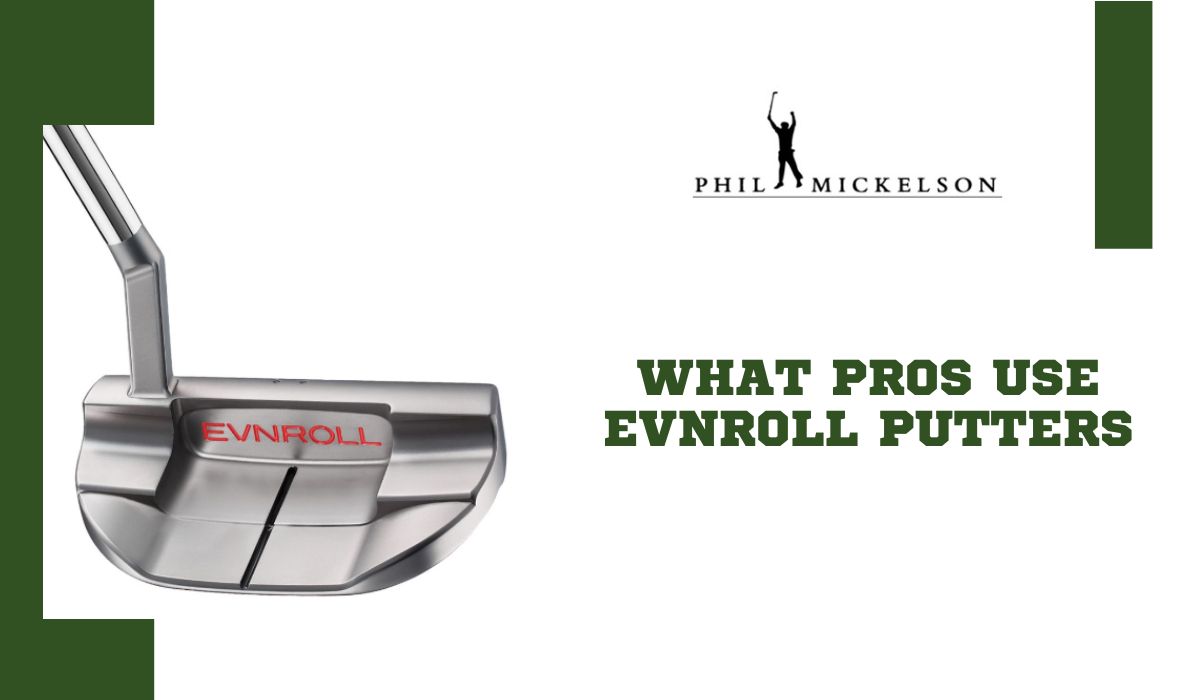
    What Pros Use Evnroll Putters

    Evnroll putters have become popular among professional golfers like Tommy Fleetwood, Zac Blair, and Ian Poulter. The fact that these pros choose Evnroll highlights the effectiveness and appeal of these putters, demonstrating the brand’s recognition and acceptance in professional golf.


    Selecting the right putter has become increasingly complex in today’s golf world, given the vast array of options available. Among the many choices, Evnroll putters stand out as a compelling option. Considering that nearly 40% of a golfer’s shots occur on the putting green, finding the right putter cannot be overstated. This is evident on the PGA Tour, where the precision and performance of Evnroll putters have gained recognition, making them a focal point for those seeking to improve their short game.


    If you want an Evnroll putter but are curious to know if any pro golfers are using it, you’ll get the answer and more in this article.

    Evnroll Putters Construction and Technology

    The precision and advanced technology of Evnroll putters have greatly impacted my approach to improving my putting performance. One standout feature is the SweetFace, which has variable-width channel technology. It significantly reduces the dispersion of mis-hit putts and ensures consistent distance control. This intricate design guides the golf ball toward its target on off-center hits and enhances energy transfer, improving my overall putting experience.


    The strategically designed channels in Evnroll putters, wider in the center and gradually narrowing towards the heel and toe in a V-shape, have personalized my putting journey. This intentional calibration redirects my putts off the sweet spot, ensuring smooth travel along the target line. The increasing spacing between channels away from the center provides a larger surface area for higher energy transfer, showcasing Evnroll’s dedication to consistency. This feature resonates deeply with my quest for precision in putting.


    Evnroll’s commitment to personalization continues with various hosel options in the V-Series model. There are six putter heads with four interchangeable hosels, including long slant, long plumber, short plumber, and short slant. This allows me to tailor my putter to correct various putting strokes according to my preferences.


    The Midlock putting grip, a thoughtful addition, caters specifically to my choice of arm-locking the putter. It reduces shaft lean, encourages a one-piece takeaway with the shoulders, and minimizes wrist movement, providing me with a personalized touch for optimal control and stability.


    The Gravity Grip, a breakthrough in putter grip technology, has further enhanced my connection with the putter. It is crafted from super lightweight EVA foam and features a 70-gram steel shaft running 1/2 inch below the grip. This design allows my hands to feel the precise angle of the putter face, connecting them with the putter head for a square impact before and after contact. This underscores Evnroll’s commitment to elevating my overall experience through innovative features tailored to my preferences.

    Pro Golfers Who Are Using the Evnroll Putters

    Evnroll putters offer golfers a reliable tool to enhance their short game, boost confidence, and potentially improve their scores. Despite being more expensive, the advanced technology and endorsements justify the investment for those seeking consistent and precise putting on the greens. Here are some notable pros who use the Evnroll putters:


    • Brandt Snedeker: A seasoned veteran on the PGA Tour, Brandt Snedeker has made a name for himself with his precision putting. Known for his accuracy and consistency, Snedeker switched to an Evnroll putter and experienced positive results. These putters are designed with innovative technology to enhance roll consistency and minimize mishits, making them popular among pros like Snedeker.


    • Lydia Ko: Among the top female golfers globally, Lydia Ko has also embraced the Evnroll putter. Her short-game prowess is well documented, and the Evnroll putter has become integral to her toolkit. The combination of feel, alignment aids, and performance benefits has contributed to her confidence in the greens.


    • Tommy Fleetwood: Tommy Fleetwood, a prominent figure on the European Tour, has added Evnroll putters to his collection. Fleetwood’s precision and accuracy on the greens have been crucial to his success in various tournaments. One of Fleetwood’s preferred choices is the Evnroll ER5 Hatchback putter, known for its high performance, adjustable weights, and distinctive alignment features. What sets Fleetwood apart is his adaptability, as he has even experimented with a unique putter purchased on eBay for £90, showing his willingness to explore different options.


    • Zac Blair: Zac Blair, a well-known player on the PGA Tour, openly supports Evnroll putters. Blair is recognized for his exceptional putting skills and has used the Evnroll ER1TS model during tournaments. Choosing this particular Evnroll putter likely contributes to Blair’s proficiency on the greens, ultimately aiding his success in professional golf.


    • Ian Poulter: Ian Poulter, famous for his charismatic and enigmatic presence on the golf course, has consistently used Evnroll putters since 2018. Poulter’s commitment to the armlock putting technique has made him a formidable force on the greens. Carrying the Evnroll Tour ER putter in his bag, Poulter benefits from the SIK Pro C-Series Armlock putter, allowing him to control his arc effectively. The patented Descending Loft Technology ensures a consistent launch, regardless of the strike location on the putter’s face.

    What Evnroll Putter Length Do Pros Use?

    According to the PGA of America, the average PGA Tour player, typically around 6 feet tall, tends to use a putter of 33.5 inches. This is notably shorter than the standard putter length of 35 inches.


    A golfer’s height often influences putter length. For instance, the standard recommendations suggest that a 33-inch putter is suitable for golfers between 5’2″ and 5’4″, while a 34-inch putter is recommended for those between 5’6″ and 5’8″. These guidelines help align the putter with the golfer’s physique, promoting a more natural and comfortable stance.

    Top 3 Evnroll Putter Models Used by Pro Golfers

    If you were considering pro golfing and that made you wonder if any pros use the Evntoll putter, here are some Evnroll putter models some notable pro golfers have used:


    1. Evnroll ER1

    The Evnroll ER1 putter has made a significant impact on my golf game. Its blend of control, roll, and forgiveness is outstanding. The putter’s innovative technology and features contribute to its exceptional performance.


    The milled face of the Evnroll ER1 is truly revolutionary. Its unique pattern, covering the entire surface, provides a consistent milling experience. When I run my finger across it, I feel the precision, transforming the entire face into a sweet spot. This ingenious design guarantees a smooth roll for the ball, even on off-center putts, making distance control extremely accurate.


    I have found the alignment aids on the top line of the putter to be incredibly helpful. There are two dots on each side of the center cavity sightline, which guide the positioning of the ball. This ensures that my putts consistently stay on the high side of the hole, ultimately improving my accuracy.


    The Evnroll ER1 offers three length options (33 inches, 34 inches, and 35 inches), each corresponding to a specific head weight. This customization ensures optimal balance and distance control, catering to individual preferences and adding to the putter’s versatility.


    Pros

    • Its unique face grooves, wider in the middle and narrower towards the edges, provide consistent distance control and a smoother roll.
    • It appeals to players who prefer a traditional blade with its visually appealing design, enhanced feel, and improved roll.
    • Players can choose from a range of high-quality stock grips for the ER1 to add a personal touch.


    Cons

    • Some golfers may feel that the customization options for the ER1 putter are more limited compared to other putters.
    • It is classified as a high-end putter with a higher price tag.


    1. Evnroll ER2

    The Evnroll ER2 putter has revolutionized my putting game on the greens. With its Face Groove Technology, the putter ensures a consistent roll no matter where I strike the ball on the face. This personalized design philosophy perfectly resonates with Evnroll’s commitment to delivering even and reliable ball rolls.


    As an avid user of the ER2 model, I’ve found that the blade putter aligns seamlessly with my slightly arcing and straighter strokes. What sets the ER2 apart is its ability to provide the most consistent roll among all putters, giving me a satisfying feel with every stroke. Incorporating alignment dots and a line on the flange makes lining up shots effortless, enhancing my accuracy on the green.


    With 15 degrees of toe hang, the ER2 accommodates my slight arcing stroke, allowing for a smooth and natural putting motion tailored to my game. The stainless steel head contributes to the putter’s aesthetics and generates a satisfying “click” on impact, further enhancing the feel of each putt.


    Pros

    • The ER2 putter enhances performance on the greens by providing a controlled and consistent roll across different putt lengths.
    • It sets up perfectly with its sophisticated finish and wide blade shape.
    • It minimizes the negative impact of mishits, offering forgiveness and instilling confidence in your putting stroke.


    Cons

    • Some players may need some time to adjust to its slower speed.
    • Compared to other putters, the customization options are limited.


    1. Evnroll ER8v Tour Mallet Putter

    The Evnroll ER8v Tour Mallet Putter, released in 2021, has quickly become my go-to putter on the green. It relies on the innovative Sweet Face Technology, elevating forgiveness, stability, and accuracy in my putting game and significantly contributing to improved performance on the green.


    The microgroove pattern on the face, coupled with the squared-backed mallet head, delivers a pleasing balance and a remarkable feel and sound upon impact that I find truly satisfying. This putter’s modern and stylish design goes beyond aesthetics; it boosts my confidence during shots thanks to its adjustable weighting features, gravity grip technology, and alignment aids, all working together to enhance my putting precision.


    However, although exceptionally smooth, the milled face occasionally reflects sunlight due to its steel composition, creating a minor inconvenience during play. Despite being a bit heavier than some alternatives, I’ve found that the Evnroll ER8v more than compensates for this with its advanced features, making it a valuable investment for someone like me who’s always looking to enhance consistency on the green.


    Pros

    • The ER8v incorporates Evnroll’s patented Sweet Face Technology, designed to deliver a consistent roll across the face. This leads to increased accuracy and fewer mishits.
    • This putter offers a high-end look with CNC-milled stainless steel, a sleek black flange line, and customizable neck options.
    • For an extra fee, you can opt for the gravity grip, which enhances face angle awareness and helps maintain a balanced tempo throughout your stroke.
    • It delivers a pleasant and muted “tock” sound upon impact, providing a consistent feel even on off-center strikes.


    Cons

    • Some players may not find the muted feel and lack of strong feedback appealing because it doesn’t provide sufficient sensory information about the quality of the strike.
    • The ER8v has a high price tag (over $400), which may discourage budget-conscious golfers.
    • Occasionally, the steel face of the putter can reflect sunlight, which could be distracting for certain players.

    Conclusion

    The fact that professional golfers like Tommy Fleetwood, Zac Blair, and Ian Poulter have adopted Evnroll putters shows the brand’s popularity and appeal among top players. By choosing Evnroll, these pros demonstrate the putters’ ability to enhance accuracy and consistency on the greens. The endorsement from skilled and diverse players within the golfing community reinforces Evnroll’s reputation as a reliable and high-performance choice for those looking to improve their short game.

  • Mizuno MP-60 Specs

    Mizuno MP-60 Specs

    The MP-60 is ideal for mid-level golfers seeking more shot power. Its sleek appearance and hybrid design offer an improved feel and more forgiveness. Despite a slightly larger head size than the MP-30, the cut-muscle design still enhances forgiveness. The MP-60’s 10% larger sweet spot (compared to the MP-32) comes with only a 4% increase in face size.

    Initially, I was skeptical, but adding the Mizuno MP-60 irons to my golf bag was a game-changer. The classic yet sleek appearance of these clubs always attracts compliments. However, it’s not just about looks; the MP-60s have significantly improved my game. Combining a cavity-backed design and a classic forged iron aesthetic provides forgiveness and style.

    Personally, playing with the MP-60 is a joy. The forgiving sweet spots and impressive performance, even on mishits, make them a great choice. These irons offer consistent distances and effortless interaction with the turf and have become my go-to clubs on the course. They are not just tools but trophies that I proudly showcase to my playing partners every round.

    In this article, I’ll cover everything about the Mizuno MP-60. So, stay tuned till the end to get all the information you might need to decide to buy.

    Mizuno MP-60 Specifications

    Before I start sharing my experience with the Mizuno MP-60, I’ll share an overview of its technical details so you can get an idea of what defines these precision-crafted clubs.

    Construction Grain Flow Forged 1025 Mild Carbon Steel
    Target Handicap Ten and under
    Ball Flight Mid to Low
    Offset Minimal
    Cut Muscle Cavity Innovative design provides ideal COG locations, a perfect trajectory, a solid feel, and forgiveness.
    Sweet Spot 10% larger than the MP-32, enhancing forgiveness
    Feet Size 4% larger than the MP-32
    Finish Durable double nickel chrome-plated finish
    Grooves Modified U-grooves for optimal spin rate

    Iron 2-iron 3-iron 4-iron 5-iron 6-iron 7-iron 8-iron 9-iron PW
    Loft 18o 21o 24o 27o 31o 35o 39o 43o 37o
    Lie 59.0o 59.5o 60.0o 60.5o 61.0o 61.5o 62.0o 62.5o 63.0o
    Length 39.25″” 38.75″” 38.25″” 37.75″” 37.25″” 36.75″” 36.25″” 35.75″” 35.25″”
    Offset 0.154 0.142 0.134 0.134 0.130 0.126 0.126 0.114 0.114
    Bounce 2 2 2 2 3 3 4 5 6

    Features and Performance

    My first experience with the Mizuno MP-60 Forged Irons made a lasting impression. These irons combine cutting-edge technology with Mizuno’s renowned craftsmanship. As someone who values performance and forgiveness in forged irons, the MP-60s struck a perfect balance.

    The integration of Mizuno’s Grain Flow Forging technology and Cut Muscle technology in the MP-60s is immediately noticeable in the feel of the clubs. Made from mild 1025 carbon steel, these irons provide that signature Mizuno feel—soft, solid, and consistent. They are 4% larger than the MP-32, resulting in a 10% larger sweet spot for improved forgiveness on off-centre shots. I quickly found myself appreciating the remarkable forgiveness these irons offer, making them hard to put down once you’ve had the chance to use them.

    The performance of the MP-60s also impressed me. The long irons have a slightly higher ball flight, providing an ideal trajectory for maximum distance, while the scoring irons produce a mid-trajectory, adding control to my approach shots. The cut muscle design plays a crucial role in positioning the center of gravity for a consistent ball flight—a feature that stood out during my rounds with these irons.

    Visually, the MP-60s have a traditional appearance that appeals to better golfers like myself. The nickel-chrome-plated finish looks beautiful and reflects sunlight on the golf course. The True Temper Dynamic Gold shafts are a preferred choice among professionals, and the Golf Pride Tour Velvet grip contributes to the overall quality and feel of the clubs.

    Forgiveness

    Considering Mizuno MP-60’s reputation as a club designed for better players, the forgiveness level isn’t’ wrong. As someone with a low to mid handicap, forgiveness is a crucial factor in my iron selection, and the MP-60s managed to strike a commendable balance between playability and performance.

    Mizuno’s Grain Flow Forging technology and Cut Muscle design played a pivotal role in enhancing forgiveness in the MP-60s. The mild 1025 carbon steel construction contributed to the soft, solid feel that Mizuno is renowned for, and it became evident that these irons were crafted with precision.

    Even when my shots weren’t perfectly centered, the forgiveness of these irons kicked in, helping to maintain distance and accuracy. This aspect was particularly beneficial during rounds, where I encountered various lies and situations on the course.

    The forgiveness of the MP-60s was not just a theoretical concept but something I could feel in every swing. Mishits, which might have been more punishing with other irons in the better-player category, were surprisingly manageable with the MP-60s. The ability to recover from minor mistakes without a significant drop in performance boosted my confidence and freed up my mind to work on enhancing other areas of my game.

    Price

    The Mizuno MP-60 irons offer excellent value for money, considering their performance and build quality. When exploring the market, I found a variety of Mizuno MP-60 shafts available, both new and used, on various online platforms.

    The prices ranged from $128 to $380 for original Mizuno shafts. eBay, in particular, proved to be a reliable source, providing options within this price range.

    It’s worth noting that additional costs, such as shipping, should be factored in when purchasing online.

    Who Should Use the Mizuno MP-60?

    The Mizuno MP-60 Forged Irons are perfect for golfers with intermediate to advanced skills. These irons are meticulously crafted using Mizuno’s Grain Flow Forging technology, featuring the forgiving Cut Muscle design.

    They are specifically designed for golfers with low to mid handicaps, offering an outstanding balance of control, feel, and a classic look. With these irons, golfers can confidently navigate any on-course situation.

    Comparison with Other Alternatives

    Having personally used the Mizuno MP-69, MP-57, and MP-60 irons, I can confirm that each has unique characteristics in terms of construction, player profile, and performance.

    Let’s start with the Mizuno MP-69. Its 4D muscle design is particularly noteworthy, as it provides a strategic weighting system that improves the launch of long irons and allows for versatility in short irons. As a confident ball-striker, I appreciate how the MP-69 focuses on feedback and control, which perfectly fits my playing style. The soft lines and absence of harsh edges also contribute to its visually appealing design. However, it’s worth mentioning that the super-high-glare chrome finish can be overwhelming in certain lighting conditions.

    The Mizuno MP-57’s full-cavity back design represents a noticeable departure from the traditional MP series. As someone with a single-figure handicap who values forgiveness without compromising quality, I welcomed the more prominent sweet spot provided by the cavity back design. The higher offset and thicker topline also contribute to its forgiving nature, making the MP-57 suitable for a broader range of skilled players.

    Regarding the Mizuno MP-60, this model is designed for intermediate to advanced golfers who prioritize control and distance. It offers a distinct feel compared to the MP-69 and MP-57. The slightly thinner topline and appealing aesthetics caught my attention, and the lower ball flight added an extra layer of control to my shots. While it may not be as forgiving as the MP-57, the MP-60 strikes a balance between feeling and forgiveness that aligns with my playing preferences.

    Here’s a side-by-side comparison of the Mizuno MP-60, MP-69, and MP-57 irons to make things easier for you:

    Features Mizuno MP-60 Mizuno MP-69 Mizuno MP-57
    Forgiveness Less forgiving Moderate More forgiving
    Launch Angle Lower Mid-to-High Higher
    Sole Width Standard Standard Wider
    Topline Thickness Slightly thinner Sleek Low single-figure players
    Target Player Intermediate-to-advanced golf players Advanced golfers Thicker
    Hand Orientation Right-handed Right-handed Right-handed
    Shaft Material Steel Steel Steel
    Flex Stiff Stiff Stiff
    Set Composition 3-PW (8 irons) 3-PW (8 irons) 3-PW (8 irons)
    Grip Mizuno Golf Pride M-21-58 Round Mizuno Golf Pride M-21-58 Round Mizuno Golf Pride M-21-58 Round

    Pros and cons

    Let’s’ explore the strengths and weaknesses of the Mizuno MP-60 irons I observed when using them.

    What I liked

    • Their design and build quality are top-notch.
    • I liked the feel and sound when striking the ball with these irons.
    • The MP-60s allow for shot shaping, making them versatile for different situations on the course.
    • I find the distance control and spin performance to be impressive.
    • Golfers experienced more consistent ball striking with these clubs.

    What I Didn’t Like

    • The MP-60 irons are not overly forgiving. They might not be the best fit if you’re not committed to consistently working on your swing.
    • Due to their narrow soles, some people might find the long irons (3-iron, etc.) challenging.

    Final Thoughts

    The Mizuno MP-60 Forged Irons offer a great combination of craftsmanship and technology. They feature grain flow forging, cut muscle design, and a classic appearance, making them ideal for intermediate to advanced golfers who want precision, forgiveness, and control. Although they are not the newest release from Mizuno, the MP-60s are a wise investment for those who value a well-crafted iron set that will last.

  • Ping Eye 2 vs. Eye 2+ Irons (the Ultimate Comparison)

    Ping Eye 2 vs. Eye 2+ Irons (the Ultimate Comparison)

    The main difference between the Ping Eye 2 and Eye 2+ irons is that the Eye2 iron was made from 1982 to 1984 and has a patent-pending design featuring “V” or the later “U” grooves. However, Eye2+ features a “scalloped” sole, a modified bounce and grind, a slightly thinner topline, a slight increase in clubhead size, a somewhat higher and more rounded toe, and slightly stronger lofts.

    The increased groove width makes the Eye 2+ stand out from the entire Ping Eye 2 series. The Ping Eye irons were generally first introduced in the 1980s, which inarguably set the quality and performance standard for today’s cavity back irons.

    If you’re torn between the Ping Eye 2 and the Eye 2+ and want to know what makes them different, this post is for you.

    In the rest of this article, you will learn the key specifications, features, pros, and cons of each irons to help you further decide which is best for your game.

    Ping Eye 2 vs Eye 2+ (Plus) Specs

    After the R&A and PGA banned the original Ping Eye2 grooves for being too close together, Ping introduced the Ping Eye2+ with approved changes.

    These new clubs have a + or dot and different groove spacing while keeping the square grooves.

    Unlike the older Ping Eye models, they don’t have V grooves. Here are the specifications that differentiate the two irons:

    Ping Eye 2 Ping Eye 2+
    Material Construction Stainless steel clubs Stainless steel clubs
    Shaft options Ping JZ series steel, Ping 350 series graphite ZZ Lite or KT-M shafts (depending on the lightness)
    Club length 38-inch-long driver
    Wedges option 1 to 9-iron wedges 2 to 9-iron wedges
    Club head Offset cavity back Oversized club heads
    Shaft flexibility High flexibility Stiff shaft flexibility (low flexibility)
    Hand Right-handed (mostly) Right-handed (mostly)
    V-shaped (1982), U-shaped (1984–1985), box groove (1986 onwards) 3-PW club type
    Material Tungsten (for increased perimeter weighting) Cast irons (not forged)

    Ping Eye 2: Iron Key Features

    • Ping JZ series steel, Ping 350 series graphite
    • V-shaped (1982), U-shaped (1984–1985), box groove (1986 onwards)
    • Offset and Cavity Back
    • Extreme-Perimeter Weighting
    • Enhanced by Perimeter Weighting and Offset Design
    • Emphasizes speed and forgiveness
    • Patented design with a top rail undercut
    • Tungsten (for increased perimeter weighting)

    Ping Eye 2 Plus Iron Key Features

    • Clubs are tailored to your height and wrist-to-toe length, marked by colored dots.
    • Pick between lightweight and medium-weight shafts for flexible play and more powerful shots.
    • Get clubs from 2 to 9-iron, plus an attack wedge for precise close-up shots.
    • Easy-to-use cast iron clubs, professional-grade stainless steel irons, and beginner-friendly graphite options.
    • Focus on top-notch grip quality for better control and feel.
    • Smooth soles reduce turf drag, boosting speed and distance for each shot.

    Ping Eye 2 vs. Eye 2+ (My Review)

    I really appreciate the perfect balance in the perimeter weighting of the Eye 2+ irons, making shot control a breeze, which is the opposite experience for the original Eye 2.

    However, when it comes to shaping shots in both directions, it can get tricky.

    The offset feature of the Eye 2+ is a plus for hitting the ball right to the left, but even as an older player, I’ve managed to handle shot shaping quite nicely.

    One standout feature for me is the consistent loft progression throughout the set. Unlike newer clubs that might mess with loft characteristics, each iron in the Eye 2+ set maintains its intended loft.

    This is crucial, especially in long irons, where hybrids often fall short.

    Sticking with the + PW, SW, and LW ensures a smooth progression, with every club looking and setting up the same way.

    I particularly love the versatility of the wedges for various shots without causing excessive damage to the ball cover.

    Now, there’s a downside worth mentioning regarding the original KT shafts. These are known for their thin walls and durability issues.

    If you’re in the market for used sets, I’d strongly advise steering clear of KT-equipped irons unless the shafts are original and have that distinctive “white” Ping epoxy.

    On the flip side, the JZ shaft in my BeCu Eye 2+ irons has proven to be more reliable. The ZZ65 shaft in stainless-eye 2+ irons is acknowledged as excellent, and I still regret letting go of a set with this configuration.

    If you’re ordering new Eye 2+ irons directly from Ping, the significant part is that you get to choose your preferred shaft, adding a personalized touch to your clubs.

    I’m a big fan of the Eye 2+ irons, and I recommend them over the Eye 2.

    Despite other good options from Ping, there hasn’t been much improvement in the golf industry since the success of the Eye 2 and Eye 2+ lines from Karsten.

    Pros and Cons of Ping Eye 2 Iron

    The Ping Eye 2 allows you to outfit it with graphite shafts as well as the original steel shafts. However, I also observed that these irons have ridiculously weak lofts, which give them incredibly high launch angles.

    Here are the pros and cons to keep in mind before using Ping Eye 2 irons.

    PROS CONS
    They have a soft feel. The Ping Eye 2’s are dated in terms of manufacturing and features.
    Very durable construction Narrow soles
    They produce effortless and very high apex height. Minimal distance
    The dot-lie system They are no longer in circulation and are slightly expensive.
    They are perimeter-weighted.
    Stainless steel construction

    Pros and Cons of Ping Eye 2 Plus

    Like the Eye 2’s, you can’t find the Eye 2 Plus easily, even on the Ping official website. They are old, old clubs. That’s a significant downside. But there are good sides to this club as well.

    PROS CONS
    Various lie angles and heights for different players It’s hard to find unused models.
    Excellent for beginners Not as attractive as the original Eye 2’s
    Easy-to-use irons Like the Eye 2’s, the Eye 2 Plus is no longer in circulation and is slightly expensive.
    The gliding sole design reduces drag.
    Stainless steel and graphite irons

    Who Should Use the Ping Eye 2+ Iron?

    Even though the Ping Eye 2+ is an older model compared to newer clubs from brands like Callaway and Titleist, it’s still a good choice for beginners.

    If you’re on a budget, you can buy used Ping clubs for a much lower price than brand-new ones.

    Brand-new sets can be expensive, reaching the upper three-digit price range.

    Ping doesn’t sell them directly anymore, but you can find them through online resellers.

    If you come across a well-maintained set of Ping Eye 2+ clubs, don’t miss the chance to buy them.

    Pro Tip:

    • Before making a decision, visit a golf equipment store and ask the experts there to help you choose the right color for your set.
    • Ping has used a colored dot system for labeling their clubs for over 40 years, and getting the right color ensures that you get the best set for you.

    Final Remark

    I’ve used a variety of Ping golf irons over the years, starting with the Eye 2’s and progressing through different models like the +’s, Zings, Zing 2’s, ISI BeCu, BeNi, I3 Blades, and I3+ Blades.

    Currently, I’ve been playing with the Eye 2+s for the past two seasons. And I can say it’s the best of the old Ping products I’ve tried.

    However, I haven’t tried the newer Ping iron models like the G2, G5, S58, S59, I5, or I10.

    But if you’re torn between the Eye 2 and Eye 2+’s, you should, by now, know what makes these two irons different.