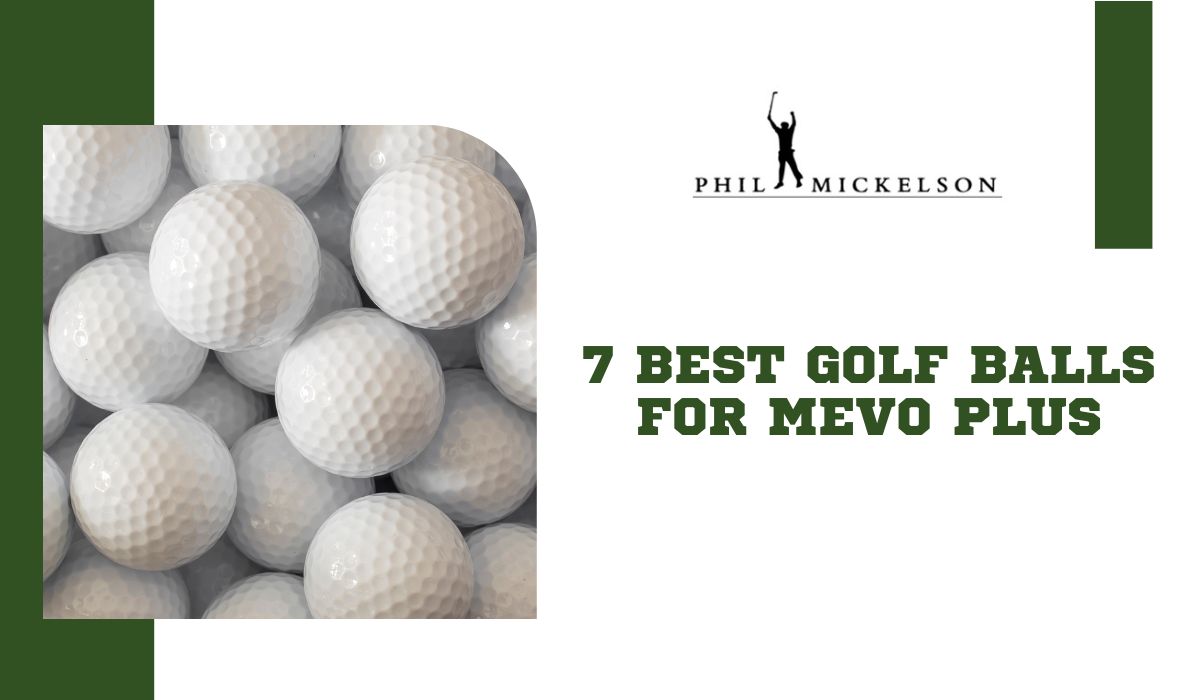
The best golf balls for the FlightScope Mevo Plus are the Titleist RCT golf balls. These golf balls are specifically designed with features that contribute to improved accuracy in ball data readings with Mevo Plus. Other great options for optimal performance with the Mevo Plus include Titleist TruFeel Golf Balls, Vice Tour, and Bridgestone e6 golf balls.
The Mevo Plus launch monitor is one of my favorites due to its affordability and precise capture of swing metrics. It was one of my first launch monitors, and it proved highly functional in offering valuable data for refining my swings. However, I needed to correct certain ball data metrics when using specific golf balls. In my search for new golf balls, I found information on Titleist’s website indicating that radar-based launch monitors like the Mevo Plus have been validated with RCT in indoor environments. Intrigued by this validation, I decided to give Titleist RCT balls a try.
Titleist balls, particularly the Titleist Pro V1× RCT 2023 Golf and the Titleist AVX RCT 2022 Golf Balls, have proven excellent companions for my Mevo Plus. These balls consistently deliver accurate data, impressive distance, and a satisfying feel. After experimenting with various options, I have compiled a list of the top 7 golf balls that performed exceptionally well with my Mevo Plus.
- Titleist Pro V1× RCT Golf Balls
- Titleist: AVX RCT Golf Balls
- Titleist Pro V1x Left Dash RCT Golf Balls
- Titleist Tour Speed Golf Balls
- Titleist TruFeel Golf Balls
- Vice Tour golf balls
- Bridgestone e9 golf balls
In the rest of this article, I’ll discuss the distinctive features that make these golf balls optimal for use with the Mevo Plus launch monitor. I’ll provide insights into their performance during testing, outline the advantages they offer, and touch upon any drawbacks associated with each ball. Let’s begin.
Specification comparison
These golf balls are crafted with specific features that optimize their compatibility with the Mevo Plus, ensuring precise results to improve your gameplay. Here’s a comparison of the key specifications of each ball, providing a quick overview to help you decide on your preferred choice.
| Golf Ball | Titleist Pro V1× RCT Golf Balls | Titleist: AVX RCT Golf Balls | Titleist Pro V1x Left Dash RCT Golf Balls | Titleist Tour Speed Golf Balls | Titleist TruFeel Golf Balls | Vice Tour golf balls | Bridgestone e6 golf balls |
| Construction | 4-piece | 3-piece | 4-piece | 3-piece | 2-piece | 3-piece | 2-piece |
| Cover | Urethane Elastomer Cover | Urethane Elastomer Cover | Urethane Elastomer Cover | Urethane cover | reformulated 2.0 TruFlex cover | Surlyn | Surlyn |
| Dimple Number | 348 | 348 | 328 | 346 | 376 | 392 | |
| Price | $69.99 | $69.99 | $69.99 | $39.99 | $24.99 | $25 | $24.99 |
Titleist Pro V1× RCT 2023 Golf Balls
These golf balls are designed for compatibility with radar-based launch monitors, such as the Mevo Plus. They provide outstanding distance and exceptional greenside spin, making them particularly suitable for golfers with lower swing speeds. However, it’s worth noting that they come with a premium price tag and may not be the most cost-effective option, especially for beginners on a budget.
Features
Designed for golfers prioritizing total performance with a preference for higher flight and increased spin, the high-flex casing layer adds speed and ensures low long-game spin on full shots.
The sphere-tiled 348-tetrahedral dimple design further contributes to the ball’s overall aerodynamics and performance. This contributes to longer distances, a more consistent flight, and excellent drop-and-stop greenside control.
The soft cast urethane cover plays a crucial role in the overall performance of the Pro V1x, providing outstanding greenside spin that aids golfers in achieving lower scores. The high-gradient dual core, featuring a larger inner core as a central engine, promotes high speed and reduces long-game spin.
Performance
The Pro V1X golf balls have impressed me with their outstanding performance in distance, green control, and durability, surpassing most other golf balls.
While they might be on the pricey side, these are the balls to grab if you’re looking to gain distance. The higher launch and increased spin contribute to a high-flying performance that I find remarkable. I’ve had no issues with them being picked up by my Mevo Plus, and the feel of the ball is awesome.
The Pro V1X provides a great flight and is responsive around the greens, adding to the overall positive experience.
For those concerned about visibility on the course, the yellow Pro V1X stands out as a preferred choice. I find the yellow color much easier to track than white golf balls.
While I appreciate the consistent performance, it’s worth noting that the Pro V1X may generate a bit too much spin for those using certain iron models, like the t100 irons.
I’ve noticed that they are slightly harder and offer a “clickier” feel compared to the Pro V1 balls. However, the Pro V1X provides a noticeable improvement in the launch and spin of the irons, especially evident in wedge shots around the greens.
I do acknowledge that the cost is a drawback. It is more expensive than most other alternatives, at $5.
Despite this, the Pro V1X provides reliable and impressive performance, particularly when paired with the Mevo Plus.
What I liked:
- Outstanding distance and exceptional greenside spin.
- Superior performance in terms of distance, green control, and durability.
- Easily picked up by Mevo Plus.
- The yellow color option enhances visibility on the course.
What I didn’t like:
- Slightly harder than other alternatives.
- A higher price tag may not be the most cost-effective option.
- It may generate a bit too much spin for certain iron models.
Titleist: AVX RCT Golf Balls
Like all Titleist RCT balls, this particular ball is designed to deliver exceptional performance when used with launch monitors such as the Mevo Plus. It offers a low spin and a softer feel. However, it’s important to note that these balls fall on the more expensive side and may not be the most durable option among Titleist balls.
Features
The AVX RCT features an internal radar reflective marker that enhances signal capture, providing more accurate spin data.
The cover of the AVX RCT showcases a new dimple pattern, with a reduction of four dimples to 348 in a tetrahedral dimple design. The primary goal is to stabilize the ball’s flight, improving accuracy and consistency.
Titleist has introduced a new core formulation in this ball, making the outer region of the core stiffer to generate high speed and reduce long game spin. The high-flex casing layer promotes high ball speed and minimizes spin on long shots.
Additionally, the softer cast urethane elastomer cover system increases greenside spin and control, contributing to an improved overall feel around the greens.
Performance
The AVX RCT was impressive in lowering spin, increasing distance, and minimizing those frustrating pop-ups. What truly stands out is its soft feel around the greens, providing exceptional control and allowing for quick stops.
With a mid-high flight and low spin, this ball enabled me to dictate its landing zone for precise second shots. While it’s a premium ball, the AVX feels remarkably close to a Pro V1, but with significantly less spin. The vibrant yellow color adds flair and makes it easier to spot on the course. The reduced spin has proven beneficial for my drives by introducing some roll-to-attach shots.
Despite its fantastic feel and performance, durability is a notable downside. After just one round, the balls take on a dingy beige color, seemingly due to the paint wearing away. The AVX doesn’t quite match the durability of premium balls like the Pro V1.
For those who favor a low-spin, soft-feeling ball, the AVX is a top-notch choice. Its flatter trajectory caters to those who hit the ball high and may not suit those seeking maximum spin. It’s longer than the Pro V1 while still excelling around the green.
If hitting longer and straighter off the tee is your priority and you’re willing to compromise some backspin on approach shots, the AVX is the perfect fit. Additionally, its length off the tee and softness around the greens make it an excellent choice for senior players.
What I liked:
- Low spin and softer feel
- Offers increased distance and minimizes pop-ups.
- Soft feel and exceptional control.
- Flatter trajectory for players who hit the ball high.
- Suitable for senior players, it prioritizes longer and straighter tee shots.
- Good Greenside Spin
What I didn’t like:
- They are the more expensive options in Titleist balls.
- Not the most durable
- improves backspin on approach shots for longer drives.
- Not suitable for higher swings
Titleist Pro V1x Left Dash RCT Golf Balls
These balls stand out for their remarkable distance and impressive greenside spin. Additionally, they offer exceptional durability and contribute to enhanced ball flight. However, it’s important to note that they tend to be harder than many alternative golf balls on the market.
Features
The Pro V1x Left Dash RCT golf ball is purposefully crafted for radar-based launch monitors, ensuring the most precise golf ball data for indoor golf experiences. Featuring a firm cast urethane elastomer cover system, this ball is designed for durability and a consistent feel on the course.
The ZG Process Core is a central component, likely aimed at optimizing speed and control. The fast, low-spin casing layer contributes to lower spin rates, which is especially beneficial for improved control in the long game. With a spherically-tiled 328 tetrahedral dimple design, the ball’s aerodynamics are finely tuned to enhance lift and reduce drag, resulting in a more reliable and stable flight.
Performance
I found these balls surprisingly easy to work around the greens. Admittedly, they may feel a bit firm with a slower swing, but the extra yardage they provide on a well-paced swing is truly remarkable.
I’ve seen a significant distance gain of about 5 to 10 yards off my driver, now allowing me to drive an impressive 255 yards. Although these balls are a bit harder than other Pro V1, this hardness translates to increased durability, making them well worth the price. While it takes a few holes to get the feel around the green due to their hardness, once you adjust, these balls perform exceptionally well in various weather conditions, be they calm or windy.
While they may not be the go-to for shorter hitters, switching to these balls could surprise you if you have an average to slightly higher swing speed (around 93 mph or higher).
Beyond the feel advantage, I’ve found that these balls tend to lower my handicap from tee to green. They offer a fantastic feel with irons, especially short irons, displaying a good ball flight and effective resistance against the wind.
What I liked:
- Remarkable distance and impressive greenside spin.
- Exceptional durability for extended use.
- It is easy to work around the greens despite the high compression.
- Great feel with irons, especially short irons.
What I didn’t like:
- Harder feel compared to many alternative golf balls.
- It’s not the best choice for shorter hitters.
- It’s not the most affordable ball.
Titleist Tour Speed Golf Balls
If you’re searching for a ball that offers a bit less spin while providing good distance, these balls could be the right choice. They excel at putting and delivering a satisfactory level of distance. However, it’s important to note that they have a harder feel than many other alternatives. Additionally, their durability is lacking.
Features
The core design of this ball is propelled by cutting-edge technology, aiming to achieve maximum speed on full-swing shots. The proprietary thermoplastic urethane cover is a standout feature, specifically engineered to generate greenside spin.
The 346 quadrilateral dipyramid dimple design is another noteworthy element. This design is meticulously crafted to provide a penetrating flight for long distances while maintaining a tight dispersion pattern. The dimple configuration aims to optimize aerodynamics, resulting in a trajectory that maximizes distance and precision.
Additionally, a fast ionomer casing layer is introduced to contribute to penetrating flight during long-game shots, enhancing distance while maintaining precise scoring control.
Performance
While the Titleist Tour Speed Golf Balls don’t reach the heights of premium balls like the Pro V1, they deliver ample distance and spin without the premium price tag. It’s the ball I reach for when the risk of losing a dozen doesn’t leave me worried.
The Tour Speed shines off the tee with a penetrating trajectory and consistent direction. I recently played in 55 MPH winds, which perfectly handled the conditions. The soft feel around the greens is a standout feature, making it versatile for various shots. It felt superior inputting, providing a promising feel.
I appreciate the distance the Tour Speed offers, and I like that it spins a bit less around the greens than the Pro V1. It gives my chips and pitches a nice run on the ground.
In cooler temperatures, I’ve noticed the Tour Speed provides slightly more distance compared to the Pro V1 without feeling like I’m hitting a rock. It has less spin with short irons and around the greens, but that’s an acceptable trade-off for me.
However, this might not be the best fit if you prefer a softer ball. It’s worth noting that for a “cheaper” ball, the Tour Speed comes with a relatively high price tag. Spending more to get the Pro V1x or AVX might be worth considering.
The tour speed just doesn’t offer enough value for money, and there are less expensive balls that offer similar performance.
What I liked:
- Good combination of less spin and ample distance.
- Consistent and penetrating trajectory off the tee.
What I didn’t like:
- Harder feel compared to many alternatives.
- Not the most durable
- Less spin with short irons and around the greens.
- a considerably higher price compared to some other options in its category.
Titleist TruFeel Golf Balls
These balls provide a great combination of spin, distance, and a soft feel, making them a solid choice. Their affordability is a definite plus, appealing to budget-conscious players. However, it’s important to note that while they excel in spin, distance, and feel, there are compromises regarding overall control of the course.
Features
This ball features a reformulated 2.0 TruFlex cover, with thinner balls resulting in an improved feel and excellent control around the greens. This modification enhances the playing experience by providing a softer touch while maintaining precision in short-game situations.
The spherical 376 tetrahedral dimple design is a notable feature, contributing to a penetrating ball flight and increased distance.
The larger and faster TruTouch core is another key element, designed to generate longer distances while offering excellent control around the greens. This core formulation likely aims to balance power off the tee and responsiveness on approach shots.
Performance
I appreciate the alignment aid on these balls, especially for putting. Surprisingly, they perform better around the green than other non-tour balls I’ve tried.
They offer a soft feel, excellent control around the green, and remarkable durability even in tough situations like sand and trees.
They might not match the performance of pricier balls like the ProV1 or TP5, but considering their price range, they deliver good value.
The yellow ball is a nice plus for increased visibility on the course. These balls feel long off the driver and soft around the greens. I’ve even noticed a few extra yards compared to cheaper alternatives, and they provide a good spin around the greens. Even better, I played four rounds without losing a single ball.
I did, however, notice they play a bit squishy and shorter off the tee. I think these balls are excellent for their value, and I would recommend them if you are looking for more affordable balls.
What I liked:
- Excellent combination of spin, distance, and soft feel. Budget-friendly options
- Alignment aids in better putting.
What I didn’t like:
- There is less control over the course.
- Slightly squishy and shorter off the tee.
Vice Tour Golf Balls
These balls might not be the softest, but they compensate for this with remarkable durability, impressive distance, and an appealingly budget-friendly price point. This combination of durability, distance, and affordability positions these balls as a practical choice for players who prioritize performance and longevity without breaking the bank.
Features
The three-piece construction of these balls incorporates a Soft Energy Speed Core, contributing to a well-balanced flight and delivering good distance. The 392-dimple design enhances stability, particularly in windy conditions, while promoting higher flights.
The closed alignment line is a notable feature designed to aid in better aiming on the course. Additionally, the durability of the Surlyn cover is highlighted as impressive, ensuring the ball can withstand the rigors of play over time.
Performance
I gave the Vice Tour balls a shot, and they indeed live up to their reputation for low driver spin and high spin with irons and wedges. While chipping with them, it feels like the ball is being “cut” by the wedge, delivering a unique experience.
They perform well with every club, offering impressive distance on drives, good control with long and mid irons, and reliable chipping performance.
However, the drawback is the distinct feel of the ball; it’s akin to hitting on a hard shell, reminiscent of an eggshell without cracking. Surprisingly, though, it manages to hold the greens during chipping, and I couldn’t discern a significant difference in spin between the Tour and Pro versions.
The Vice Tour balls also exhibit signs of wear more quickly than others, necessitating more frequent changes. Additionally, the cover is notably soft and prone to scratches, affecting its overall durability. The feel off the face is firmer, which suits my preference for well-struck irons and wedges, but it might not be the choice for those seeking a softer feel akin to the Callaway Chrome Soft.
What I liked:
- Budget-friendly price point.
- Alignment aids in better aiming.
What I didn’t like:
- Not the softest feel.
- Not the most durable ball
- Limited spin on greens compared to softer alternatives.
Bridgestone e6 golf balls
These balls have a standout feature: they fly straighter than other options, providing excellent distance. However, they do fall short in terms of greenside spin. On the positive side, they are known for being affordable, making them a budget-friendly choice.
Features
The recently introduced 2-piece construction, featuring a low compression core, is crafted to achieve high ball speed while retaining a soft feel.
With an enlarged and softer core, the ball undergoes faster compression, resulting in increased distance off the clubface. This economical two-piece ball offers comprehensive performance across various aspects of the game.
Including an alignment arrow on the side is practical for aligning putts or tee shots. Despite its budget-friendly price, the ball imparts a sensation and performance akin to more expensive alternatives. It is also available in yellow, making it suitable for autumn and winter play or adding a vibrant touch to your game.
Performance
I’ve noticed a good distance off the tee with these balls, and what I appreciate most is that they don’t feel like I’m smacking a stone.
The e6, being a lower-spin, softer compression ball, has contributed to straighter shots down the fairway by reducing that left or right spin.
For the colder months, I’ve found the Bridgestone e6 to be my go-to. While it might not offer as much spin on the greens, I prefer this ball’s overall feel in winter conditions.
I’ve observed that they tend to go a bit straighter compared to other balls I’ve played. However, the yellow version scuffs quite easily, which can be a bit bothersome. I specifically wanted a soft ball that wouldn’t break the bank and came in color for easy identification during league play, and these e6 balls fit those criteria perfectly.
They’re easy to spot on the course and deliver solid distance, particularly on drives. Considering their affordable price, these balls have played well for me. They don’t feel rock-hard like other distance balls, offering a good balance of performance and value.
What I liked:
- Straight flight for excellent distance.
- Affordable, making them budget-friendly.
- High ball speed and a soft feel.
- Practical alignment aids in enhanced accuracy.
What I didn’t like:
- Limited greenside spin.
- It’s not the most durable; it scuffs easily.
Closing Remark
Each ball discussed in this article enhances the overall golfing experience when used with the Mevo Plus. The Titleist Pro V1× RCT Golf Balls stand out with impressive distance and greenside spin despite a higher price and a slightly firmer feel. Opting for the AVX RCT Golf Balls gives you a soft feel, low spin, and good distance, but it comes at a premium cost with potential durability compromises.
Bridgestone e6 golf balls deliver a straight flight and affordability but have limited greenside spin and durability concerns. Each option caters to specific preferences, allowing you to tailor your Mevo Plus experience based on your desired performance and budget considerations.