Category: Golf Equipment

  • Should I Use A Tee With An Iron In Golf? Yes Or No

    Should I Use A Tee With An Iron In Golf? Yes Or No

    Golf, a sport rich in tradition and technique, invites players of all levels to continually refine their skills and strategy.

    One nuanced aspect of the game, the use of a tee when hitting an iron, stands out as a point of contention and curiosity among enthusiasts.

    This decision, seemingly minor, holds considerable impact on a golfer’s performance, influencing both the ball’s flight and the player’s confidence on the course.

    As the golf community expands, with millions embracing the sport annually, understanding the implications of teeing up with an iron becomes essential.

    This exploration aims to shed light on the intricacies of this choice, guiding both new and seasoned players towards making informed decisions that enhance their game.

    The Delicate Balance: To Tee Or Not To Tee With An Iron

    The decision to use a tee with an iron in golf is akin to walking a tightrope, balancing between tradition and technique, between the purist’s perspective and the pragmatist’s approach.

    This balance is not about right or wrong but about understanding and applying the nuances of golf to enhance one’s play.

    In golf, every shot counts, and how one begins their play on each hole can set the tone for the entire game.

    Using a tee with an iron, particularly on par 3 holes or in specific course conditions, can significantly affect the outcome of a shot.

    However, this practice is mired in debate, with arguments for and against it rooted in the fundamentals of golf, player preference, and the endless quest for perfection on the green.

    Yes Or No: The Ongoing Debate

    Utilizing a tee with an iron encapsulates a fundamental golfing paradox.

    On the one side, proponents argue that teeing up—even minimally—can offer a cleaner launch, reduce the risk of turf interference, and provide a slight advantage in controlling the ball’s flight and landing.

    This approach is seen as leveraging every available rule and tool for optimal play, particularly beneficial for beginners or those struggling with consistency.

    Conversely, traditionalists might see the practice as unnecessary or even detrimental in the long run, advocating for mastering iron shots from the ground to better prepare for the variety of shots required across a round of golf.

    They argue that the skill in iron play comes from the ability to adapt to the lie as it is found on the course, suggesting that reliance on a tee could hinder the development of a more versatile and resilient game.

    In navigating this debate, one may turn to the wheel of decision— yes or no wheel —where the answer may not be as binary as it seems.

    Instead, the decision to use a tee with an iron might best be approached as a strategic choice, influenced by factors such as course conditions, the player’s skill level, and specific challenges of each hole.

    The Case For Teeing Up: Strategic Advantages

    Advocates for using a tee with an iron highlight several strategic advantages that can refine a golfer’s game.

    Firstly, teeing up, even slightly, can offer a consistent starting point, reducing variables such as turf condition and moisture that might affect the shot.

    This consistency is crucial for beginners and seasoned players alike, aiming for precision and control.

    The slight elevation of the ball can facilitate a cleaner contact, potentially improving the ball’s trajectory and spin.

    This method might not dramatically alter the game for every player, but it provides an opportunity to maximize the shot’s potential, especially on challenging courses where every advantage counts.

    The Purist’s Perspective: Skills Over Shortcuts

    On the other side of the debate, purists argue for the development of a golfer’s skill set without reliance on tees for iron shots.

    They posit that learning to play the ball as it lies teaches essential skills and adaptability, preparing players for the diverse challenges golf courses present.

    This perspective is not just about tradition but about honing one’s game to perform under any condition.

    The argument extends to the belief that overcoming the unpredictability of the lie is part of the sport’s essence, cultivating a golfer’s ability to assess, adapt, and execute shots with precision, regardless of the starting point.

    Tee Time: A Guide To Women’s Golf Leagues

    Women’s golf leagues offer a fantastic way for female golfers of all skill levels to connect, learn, and enjoy the game.

    These leagues are designed to cater to a diverse range of preferences, from those seeking competitive play to those looking for a more social and relaxed golfing experience.

    Here’s a closer look at what these leagues offer, focusing on their structure, benefits, and the communities they foster.

    LPGA Amateur Golf Association: Empowering Women Golfers

    The LPGA Amateur Golf Association stands out as a vibrant community that connects women golfers across the globe.

    With over 15,500 members spread over 130 chapters worldwide, this association is a testament to the growing enthusiasm for women’s golf. It offers a platform for women of all abilities to learn, play, and enjoy golf through various organized events, both local and national.

    The essence of the LPGA Amateurs is its inclusivity, providing an environment where beginners and seasoned players alike can find a welcoming community and a home in golf.

    Spark Golf: Making Golf Accessible And Fun

    Spark Golf takes a unique approach by organizing 9-hole social golf leagues at over 2,000 courses throughout the U.S. and Canada.

    Its mission is to make golf casual, fun, and slightly competitive. The leagues are designed to be welcoming to players of all skill levels, emphasizing a friendly competition atmosphere.

    What sets Spark Golf apart is its flexibility; there are no upfront costs, and players can join leagues for free, opting to pay for league rounds weekly or save by prepaying for credit at a discount.

    This model offers a convenient way to play golf in a social setting, connecting local community members and fostering new friendships on the course.

    Indian Peaks Ladies’ League: A Community Of Passionate Golfers

    At Indian Peaks Golf Course, the Ladies’ League exemplifies a successful model for attracting and retaining women golfers.

    Founded in 2003, the league has grown to be one of the most popular in Colorado, boasting over 200 members.

    It caters to golfers of all abilities, offering a fun, friendly, and professional-run environment.

    Members have the flexibility to play 18 or 9 holes each week, with the option to form their own groups or be paired for a fun foursome.

    The league is known for its supportive atmosphere, where competition is balanced with camaraderie.

    Special discounts on golf shop merchandise and social events after rounds add to the appeal, making it a sought-after league for women in the area.

    Key Takeaway

    In the nuanced world of golf, the decision to use a tee with an iron is more about strategic choice than a simple yes or no answer.

    It encompasses a blend of tradition, technique, and personal preference, aiming to enhance play based on the golfer’s skill level and course conditions.

    On one side, teeing up offers a cleaner launch and reduced turf interference, beneficial especially to those seeking consistency and control.

    Conversely, mastering iron shots from the ground fosters adaptability and resilience, essential for navigating the unpredictability of golf courses.

    Similarly, women’s golf leagues like the LPGA Amateurs, Spark Golf, and the Indian Peaks Ladies’ League underscore the sport’s inclusivity and community spirit, offering diverse experiences from competitive play to social gatherings.

    These leagues not only promote the game among female golfers but also forge connections and friendships, making golf a more accessible and enjoyable sport for women worldwide.

    Whether teeing up with an iron or participating in a women’s league, golf remains a sport rich in opportunities for personal growth, skill enhancement, and community building.

  • Bushnell Wingman Remote Not Working (Causes & Solutions)

    Bushnell Wingman Remote Not Working (Causes & Solutions)

    The main reasons for a malfunctioning Bushnell Wingman speaker remote are dead batteries, paring issues, app connectivity, or damage to the remote. Possible solutions include replacing batteries, clearing obstructions, ensuring a clear line of sight, or using a replacement remote.

    The Bushnell Wingman is a small speaker made for golfers who love music. It connects to your phone through Bluetooth and works with the Bushnell Golf app. This app helps you set up your golf course, keep track of your scores, and figure out distances to the next hole using GPS.

    While the speaker is easy to carry around, problems with the remote control have been a dominant frustration for many users.

    If your Wingman Remote isn’t working as it should, here are the possible causes and how you can troubleshoot them:

    5 Reasons Why Bushnell Wingman Remote Is Not Working (And Solutions)

    The small remote control of the Bushnell Wingman can be placed atop the speaker.

    You have to connect this remote to your phone using Bluetooth and the Bushnell Golf app, and the remote has just one button.

    If it’s not working, here are the common reasons and how you can fix it:

    1. Dead batteries

    Dead batteries are a common cause of remote control failure, and the remote of the Bushnell Wingman isn’t an exception.

    Over time, batteries lose their charge, rendering the remote control ineffective.

    This can happen gradually, resulting in a gradual decline in remote performance or, suddenly, a complete failure.

    Solution: Replace the battery of the Bushnell Wingman remote control.

    Step 1: Locate the grove on the remote control and pry into two halves apart.

    Step 2: Remove the old battery from the compartment.

    Step 3: Insert a new battery into the compartment. Please place it in the correct orientation.

    Step 4: Close the battery compartment securely by taking note of the groove at the sides and snapping it together.

    Here’s a video demonstrating these steps for better guidance:


    Step 5: Test the remote control by pressing the button to see if it now operates the speaker correctly. If not, proceed to the next possible cause.

    2. Obstruction Between the Remote and Speaker


    When objects or obstacles block the line of sight between the remote control and the speaker, the infrared (IR) signal emitted by the remote may be interrupted.

    This can prevent the remote control from communicating effectively with the speaker, leading to a lack of response.

    Solution: Remove any objects or obstacles blocking the direct line of sight between the remote control and the speaker.

    • There should be a clear path between the remote control and the IR sensor on the speaker, located on the front panel.
    • Reposition the speaker or remote control to improve the alignment.
    • Test the remote control again to see if the obstruction was the cause of the issue.


    If none of these solves the problem, the remote control is faulty. But before looking into that, check for a problem with the pairing.

    3. Pairing Problems

    Bluetooth pairing problems can arise for various reasons, such as incompatible devices, software glitches, or interference from other electronic devices. When you turn the speaker on, it reconnects to the last device it was paired with.

    So, if the remote is not working, it may be connected to a device you’re not currently using. Pressing both volume buttons together disconnects it.

    Solution: Reset the Wingman remote.

    • If you need to reset the Wingman, ensure it’s not connected to the charging cable.
    • Find a small pin, like a paperclip, and insert it gently into the reset button, a small hole to the right of the USB charging port.
    • Hold it for about 2 seconds until the LED light around the button turns off.

    4. Outdated Bushnell app for pairing

    Assuming you’re attempting to set up the Bushnell Wingman for the first time and you’ve successfully paired your phone with the Wingman speaker and remote, you may notice that as you exit your Bluetooth settings and return to the app, you won’t be able to proceed to the next step to finish the registration.

    Some people who have faced this problem try to delete and reinstall the app multiple times and turn Wingman on and off each time, but that doesn’t always work.

    You may still be able to play music through the Wingman, but the registration process on the app won’t be complete.

    Solution: Pair Bushnell Wingman Remote properly.

    Download the newer Bushnell Golf Mobile app. Many people facing this are those using the previous Legacy app.


    Here’s a video from Wingman on solving this issue using an iPhone or Android.

    5. Damaged Remote

    Physical damage to the remote control can occur due to accidental drops, impacts, or when you mishandle it.

    This damage may include cracked casings, broken buttons, or internal circuitry issues.

    Solution: 

    • Check the remote control for visible signs of physical damage, such as cracks, dents, or broken buttons.
    • Check if the single button on the remote is stuck or if debris accumulates underneath it.
    • You may need to clean the remote control if necessary.

    If the remote is damaged, you may have to order a replacement remote or resort to the button controls on the speaker in the meantime.

    Button Control on the Bushnell Wingman Speaker

    The central control for the Bushnell Wingman speaker is the detachable remote that connects to your phone via Bluetooth through the Bushnell Golf app.

    With just one button, you can get distance readings to the nearest hole on a golf course. You can hold the button for fun sound effects like applause or custom messages.

    However, when it stops working due to damage, you can use the easy-to-use controls on the speaker, but they are tricky to press.

    • When you turn it on, it reconnects to the last device it was paired with.
    • Pressing both volume buttons together disconnects it.
    • You can also hold them down to restart or skip tracks, but be careful because this might make you skip tracks accidentally while adjusting the volume.
    • The play button manages phone calls and EQ settings with single or double presses.

    Control and Lightning meaning on the Bushnell Wingman Speaker

    The speaker has a light ring that tells you different things.

    Ring color gestures  Meaning
    Orange Indoor mode
    Blinking orange slowly Outdoor mode
    Green Charging
    Blinking Orange Pairing mode or low battery
    A sound with three blinks When you turn up the volume all the way

    Meanwhile, the ring colour gesture doesn’t do anything when you turn the volume down.

    What battery does the Wingman Remote use?

    The Wingman remote comes with a CR-2032 battery that can be removed and swapped for a new one.

    Consider replacing it with a fresh, top-quality battery from brands like Panasonic, Duracell, or Energizer.


  • Mizuno MP-60 Specs

    Mizuno MP-60 Specs

    The MP-60 is ideal for mid-level golfers seeking more shot power. Its sleek appearance and hybrid design offer an improved feel and more forgiveness. Despite a slightly larger head size than the MP-30, the cut-muscle design still enhances forgiveness. The MP-60’s 10% larger sweet spot (compared to the MP-32) comes with only a 4% increase in face size.

    Initially, I was skeptical, but adding the Mizuno MP-60 irons to my golf bag was a game-changer. The classic yet sleek appearance of these clubs always attracts compliments. However, it’s not just about looks; the MP-60s have significantly improved my game. Combining a cavity-backed design and a classic forged iron aesthetic provides forgiveness and style.

    Personally, playing with the MP-60 is a joy. The forgiving sweet spots and impressive performance, even on mishits, make them a great choice. These irons offer consistent distances and effortless interaction with the turf and have become my go-to clubs on the course. They are not just tools but trophies that I proudly showcase to my playing partners every round.

    In this article, I’ll cover everything about the Mizuno MP-60. So, stay tuned till the end to get all the information you might need to decide to buy.

    Mizuno MP-60 Specifications

    Before I start sharing my experience with the Mizuno MP-60, I’ll share an overview of its technical details so you can get an idea of what defines these precision-crafted clubs.

    Construction Grain Flow Forged 1025 Mild Carbon Steel
    Target Handicap Ten and under
    Ball Flight Mid to Low
    Offset Minimal
    Cut Muscle Cavity Innovative design provides ideal COG locations, a perfect trajectory, a solid feel, and forgiveness.
    Sweet Spot 10% larger than the MP-32, enhancing forgiveness
    Feet Size 4% larger than the MP-32
    Finish Durable double nickel chrome-plated finish
    Grooves Modified U-grooves for optimal spin rate

    Iron 2-iron 3-iron 4-iron 5-iron 6-iron 7-iron 8-iron 9-iron PW
    Loft 18o 21o 24o 27o 31o 35o 39o 43o 37o
    Lie 59.0o 59.5o 60.0o 60.5o 61.0o 61.5o 62.0o 62.5o 63.0o
    Length 39.25″” 38.75″” 38.25″” 37.75″” 37.25″” 36.75″” 36.25″” 35.75″” 35.25″”
    Offset 0.154 0.142 0.134 0.134 0.130 0.126 0.126 0.114 0.114
    Bounce 2 2 2 2 3 3 4 5 6

    Features and Performance

    My first experience with the Mizuno MP-60 Forged Irons made a lasting impression. These irons combine cutting-edge technology with Mizuno’s renowned craftsmanship. As someone who values performance and forgiveness in forged irons, the MP-60s struck a perfect balance.

    The integration of Mizuno’s Grain Flow Forging technology and Cut Muscle technology in the MP-60s is immediately noticeable in the feel of the clubs. Made from mild 1025 carbon steel, these irons provide that signature Mizuno feel—soft, solid, and consistent. They are 4% larger than the MP-32, resulting in a 10% larger sweet spot for improved forgiveness on off-centre shots. I quickly found myself appreciating the remarkable forgiveness these irons offer, making them hard to put down once you’ve had the chance to use them.

    The performance of the MP-60s also impressed me. The long irons have a slightly higher ball flight, providing an ideal trajectory for maximum distance, while the scoring irons produce a mid-trajectory, adding control to my approach shots. The cut muscle design plays a crucial role in positioning the center of gravity for a consistent ball flight—a feature that stood out during my rounds with these irons.

    Visually, the MP-60s have a traditional appearance that appeals to better golfers like myself. The nickel-chrome-plated finish looks beautiful and reflects sunlight on the golf course. The True Temper Dynamic Gold shafts are a preferred choice among professionals, and the Golf Pride Tour Velvet grip contributes to the overall quality and feel of the clubs.

    Forgiveness

    Considering Mizuno MP-60’s reputation as a club designed for better players, the forgiveness level isn’t’ wrong. As someone with a low to mid handicap, forgiveness is a crucial factor in my iron selection, and the MP-60s managed to strike a commendable balance between playability and performance.

    Mizuno’s Grain Flow Forging technology and Cut Muscle design played a pivotal role in enhancing forgiveness in the MP-60s. The mild 1025 carbon steel construction contributed to the soft, solid feel that Mizuno is renowned for, and it became evident that these irons were crafted with precision.

    Even when my shots weren’t perfectly centered, the forgiveness of these irons kicked in, helping to maintain distance and accuracy. This aspect was particularly beneficial during rounds, where I encountered various lies and situations on the course.

    The forgiveness of the MP-60s was not just a theoretical concept but something I could feel in every swing. Mishits, which might have been more punishing with other irons in the better-player category, were surprisingly manageable with the MP-60s. The ability to recover from minor mistakes without a significant drop in performance boosted my confidence and freed up my mind to work on enhancing other areas of my game.

    Price

    The Mizuno MP-60 irons offer excellent value for money, considering their performance and build quality. When exploring the market, I found a variety of Mizuno MP-60 shafts available, both new and used, on various online platforms.

    The prices ranged from $128 to $380 for original Mizuno shafts. eBay, in particular, proved to be a reliable source, providing options within this price range.

    It’s worth noting that additional costs, such as shipping, should be factored in when purchasing online.

    Who Should Use the Mizuno MP-60?

    The Mizuno MP-60 Forged Irons are perfect for golfers with intermediate to advanced skills. These irons are meticulously crafted using Mizuno’s Grain Flow Forging technology, featuring the forgiving Cut Muscle design.

    They are specifically designed for golfers with low to mid handicaps, offering an outstanding balance of control, feel, and a classic look. With these irons, golfers can confidently navigate any on-course situation.

    Comparison with Other Alternatives

    Having personally used the Mizuno MP-69, MP-57, and MP-60 irons, I can confirm that each has unique characteristics in terms of construction, player profile, and performance.

    Let’s start with the Mizuno MP-69. Its 4D muscle design is particularly noteworthy, as it provides a strategic weighting system that improves the launch of long irons and allows for versatility in short irons. As a confident ball-striker, I appreciate how the MP-69 focuses on feedback and control, which perfectly fits my playing style. The soft lines and absence of harsh edges also contribute to its visually appealing design. However, it’s worth mentioning that the super-high-glare chrome finish can be overwhelming in certain lighting conditions.

    The Mizuno MP-57’s full-cavity back design represents a noticeable departure from the traditional MP series. As someone with a single-figure handicap who values forgiveness without compromising quality, I welcomed the more prominent sweet spot provided by the cavity back design. The higher offset and thicker topline also contribute to its forgiving nature, making the MP-57 suitable for a broader range of skilled players.

    Regarding the Mizuno MP-60, this model is designed for intermediate to advanced golfers who prioritize control and distance. It offers a distinct feel compared to the MP-69 and MP-57. The slightly thinner topline and appealing aesthetics caught my attention, and the lower ball flight added an extra layer of control to my shots. While it may not be as forgiving as the MP-57, the MP-60 strikes a balance between feeling and forgiveness that aligns with my playing preferences.

    Here’s a side-by-side comparison of the Mizuno MP-60, MP-69, and MP-57 irons to make things easier for you:

    Features Mizuno MP-60 Mizuno MP-69 Mizuno MP-57
    Forgiveness Less forgiving Moderate More forgiving
    Launch Angle Lower Mid-to-High Higher
    Sole Width Standard Standard Wider
    Topline Thickness Slightly thinner Sleek Low single-figure players
    Target Player Intermediate-to-advanced golf players Advanced golfers Thicker
    Hand Orientation Right-handed Right-handed Right-handed
    Shaft Material Steel Steel Steel
    Flex Stiff Stiff Stiff
    Set Composition 3-PW (8 irons) 3-PW (8 irons) 3-PW (8 irons)
    Grip Mizuno Golf Pride M-21-58 Round Mizuno Golf Pride M-21-58 Round Mizuno Golf Pride M-21-58 Round

    Pros and cons

    Let’s’ explore the strengths and weaknesses of the Mizuno MP-60 irons I observed when using them.

    What I liked

    • Their design and build quality are top-notch.
    • I liked the feel and sound when striking the ball with these irons.
    • The MP-60s allow for shot shaping, making them versatile for different situations on the course.
    • I find the distance control and spin performance to be impressive.
    • Golfers experienced more consistent ball striking with these clubs.

    What I Didn’t Like

    • The MP-60 irons are not overly forgiving. They might not be the best fit if you’re not committed to consistently working on your swing.
    • Due to their narrow soles, some people might find the long irons (3-iron, etc.) challenging.

    Final Thoughts

    The Mizuno MP-60 Forged Irons offer a great combination of craftsmanship and technology. They feature grain flow forging, cut muscle design, and a classic appearance, making them ideal for intermediate to advanced golfers who want precision, forgiveness, and control. Although they are not the newest release from Mizuno, the MP-60s are a wise investment for those who value a well-crafted iron set that will last.

  • Foresight GC2 HMT vs. GCQuad Launch Monitor

    Foresight GC2 HMT vs. GCQuad Launch Monitor

    The key distinction between the Foresight GC2 HMT and GCQuad lies in their technological capabilities and convenience. The GC2 HMT provides dual-function data accuracy. Conversely, the GCQuad delivers extensive data at a much higher cost. So, if you are not a pro athlete needing in-depth insight into the ball and club data performance, there are better choices than the GCQuad.
     
    The Foresight GC2 Launch Monitor has been my go-to companion for a year. I was initially drawn to it because it was within my budget and could provide the data I needed to improve my swings. It was a great option then, and it has served me well. But I was ready to upgrade last month and tried the GCQuad. After several tests, it is designed for professional-grade performance and offers a more in-depth analysis of my shots. The simulation feature is also one of the best. However, it is larger in weight and size and requires more space to set up than my GC2 model, and my bank account felt it after I made the purchase.
     
    In the rest of this article, I’ll delve into the specifications of each launch monitor, detailing their performance during my testing and outlining the pros and cons. Let’s dig in.

    Specification comparison

    The GC2 Head Measurement Technology (HMT) stands out for its portability and lighter weight. The HMT feature provides club and ball data for every shot, all at a more budget-friendly price. The GCQuad, on the other hand, captures a broader range of data, offers durability, and, thanks to quadroscopic technology, delivers an exceptional simulation experience. However, it comes with a considerably higher price tag. Here’s a brief side-by-side look at their features.

    SpecificationForesight GC2 HMTForesight GCQuad
    Dimensions5.5 (w) x 10 (l) x 3 (h)7 (w) x 4 (d) x 12.5 (h)
    Weight3.8 lbs7.5 lbs
    TechnologyStereoscopic high-speed camera system.Quadrascopic high-speed camera system.
    PC connectivityBluetooth or USBUSB Type C, WiFi, or Ethernet
    Battery Life6–8 hours of NiMH rechargeable6–8 hours removable Lithium-Ion Rechargeable
    CompatibilityApple and AndroidApple and Android
    Price$5,581$14,000
    Ball data collectedball speed, carry distance, spin side spin, horizontal and vertical, and launch angleBall speed, launch angle, Side angle,spinn, side spin, carry distance
    Club data collectedsmash factor, angle of attack, club head speed, club path.
    Club head speed, efficiency, angle of attack, club path, face angle, loft and lie at impact, impact location, and closure rate
    ImageProductDetailPrice
    Foresight GC2 HMT

    Foresight GC2 HMT

    • It can be used indoors or outdoors
    • Smaller in Size
    • Very Accurate
    • Long battery life
    • Lower Price
    Buy Now For $5,581
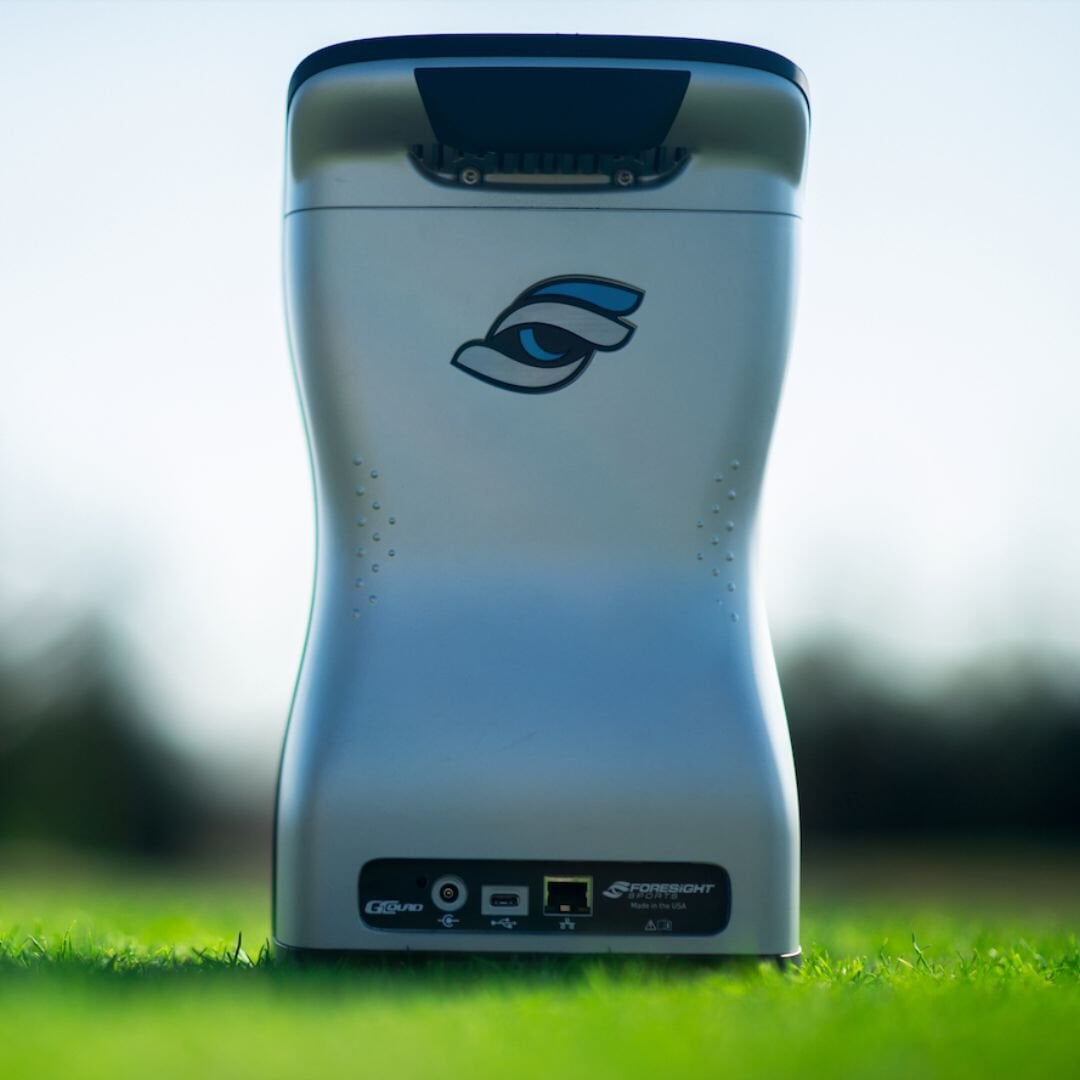
    Foresight GCQuad

    Foresight GCQuad

    • State-of-the-art optics, accuracy, and reliability
    • Ball and club data
    • Quadrascopic and Infrared Technology
    • Four cameras operating at 6000 fps
    • Indoor and Outdoor Use
    Buy Now For $14,000

    First impression:

    The GC3 had a lightweight and compact form, accompanied by the HMT, which was equally lightweight. Both the GC2 and its HMT had two cameras each and came with a couple of other accessories:

    • Rear and side black nylon valves
    • Side Barriers
    • A super flash (replaceable flash module)
    • Power adapter and cable
    • USB cable

    The GCQuad showcased a modern design and was way heavier than the GC2. It was also less portable. It came with a set of accompanying accessories:

    • LCD
    • USB-C Cable
    • Alignment Stick
    • Club marker dispenser

    Both devices felt durable. I was more impressed with the look of the GCQuad. However, spending $14,000 on a launch monitor makes no sense simply because it looked nice, so I was eager to see how it would perform.

    Setting up

    Setting up both monitors was relatively easy; I followed the manual’s instructions without encountering any issues. Connecting the HMT to the launch monitor was straightforward, and in no time, it was ready to track my shots. The simplicity of the setup process makes it user-friendly. Even if you are not a tech wizard, you should have no problem setting it up.

    This ease of setup is a shared feature with the GCQuad, which also proved straightforward using the provided manual.

    However, I did notice that the GCQuad required a more spacious setup, with its hitting zone being six times larger than the GC2. While this demanded more space, it also offered a broader area for shot-taking, creating a trade-off.

    After setup, turning on the GC2 took about 30 seconds and was good to go. The only additional step was applying the club marker sticker to my club face to track club data. Overall, both models provided a hassle-free setup experience.

    Foresight GC2

    $5,581

    • The GC2 HMT provides accurate club and ball metrics data.
    • I love how easy it is to move around.
    • It doesn’t break the bank, making it a fantastic choice for my wallet without compromising performance.
    • The GC2 has great self-levelling technology that allows for some of the quickest setup times of its class

    Build and technology

    The GC2 HMT boasts a compact yet robust build, combining simplicity and effectiveness. Its stereoscopic camera system directly measures each shot, providing ball data and monitoring the clubhead. It’s like having a golfing buddy who tells you where your shot is going and how your club head affects each shot.

    The build of the GCQuad is more of a pro-level piece of equipment. It is more modern and offers a durable feel, indicating that it will hold well in use. Both devices had a really solid build.

    Both models support the Foresight Sports Suit software, but there’s a little bit of variation with each. The GC2 provides access to FSX 2020, FSX Play, E6 Connect, and Creative Golf 3D, while the GCQuad offers these options along with additional software like FSX Pro, Foresight Fairground, and Foresight App. Moreover, the GCQuad allows integration with extra third-party software such as GSPro, Awesome Golf, and Swing Catalyst.

    The GCQuad also offers two software add-ons for professional golfers seeking more data points. The clubhead add-on provides insight into face angle, loft and lies at impact, impact location on the club face, and closure rate.

    Putting an analysis add-on, which provides access to:

    • Ball velocity
    • Smash factor
    • Club path
    • Angle of attack
    • vertical launch angle
    • Horizontal launch direction
    • Total spin
    • Spin-tilt axis
    • Backspin
    • Side spin
    • Club speed
    • Impact face angle
    • Impact lie
    • Impact location

    These additional software packages are not accessible by the GC2 HMT.

    However, I did not deem these packages necessary because you probably would never use most of the features offered by GCQuad and would be paying more. The GCQuad offers unnecessary software options that a casual golfer would not need.

    Foresight GCQuad

    $14,000

    • Unmatched ball and club performance data in a single compact unit
    • Compact, ergonomic, and easy to carry
    • Even greater indoor/outdoor readiness in a ruggedized, weather-resistant form factor
    • An integrated sold-state NIR LED lighting array eliminates the need for flash replacement.

    Performance

    Both launch monitors, the GC2 HMT and GCQuad offer high reliability and accuracy, offering valuable insights into shot analysis. However, the GCQuad exhibited more consistent results during my testing, delivering faster data but only by a few seconds.

    The difference in data delivery was hardly noticeable, so I didn’t mind as long as I got the required data.

    The dual functionality of the GC2 has provided me with valuable insights into my shots that I didn’t have before, which has helped improve my swing technique.

    If you are new to launching monitors and seeking to dissect swings and refine shots, the GC2 HMT is an excellent choice. It’s reliable, user-friendly, and budget-friendly—a solid pick for beginners and casual golfers.

    On the other hand, the GCQuad is what I like to think of as the Ferrari of Foresight launch monitors. This high-performance feature captures every detail of a shot with remarkable speed, offering more comprehensive data. Some of this data you can do without and probably would never actually use and still have enhanced performance overall.

    I feel like the GCQuad is more expensive but has the same features as the GC2, and if you are a casual golfer seeking a launch monitor for your every day, I would not recommend getting the GCQuad. It’s not worth it unless you are a professional athlete or casual golfer.

    The only major difference is that while the GC2 requires an HMT to track club data, the GCQuad does not.

    Pricing

    The GC2 is a sensible option if you want accurate data without paying a hefty sum.

    The GC2 is priced at a base of $5,581 and available in the indoor golf shop, including the accompanying HMT, at around $6,000, making it a cost-effective option for golfers.

    In contrast, the GCQuad comes with a premium price tag. The base price is $14,000, providing an LCD, FSX 2020, and FSX Play. Additional add-ons like club and putting analysis are available at $4,000 and $2,500, respectively. While integrating third-party software is possible, it comes at an additional cost.

    The GCQuad is an overpriced version of GC2.

    Pros and cons

    The GC2 HMT and GCQuad stand out in their unique ways. Understanding the strengths and potential drawbacks of each can be instrumental in making an informed decision.

    Foresight GC2

    What I likedWhat I Didn’t Like
    The GC2 HMT provides accurate club and ball metrics data.While it gives me the basics, it does offer as many data metrics as the GCQuad.  
    I love how easy it is to move around.Sometimes, lighting can affect indoor performance, requiring careful setup.
    It doesn’t break the bank, making it a fantastic choice for my wallet without compromising performance. 

    Foresight GCQuad

    What I likedWhat I Didn’t Like
    It provides highly detailed club and ball metrics.The pro-grade performance comes at a cost, making it a bit heavier on the wallet.
    I appreciate that it doesn’t mind where I set it up—indoors or outdoors; it just works.The wealth of features may be a steeper learning curve.
    The wide range of metrics offers a deep dive into performance analysis.It’s a bit larger and heavier, making it less portable.

    Final Thoughts

    When considering a launch monitor, it’s not just about performance; it’s about aligning performance with your budget. If you prioritize reliability, portability, and affordability, the GC2 HMT will serve you well.

    On the other hand, the GCQuad offers in-depth analysis and pro-grade precision, which you can do without unless you are a pro athlete.

  • Best Golf Balls for Simulator (Top 3 Recommendations)

    Best Golf Balls for Simulator (Top 3 Recommendations)

    When choosing the best golf balls for your simulator, choose new ones to preserve your impact screen, and select the color (white, orange, or yellow) suitable for your simulator setup. Prioritize highly durable options for extended use and look for balls with logos to enhance tracking by your launch monitor. Ensure the selected golf balls match your playing style.

    I wanted a Christmas present for my retired father, who loves golf. Since he got a simulator set up earlier this year, I knew getting him the best golf balls to enhance his simulation experience would be the perfect gift. So, I decided to try out some of the best golf balls to determine which was best for the simulator. I have ranked the top 3 that excelled during my test:

    ImageProductDetailPrice
    Srixon Soft Feel Golf Balls

    Srixon Soft Feel Golf Balls

    • Fastlayer Core
    • 338 Speed Dimple Pattern
    • Soft, Thin Cover
    Buy Now For $22.99
    Titleist Pro V1 Golf Balls

    Titleist Pro V1 Golf Balls