Author: Kevin Stone

  • TN 87 Mizuno Review 2023: The ‘Holy Grail’ Golf Iron

    TN 87 Mizuno Review 2023: The ‘Holy Grail’ Golf Iron

    The Mizuno TN 87 Iron today is a golf enthusiast’s dream come true. It is classy, sleek, has an aerodynamic design, and combines powerful distance with pinpoint accuracy. The TN87 Iron features an optimized weight distribution for improved control. While it’s now rare and quite pricey, there’s more to this club that you’d want to know. 

    The Mizuno TN 87 was highly demanded in the late 80s, and they resurfaced in 2014 as a desired club with an eye-catching price tag of $4,000 but are about 80% less now. I have met a few golfers who speak of the thin copper layer under the chrome and swear it gives them a certain feel. I was lucky to purchase a set of Mizuno TN 87 irons off eBay (three for the pitching wedge), which are stunning in looks and price.

    This post will dive deep into the key features, design, performance, playability, feel and feedback, technology, pros, and downsides of the Mizuno TN 87. 

    The Mizuno TN 87 Specifications

    NoLoftLieLength (inchesSwing weight
    321.057.038.5D2
    424.058.038.0
    527.059.037.5
    631.060.037.0
    735.060.536.5
    839.061.036.0
    943.061.535.5
    PW48.062.035.0D3
    AW52.062.035.0
    SW56.062.035.0D4

    TN 87 Mizuno Review

    TN 87 Mizuno Review

    • Precision Forged Construction
    • Muscle Back Design
    • Grain Flow Forged HD technology
    • Premium Materials
    • Thin Top Line
    • Versatile Sole Design
    • Customization Options
    • Tour-Proven Performance

    Key Features and Design

    The TN87 Muzino Club features a sleek and innovative design that caters to golfers seeking enhanced performance. The club head of the TN87 Muzino iron is crafted with precision, showcasing a compact shape that combines the benefits of forgiveness and workability. The clubhead size is standardized, with a width of approximately 80mm (3.15 inches) and a length of around 95mm (3.74 inches).

    The construction of the TN87 Muzino iron incorporates advanced materials to optimize performance. 

    The Looks

    • Copper underlay 
    • Muscleback blade style
    • Clean lines and sleek appearance
    • Chrome plating on top of the classic design
    • 6.5 shafts (about half inches shorter than the modern MP 20 Mizuno iron)
    • Come through with precision which was made by Brunswick Golf back then.
    • Forged construction
    • Cavity back design

    This material choice allows you to achieve enhanced feedback and control, resulting in a more consistent ball flight and increased shot-making capabilities.

    The TN87 Muzino iron implements a progressive weighting system. The long irons have a lower center of gravity (CG) and more weight towards the sole, promoting higher launch and forgiveness. The CG gradually rises as you progress to the shorter irons, facilitating better control and shot shaping.

    Feel and Feedback

    To assess the feedback provided by this iron, I tested the 7-iron with a 35-degree loft, which is 8 degrees weaker than one of the super-cranked irons of modern-day models. 

    One thing an iron like this will tell you immediately after you hit the ball in the face is the sensational feedback. But it resurfaces the argument of whether blades make one a better ball striker. 

    From the feel of the impacts of iron like this, it tells us that you only enjoy the TN 87 when you are a reasonably good ball striker. Otherwise, it’s going to beat you up a little bit. 

    Anyway, with the TN 87, the ball seems to have melted off the club face, giving me the butter-soft feeling and feedback.

    Performance and Playability

    My shot swung at 86 miles an hour, and with the TN 87 Mizuno, I achieved a ball speed of 111 with a carry distance of 155. 

    I expected more backspin than the 5000 spins launching at 21 degrees, but the strike location was precise. 

    What I deduced from multiple shots and the data brings me back to the popular idea of why many pro golfers like to use the bladed iron: the consistency derived from yardages. 

    Technology and Innovation

    In 2014, the manufacturers decided to re-release the  Mizuno TN87 iron again, but in minimal amounts. So people had to buy them for three gats and sand wedges. They were not open to custom fitting and came with 2000 dynamic gold shafts. 

    Before then, the TN87 was innovated in the U.S. into what we now have as the MP-29, and then in Europe; the TN87 became the TP-20000s

    Pros and Cons

    Pros 

    • Feel and feedback is second to none: It has the reputation of providing excellent feel and feedback, and I’m happy I got to experience this for real. It offers a “buttery” sensation on every shot. 
    • Quality materials: The construction materials stood the test of time and are still a contender to many modern clubs. 

    Cons

    • Outdated club technology: Compared to its modern variations and other modern golf clubs, the TN 87 would be considered technologically obsolete because it doesn’t have contemporary performance-enhancing features as stylish clubs, such as forgiveness, shaft, launch, and distance improvement. 
    • The grip can be better: Many people fortunate to still have this historic iron often consider refurbishing it to improve the grip.
    • Little forgiveness: it has less forgiveness for missed hits. Off-center strikes might result in less distance and accuracy than more forgiving modern clubs like the Callaway Paradym X Iron.
    • Small sweet spot: The TN 87 has a smaller sweet spot, requiring high precision to achieve optimal results. This could make it less forgiving if you have inconsistent ball striking.
    • Rare: Given its age, finding Mizuno TN 87 in good condition is often challenging. 
    • Expensive: When it was re-launched in 2014, the Mizuno TN87, people had to pay about $4000 to get these clubs. But you can be lucky to get a better deal on retail platforms like eBay.

    Comparison to Other Irons

    The Mizuno TN-87 irons are seen as one of the best iron sets that Mizuno has ever produced, but newer versions have been introduced to the market and are heavy on more unique features. 

    For example, the Mizuno MP-20, nicknamed the ultimate Mizuno muscle-back, is known for its improved feel and feedback, even compared to what we get from the TN 87 because the MP-20 is layered with soft copper plating beneath a protective nickel chrome.

    Models like Mizuno’s JPX921 irons are specifically better than the above regarding explosive ball speeds and precision. Still, if you prefer to play with bladed clubs as a low handicap golfer with love for the bladed design, then the MP-32s released in 2004 are a better call than the TN 87.

    The MP-32s have a smooth feel and give great feedback on off-center hits.

    Customer Feedback and Ratings 

    A lot of golfers who express an interest in acquiring the Mizuno TN87 golf club are more particular about two aspects of this holy grail:

    • The buttery feel and feedback on the impact
    • The incredibly outrageous price for the special reissue in 2014.
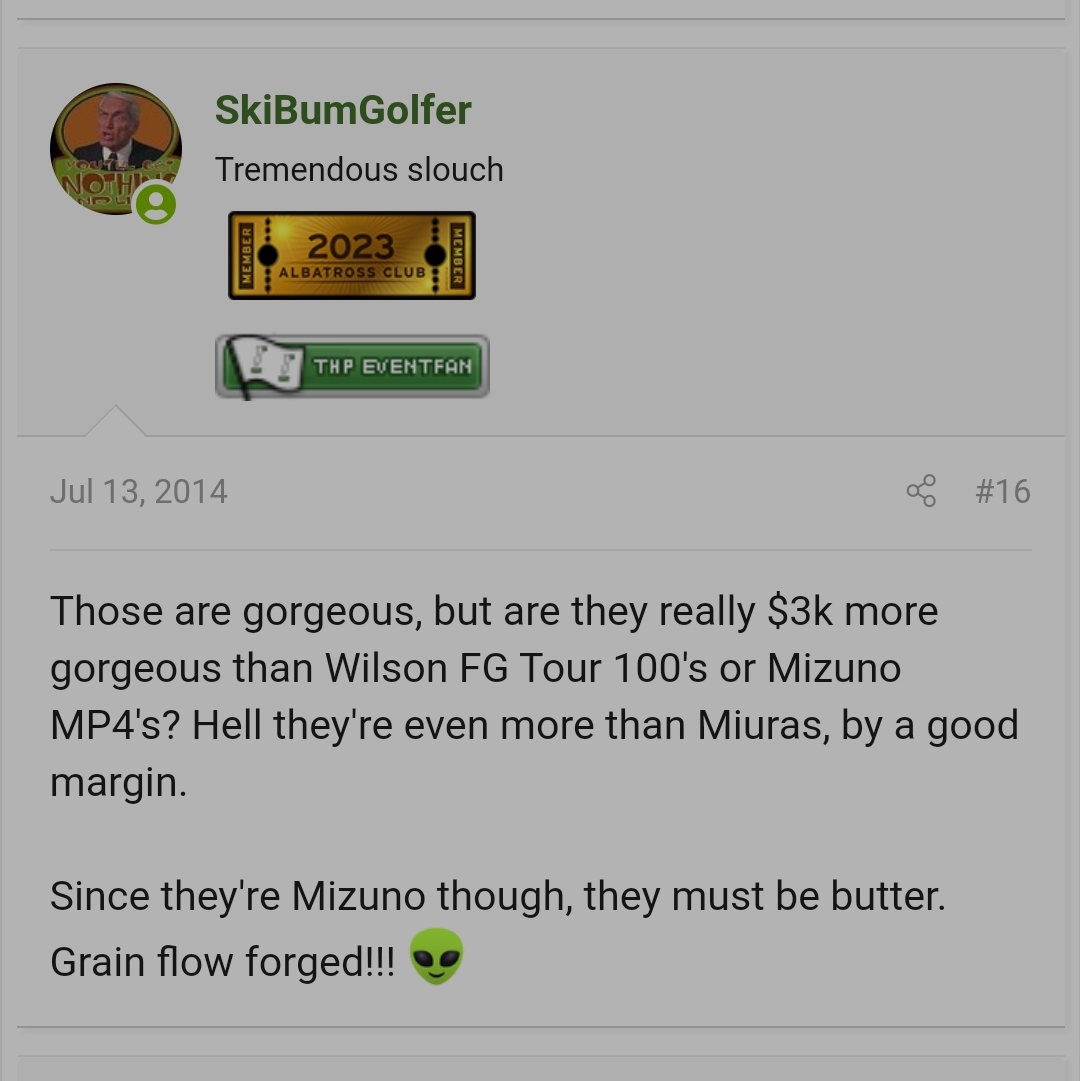
    Credit: Hackers Paradise
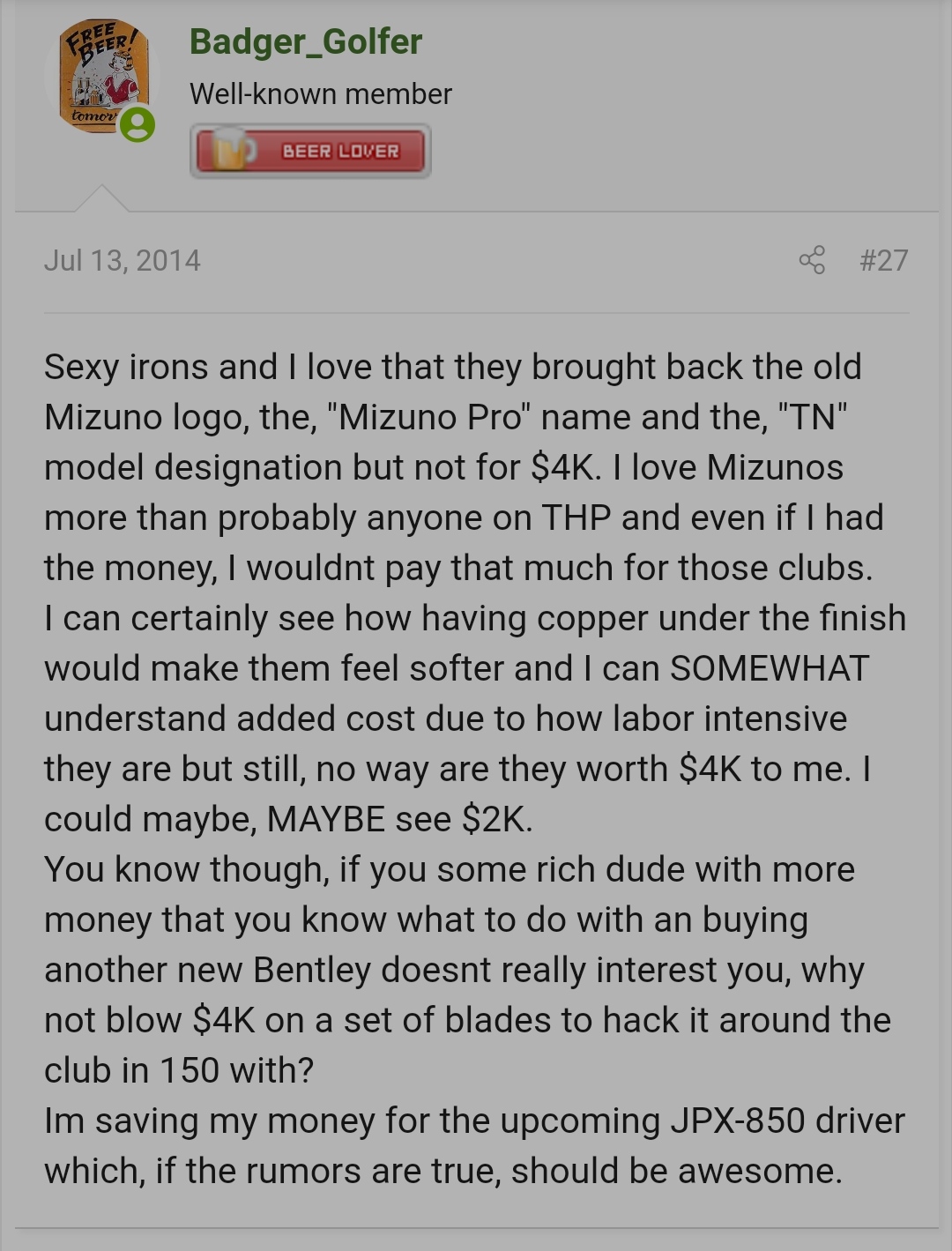
    Credit: Hackers Paradise

    My Honest Verdict On Mizuno TN 87

    I played 9 holes with the Mizuno TN87 Iron, and it is a golf enthusiast’s dream come true. 

    I held the Mizuno TN 87 in my hands when I felt the quality craftsmanship and attention to detail that Mizuno is renowned for. The club head was expertly crafted using Mizuno’s Grain Flow Forging process, resulting in a soft and responsive feel at impact. This forging technique enhanced the club’s ability to deliver consistent distance and control, allowing me to attack any shot confidently.

    The TN 87’s design incorporated a traditional muscle back blade style, which appealed to me because I value workability and shot-shaping control. It provided a compact profile allowing precise shot-making, making it an ideal choice for skilled players who prefer a classic look and feel.

    When it came to performance, the TN 87 truly shined. The club offered a remarkable combination of forgiveness and playability, providing me with the best of both worlds. The thin topline and minimal offset inspired confidence at the address, while the club’s compact shape allowed for excellent turf interaction and versatility in various lies.

    Regarding ball flight, the Mizuno TN 87 delivered a penetrating trajectory with controlled spin. This helped me achieve optimal distance while maintaining accuracy, especially on approach shots and when shaping shots around the course. The club’s ability to work the ball both ways was another versatility that I could use.

    The Mizuno TN 87 is a fantastic golf club that caters to my needs as a skilled player who values precision and workability. Its forged construction, classic design, and exceptional performance made it a standout choice. The TN 87 would elevate my game.

    Wrapping Up

    If you want this historic iron, you should focus on two things.

    First, your wallet. Then secondly, the TN 87 has a smaller sweet spot, so it requires high precision to achieve optimal results. So you won’t get the most out of this classic club if you don’t have consistent ball-striking. In other words, they better suit Low-Handicappers.

    What do you think? Let me know in the comments.

  • 3-wood vs. 3-hybrid golf club: The Ultimate Comparison

    3-wood vs. 3-hybrid golf club: The Ultimate Comparison

    The main difference between a 3-wood and a 3 hybrid is their design and functionality. A 3-wood offers greater distance and trajectory, making it suitable for long shots from the fairway or tee. On the other hand, a 3-hybrid provides versatility, easier control, and better performance from various angles. The ultimate decision rests on the balance of your playing style.

     A 3 hybrid combines the characteristics of an iron and a wood, offering the versatility of an iron with the forgiveness and ease of hitting of a wood. At the same time, a 3-wood is designed for maximum distance, thanks to its oversized clubhead and lower loft. But it takes more than knowing these differences to determine the best option. Many golfers find it hard to make a sound choice today, so you’re not alone.

    I’ve owned the PXG Proto 3-wood (0341X Fairway) and hybrid (0317 X) for a while, but I usually only carry one of them for each play: if conditions are wet and the course is tight or rough-infested, I go with the hybrid; if they are dry and very windy, I take the 3-wood. I’ve been able to compare and contrast the nuances of these clubs and have done additional research on mastering their respective techniques

    I’ll explain my findings in this article, hoping you make an informed decision and elevate your game to new heights. 

    What Is The Difference Between a 3 Hybrid and a 3-Wood?

    3-wood-vs 3 hybrid

    A 3-wood hybrid and a 3-wood golf club serve different purposes in a golfer’s bag. 

    A 3-iron hybrid, also known as a rescue club, is designed to replace long irons and provide more forgiveness and ease of use. 

    It typically has a smaller clubhead size than a 3-wood, a rounded shape, and a deeper face. 

    The loft of a 3-hybrid is usually between 18 and 21 degrees, making it ideal for shots from the fairway or rough. 

    A hybrid’s shorter shaft and higher loft allow for better control and accuracy, especially in challenging situations.

    On the other hand, a 3-wood is a fairway wood primarily used for long shots from the fairway. It has a larger clubhead size and a shallower face than a 3-hybrid. 

    The loft of a 3-wood is typically between 15 and 18 degrees, which enables it to produce more distance off the tee or fairway. The longer shaft of a 3-wood generates incredible clubhead speed, resulting in higher ball speed and longer shots.

    Also Read: 3 Wood vs. 5 Wood

    Ease of Hitting: Wood vs. Hybrid: Is It Easier To Hit A Wood Or Hybrid?

    Many beginning golfers don’t realize early enough that the ease of hitting a golf club, whether a wood or a hybrid, depends on your skill level and swing mechanics.

    But, accurately, some general characteristics of woods and hybrids can be compared to understand their differences in ease of hitting.

    • Clubhead Size and Shape: Woods typically have larger clubheads compared to hybrids. The more oversized clubhead provides a more prominent sweet spot, making it slightly easier to make solid contact with the ball.
    • Loft and Launch: The Proto 3-wood has a more oversized clubhead, providing a more prominent sweet spot but less forgiveness on mishits. It has a lower loft, offering a lower ball flight and more significant distance potential. I found this a benefit because I only wanted distance and control off the tee or from the fairway. But if you have slower swing speeds or struggle with getting the ball airborne, the higher lofts of hybrids will benefit you more. 
    • Forgiveness and Playability: Hybrids are generally designed to be more forgiving. Combining a more prominent sweet spot and a lower center of gravity can help mitigate the adverse effects of off-center hits and provide more consistent results. A mishit with wood, especially with a smaller sweet spot, can result in more significant distance loss and a less desirable ball flight.

    Pros and Cons Of 3 wood or 3 Hybrid

    3-wood
    AdvantagesDisadvantages
    Potential for greater distance, especially off the tee. The preferred choice for experienced golfers with higher swing speeds. It can provide lower ball flight for better control in certain situations.The smaller sweet spot, less forgiving on mishits. Challenging to hit difficult lies. Requires a more consistent and precise swing to achieve optimal results.
    3 Hybrids
    AdvantagesDisadvantages
    They increased forgiveness and playability. More accessible to hit from various lies, including rough and tight fairway lies. It can help golfers get the ball airborne more easily, particularly with slower swing speeds.Generally shorter distances than woods—limited versatility for specific situations, such as hitting from the tee on longer par 4s or 5s.

    With all these in mind, I recommend that you attempt both types of clubs and consider factors such as distance requirements, swing characteristics, and playing conditions to determine which club is more accessible and more suitable for your game. But when you try to do that, you may realize that one is harder to hit than the other.

    Why Is A 3-wood So Hard To Hit?

    Hitting a 3-wood can be challenging due to its longer club length than an iron. It requires a different swing and timing, making it harder to control. The larger clubhead size also increases the margin for error, making it more challenging to make consistent contact with the ball. 

    Also, the lower loft of a 3-wood requires a more sweeping and shallow angle of attack. I still sometimes find this tricky to execute, so I imagine any player (beginner or intermediate) faces such a challenge. 

    So you’ll have to focus on a smooth and controlled swing tempo to maintain balance and timing. But to improve 3-wood shots, you have to practice sweeping the ball off the turf rather than trying to hit down on it like an iron. 

    “Most players have hit many more drivers in their practice sessions than 3-woods off the tee,” says Golf Top 100 coach Joe Plecker, “so making a tentative swing with a rarely used club is a recipe for disaster.”

    Teeing the ball up slightly higher can also help achieve better contact. Adjust your setup by positioning the ball slightly forward and widening your stance for stability. 

    Similarities and Differences in Hitting a 3-wood and a 3 Hybrid: Do you hit a 3-wood the same as a hybrid?

    There’s a widespread misconception that hitting a 3-wood and a hybrid are the same. If you have this idea, it’s forgivable because many golfers unconsciously believe it.  While both clubs are designed for longer shots, they have distinct characteristics that affect their usage and swing mechanics.

    The similarity between the 3-wood and the hybrid is that they are made for long shots, typically off the fairway or rough, to cover a considerable distance.

     Also, both clubs have relatively low lofts compared to irons, allowing for increased distance. 

    But when it comes to hitting them, there’s a vast difference in approach. 

    Aspect3-wood3 Hybrid
    Clubhead DesignMore oversized club head with a shallow face and a low center of gravitySmaller clubhead with a deeper face and a low center of gravity
    Ball Position Generally positioned slightly forward in the stance Positioned slightly back in the stance 
    Swing MechanicsA sweeping motion, similar to hitting a long iron               A more descending motion, similar to hitting a mid-iron 
    Shot Trajectory Typically produces a lower, penetrating ball flight Generally offers a higher, more forgiving ball flight
    Forgiveness Offers less forgiveness on mishitsProvides more forgiveness on mishits
    Distance ControlRequires consistent swing tempo and precise contact It offers better distance control due to the shorter shaft length
    Shot Shape Control Allows for shaping shots with proper technique and skillGenerally easier to shape shots due to a more forgiving design

    Why Is A Hybrid So Hard To Hit?

    Hybrid golf clubs’ design combines features of both irons and woods, which can take some adjustment in terms of swing mechanics. So this can pose a hitting challenge.

    But the most significant factor has to be their larger clubhead size and higher loft, which can affect how the ball interacts with the clubface, making it more challenging to achieve consistent contact. 

    Also, you could struggle with the club’s versatility and finding the proper distance and trajectory for each shot.

    Whatever the actual issue is, start by practicing proper swing mechanics with hybrids, focusing on a smooth and shallow approach. 

    Players who have gotten better at hitting hybrids have also experimented with different ball positions and stances to find the optimal contact point. 

    “Your hybrid club should be located in about the same place that you’d normally hit your iron from,” says Golf Expert Adam Ditcher. “So, for example, a 3-hybrid would be played closer to the front foot than a 5-hybrid just because of the loft of the club and the distance the club is meant to travel.”

    What Is The Correct Way To Hit A 3-Wood and 3-Hybrid?

    While the positioning of the 3-wood and hybrid is different for the perfect hit, there’s a generally correct way to handle this kind of club. You have to focus on your grip, stance, and setup.

    Grip

    • Grip the club with a relaxed but firm hold, allowing for control and flexibility.
    • Position your hands slightly lower on the grip for increased loft and launch.

    Stance and Setup

    • Position the ball slightly forward in your stance, closer to your front foot.
    • Adopt a slightly wider stance for stability and balance.
    • Align your body parallel to the target line.

    Avoid gripping too tightly, which can restrict clubhead speed and control. Also, if you place the ball too far back in your stance, you may have low and inconsistent shots.

    But at the same time, don’t take a narrow stance that will lead to losing balance and stability.

    Also, when handling 3-woods, over-swinging or trying to hit the ball too hard is always a precursor to loss of control.

    Distance Comparison: 3-wood vs. 3-hybrid

    Generally, a 3-wood is designed for longer shots off the tee or fairway and features a more oversized clubhead and longer shaft. For example, the TaylorMade SIM2 Max Fairway Wood provides an impressive distance, averaging around 240–260 yards for many golfers, compared to Callaway Apex 21 3 hybrids, with an average length ranging between 210–230 yards.

    Remember that a 3-hybrid has a smaller clubhead and a shorter shaft. So it’s more particular about offering better control and versatility, so much so that it sacrifices some distance compared to a 3-wood.

    Final thoughts

    The comparison between a 3-wood and a 3-hybrid is essential for golfers seeking the optimal club for their game. 

    A 3-iron hybrid combines iron and wood characteristics, offering versatility and easier ball control. 

    However, a 3-wood provides more distance due to its oversized clubhead and lower loft. 

    Knowing the correct technique for each club and its strengths and weaknesses will help you make an informed decision to enhance your performance on the course.

    If I had to pick a side, I would lean toward the 3-hybrids. The 3-hybrid offers me more versatility and forgiveness compared to the 3-wood. 

    It is also easier to control the 3-hybrids and performs well from different lies, making it a reliable choice for various situations on the golf course.

    Even professional golfer Padraig Harrington favors the hybrids, as he says they give him “extra height and so can stop it on the green as opposed to a three iron.

    Usually, the best way to know which of the two options is best for you is to test both options with multiple shots. But now that you’ve seen this guide, I hope you have enough heads up.

    I’ll be in the comment section. Let me know what you think about these two options.

  • 3 Wood vs. 5 Wood: Which Is Better?

    3 Wood vs. 5 Wood: Which Is Better?

    The 3-wood and 5-wood have advantages depending on your preference and skill level. However, the 3-wood offers more distance and a lower trajectory, making it ideal for long fairway shots and off the tee. On the other hand, the 5 wood provides slightly more loft and an easier launch, making it better for approach shots and shots from the rough.

    The 3-wood and 5-wood belong to the same family of large, long-shaft golf clubs designed for generating distance early on in the hole. The debate on which options to go for between these two is never-ending. I made a new friend on the golf course recently who has been working on correcting swing faults this year. He struggled to hit his 3-wood consistently off the deck and wondered if a 5-wood would be easier to hit and get a similar distance or if he would still have the same issues.

    I offered my advice to him, but I went on to do more research and found out many golfers (beginners and intermediates alike) are in a similar situation: they carry a three wood but never really get on with it. Should they be changing it for a 5-wood? 

    I conducted an extensive comparison test using the Talylormade Sim2 Max 3 wood and Callaway Mavrik 5 wood Test. I will show you my findings in this article, with the conclusion to help you decide on which is best for you. 

    3 Wood Vs. 5 Wood: The Comparison At A Glance

    3-wood-vs-5-wood-1
    Factors3-Wood5-Wood
    Loft Lower loft (around 15-18 degrees)Slightly higher loft (around 20-22 degrees)
    DistanceTypically hits the ball farther      Slightly shorter distance
    ControlMore difficult to control   Easier to control
    Launch AngleLower launch angleSlightly higher launch angle
    Ball FlightLower ball flight   Slightly higher ball flight 
    VersatilityBetter for tee shots and longer fairway shotsEasier for fairway shots
    AccuracyRequires more precision for accuracyMore forgiving and easier to hit accurately
    Playability from RoughMore challenging from thicker roughBetter playability from rough
    Club Length Slightly longer club length (43 inches)Slightly shorter club length (41-42 inches)
    Shot Trajectory ControlAllows for better trajectory control It offers a more consistent trajectory
    Shot Shape Adjustment  Easier to shape shots with a controlLimited shot shape adjustment 

    Loft and Distance

    The 3-wood typically has a lower loft angle, usually around 15 degrees, while the 5-wood has a slightly higher loft angle, around 18 degrees. The difference in the loft can affect the trajectory and distance of your shots.

    Due to its lower loft and longer shaft length, the 3-wood would offer more distance, so it’s preferable for long fairway shots and the tee since this allows you to achieve greater distance than the 5-wood. 

    For instance, a well-struck shot with a 3-wood might cover around 230–250 yards, while a 5-wood might reach about 210–230 yards.

    If distance is a priority and you have the skill to control a lower trajectory, the 3-wood is a better option. On the other hand, if you seek more loft and an easier launch, the 5 wood can be a valuable club for approach shots and shots from the rough.

    Club Length and Shaft

    The length of the club plays a crucial role in swing mechanics. The 3-wood is typically shorter than the 5-wood. This is a sign of better control and accuracy because the shorter length of the three wood makes it easier to generate clubhead speed and achieve a more consistent swing tempo.

    But we have to shift our focus to flex and material when it comes to shaft suitability. 

    My TaylorMade SIM 3 wood with a shorter length—a Fujikura Pro 56 shaft—offered better accuracy and control. 

    But playing with the Callaway Mavrik 5 wood with a longer length and a Mitsubishi Tensei CK Blue shaft gave me more distance and stability for higher swing speeds

    So you’ll have to choose a club and shaft combination that suits your swing characteristics for optimal performance. If you have a slower swing speed, a shaft with a softer flex like the Fujikura Pro 56 or the Project X EvenFlow Blue might suit you, as it helps generate more clubhead speed. 

    On the other hand, if you have a faster swing speed, a stiffer shaft like the Mitsubishi Tensei CK Blue or the Aldila Rogue Silver may be preferable to control the ball’s flight and reduce unwanted side spin.

    Ball Flight and Trajectory

    A 3-wood has a lower loft and a longer shaft than a 5-wood, resulting in a lower ball flight and potentially more roll. 

    This is good news if you seek distance off the tee or a penetrating trajectory. On the other hand, a 5-wood typically has a higher loft, which gives us a  higher ball flight and potentially more carry, which is a green light for players looking to hit higher shots with softer landings, especially from fairway lies. 

    So if you anchor your decision based on ball flight and trajectory, the choice between two clubs depends on your preference and shot requirements.

    Versatility and Shot Shape

    The three wood can shape shots by adjusting the swing path and clubface angle. But the five wood excels when a higher trajectory is required to clear obstacles or hold greens. 

    The 5-wood is better for shaping shots with a slight draw or fade, although not as much as the 3-wood.

    Now, I’m slightly biased in favor of the 3-wood regarding versatility. The lower loft makes it incredibly suitable for hitting from various lies and challenging course conditions, such as thick rough or firm fairways. 

    In all fairness, the five wood’s higher loft can help with shots from tight lies or softer conditions, preventing the club from digging into the ground. Still, your skill level, personal preference, and specific course conditions will determine which is for the greater good. 

    Control and Accuracy

    Upon close inspection, I noticed that the 5-wood generally offers greater forgiveness due to the larger head size. This makes it more forgiving on off-center hits and helps maintain stability through impact. 

    If you’re trying to make a choice solely based on accuracy and consistency on approach shots, it depends on the specific club models. 

    Distance Gaps and Club Selection

    Distance gapping is the variance between how far you hit each club in your bag. On average, the 3-wood is designed to travel farther than the 5-wood. 

    A well-struck 3-wood can cover distances between 220 and 240 yards, while a 5-wood usually reaches 200 to 220 yards. This gap of around 20 yards guarantees yardage coverage in different situations.

    Still, the distance gaps between a 3-wood and a 5-wood typically vary depending on your swing and club specifications.

    The 3-wood and 5-wood bridge the gap between the driver and long irons or hybrids. Their loft and distance characteristics provide versatility for fairway shots, tee shots on shorter holes, and long approach shots.

    On multiple shots, I noted the high forgiveness and distance from the SIM2 Max 3 wood, while the Mavrik Max 5 wood did not give much space but was easy to use and launch.

    Player Skill Level

    It is common for beginner-level golfers to struggle with consistent driver hits, so they often get wide-shot dispersion due to imparting too much spin. Now a 3-wood is substantially smaller than a driver, ensuring increased control and much tighter hit distribution. With this in mind, a beginner golfer is better off with a 3-wood. 

    But if you’re starting with the game, I recommend you go for a 5-wood because, at this skill level, you want to get the ball airborne with substantial forward progress. 

    Trial and Personal Experience

    After testing the 3-wood and 5-wood, I analyzed the results on club speed, head speed, dynamic loft, dynamic lie, path, and attack.

    The club speed swung the firewood the fastest, which again is a bit odd, to be fair, but it was only one mile an hour. It did a bit of a drop off the five wood, and efficiency lowered as I gained more loft, which makes sense.

    I delivered a two-and-a-half-degree dynamic loft difference between the 3-wood and 5-wood, which statistically are three degrees. (Let me mention that this would even pop up massively compared to a 7-wood because a high launch will be created.

    For peak height, the 5-wood average was 130 feet in the air and a decent angle of 46 and a half.  The 3-wood was 125 feet in the air with a 45-degree descent, which was only 4 feet lower than the 5-wood and had a margin difference in the angle of descent. 

    For the angle attack, both clubs did pretty much the same. The path was all around three degrees, so there was little difference. 

    The whole point of my observation is that you shouldn’t buy a 3 or 5 because you think they’d be right for you.

    Also Read: 3 Wood vs. 3 Hybrid

    Final Verdict

    Now that we’ve looked into the comparison between the three and five woods, it becomes more realistic that your ultimate decision depends on what you want from a club. 

    A 3-wood is likely to favor you more if you’re looking for an alternative to hitting the driver off the tee. But if your needs are centered around an easy-to-launch and confidence-inspiring club for attacking long shots, the 5-wood is the right call.

    Players who are shorter hitters and struggle with long irons will be satisfied with a five-wood because it’s a fantastic alternative and easier to hit than a three-iron. 

    But above all, don’t forget to consider the distance.

    Adding five woods to my collection was a sure bet because I’m not a beginner, and I’m looking to plug the gap between the longest iron in my bag and three woods.

    I hope you found this helpful. 

    FAQs

    Does a 5-wood go as far as a 3-wood?

    No, a 5-wood typically does not go as far as a 3-wood. The lower the number, the lower the loft and longer the shaft, resulting in more significant distance potential. A 3-wood has a lower loft and a longer shaft than a 5-wood, allowing for more distance off the tee or fairway.

    Is it better to have a 3 or a 5?

    The three wood offers more distance and a lower trajectory, making it ideal for long shots from the fairway or off the tee. The five wood, however, provides more loft and control, making it suitable for approach shots or hitting from the rough. So it depends on which club suits your game, but I recommend having both.

    How much farther does a 3-wood go than a 5-wood?

    A 3-wood tends to go approximately 10–15 yards farther than a 5-wood. However, these figures can vary depending on the specific clubs and your ability to strike the ball consistently.

    Why can I hit my 5-wood but not my 3-wood?

    Hitting a 5-wood successfully but struggling with a 3-wood could be due to a few factors. The three wood has a lower loft and a longer shaft, making it more challenging to control. Also, differences in swing mechanics, confidence, and club weight can affect the consistency of your shots. 

  • Is A 12 Handicap Good?

    Is A 12 Handicap Good?

    A 12 handicap in golf is generally considered average. It indicates a golfer who consistently shoots 12 strokes above the course rating. While there may be varying opinions on what constitutes a “good” handicap, a 12 handicap reflects a solid level of skill and performance in the game. 

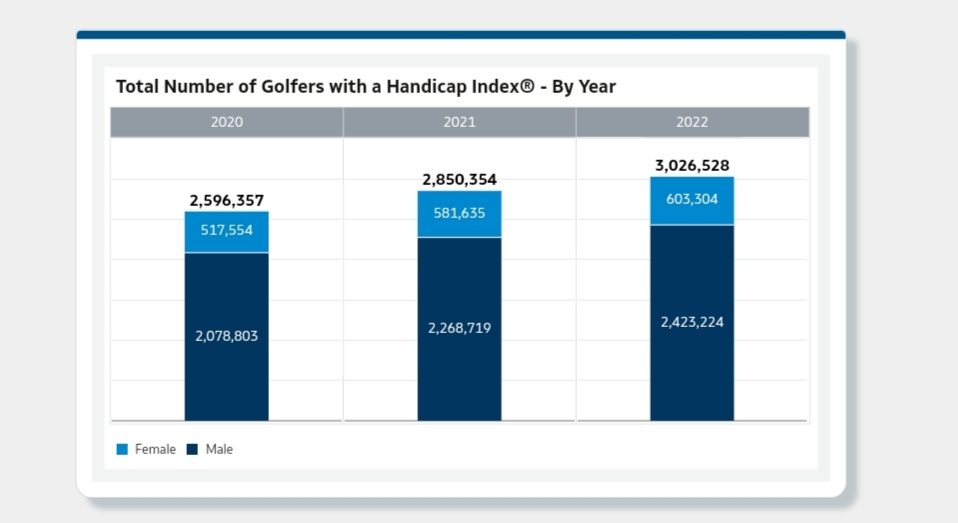
    The handicap index in golf gives players different skills, abilities, and experience levels on a relatively even playing field. According to stats from USGA, 98.5% of golfers in America have a handicap, and beginner golfers average start at 28 and 36 (for men and women, respectively), while the average pro golfer has a handicap. 

    You may be wondering how ‘good’ a 12 handicap level is, especially when compared with other ranking factors. In the rest of this guide, you’ll learn what the 12 handicap level says about your golf skills and tips for lowering your handicap to become a better golfer. 

    What Does A 12-Handicap In Golf Mean?

    A 12 handicap in golf indicates a player’s average score is 12 strokes above the course’s par rating. Par is the predetermined number of strokes an accomplished golfer should require to complete a hole or an entire round. 

    If you’re a 12-handicap golfer, you probably possess solid ball-striking abilities, moderate consistency, and an understanding of course management.

    On par 72 courses, a 12-handicap golfer will shoot an average score of around 84. This means they consistently make bogeys on par 4s and par 5s while occasionally making a par or birdie.

     For example, if you’re a 12 handicap, you may reach the green in regulation and two-putt for a bogey on a par four hole, whereas on a par 3, you may require three shots to get the green and two-putt for a double bogey.

    Indeed, a 12-handicap golfer may occasionally shoot below or above their average, but this level indicates a strong foundation in the game with room for improvement.

    What Is A Respectable Handicap?

    A respectable handicap in golf is generally considered to be around 18 or lower for men and 24 or lower for women. This handicap indicates a player’s skill level and is calculated based on their average scores relative to the course and slope ratings. 

    Meanwhile, lower handicaps signify better players who consistently score closer to par, while higher handicaps represent players who score above par more frequently.

    The truth is that there’s no one-size-fits-all measurement for what a “good or ‘bad’ handicap is, but I have attempted to put a hierarchy to it so throw in enough perspective:

    Handicap levelRemarkDescription
    Above 36 for men and 45 for womenBadThese players struggle to execute shots consistently and often score well above par. They may have limited experience, technical challenges, or are relatively new to the game. 
    From 19 to 36 for men and 25 to 45 for womenGoodPlayers within this range have progressed in their game, displaying improved skills and more consistent scoring. They are capable of executing decent shots but still have room for refinement. 
    Around 10 to 18 for men and 18 to 24 for womenRespectableThese players have honed their skills and can consistently score closer to par. They display solid shot-making abilities, a good understanding of course management, and a higher level of proficiency overall.
    Between 4 and 9 for men and 10 and 17 for womenVery GoodPlayers at this level exhibit high-level skills, consistently scoring near or below par. They possess refined swing mechanics and excellent course management abilities.
    From 0 to 3 for men and 0 to 9 for women.Excellent Highly skilled, with exceptional shot-making abilities, precise control over their game, and extensive knowledge of golf strategies. They consistently score under par and compete at an elite level in tournaments and championships. 

    What Is Considered A Low Handicap In Golf?

    A low handicap indicates a skilled player who consistently scores less than their peers. 

    Opinions widely vary on what a low handicap is, but a handicap of 0 to 5 is typically recognized as a low handicap. 

    You possess excellent ball-striking abilities, strategic course management, and short solid game skills if you’re within this range. 

    For instance, professional golfers like Dustin Johnson or Justin Thomas, who consistently rank among the top players in the world, maintain low handicaps. 

    Achieving a low handicap requires a combination of talent, dedication, and relentless practice to refine one’s skills and compete at a high level.

    What Would My Handicap Be If I Shoot 110?

    Handicap calculations are based on your average score relative to the difficulty of the course you play. If you shoot 110 in a round of golf, your handicap would likely be between 30 and 40 

    Generally, for players shooting in the 110 range, their handicap would typically be in the high double or even triple digits. 

    To accurately get your handicap, divide your scores by multiple course rounds. The handicap system assesses the difficulty of the study and calculates a differential for each game played. 

    This differential represents the deviation from the course’s rating and slope. By taking the average of these differentials and applying the handicap formula, your handicap index can be calculated.

    What A 12 Handicap Means In Terms Of Skill Level

    A 12-handicap golfer, in terms of skill level, means you’re an intermediate player that has already honed solid fundamentals and consistency.

    It means you can hit the ball with decent accuracy and distance but may lack consistency in certain aspects of your game. 

    For instance, you may struggle with challenging shots from uneven lies or experience occasional difficulties with your short game. 

    It is unlike scratch golfers who consistently shoot par or better, showcasing superior shot-making abilities and a well-rounded skill set.

    A 12 handicap comparison to average golfer handicaps

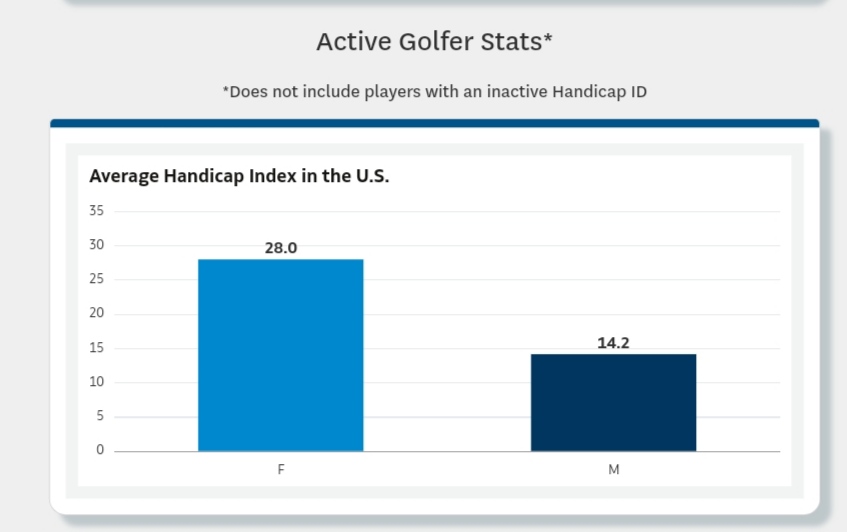
    According to USGA’s real-time data, the most common handicap range for male golfers is between 13.0 and 13.9 for men and 27.0 – 27.9 for women.  But there are many more details when we look through the lens of comparative analysis. 

    When placed side-by-side with the recorded average golfer handicaps, a 12 handicap is a pretty decent level in 2023. 

    Here’s the illustration from USGA:

    You can access the complete analysis HERE.

    Evaluating your improvement as a 12-handicap golfer

    First, I’d recommend you analyze your scoring trends over time to assess consistency. 

    A decrease in scores signifies improvement. Secondly, focus on your tee shots, evaluating accuracy, distance, and club selection. With TrackMan or a high-quality driver such as the TaylorMade SIM2 Max, you can see valuable data and aid improvement in these areas.

    Apart from the above, consider your iron play and green approach. It’s progress when you achieve precise yardage and execute consistent ball striking. I recommend you use forgiving irons like the Callaway Apex CF19 or undertake lessons with a certified golf instructor for better (and faster) performance.

    Short-game proficiency is another critical aspect of lowering your handicap. This includes chipping, pitching, and bunker play. In this case, wedges like the Vokey SM8 come handy. You can also attend short game clinics like the ones at the Dave Pelz Scoring Game School

    Probably the best way to improve on your golf score is to enhance your putting. I recommend looking into putting mirrors, as every putt counts just as much as a drive or fairway shot, and making more putts will help you improve your score.

    The Takeaway

    Remember that handicaps are not solely about being labeled as average or good. They represent a golfer’s progress and dedication to the game. 

    A 12 handicap reflects the effort put into honing skills and achieving consistency. Whether you aspire to reach a lower handicap or enjoy playing at your current level, your passion for the game truly matters. 

    Also, each golfer’s journey is unique. Your 12 handicap should be celebrated as a testament to your commitment and love for the sport.

    If you want to lower your handicap, you can begin by getting fitted for equipment, improving your drive and precision, analyzing your game, and pinpointing your shortcomings. 

    Playing with low handicappers will also help you achieve low handicaps and become a better player. 

  • Does a 1-degree lie angle make a difference?

    Does a 1-degree lie angle make a difference?

    Yes, a 1-degree lie angle difference in golf clubs can noticeably impact shot direction and distance by two to four yards. For example, if your golf club has a lie angle that is 1 degree too upright, the ball may tend to veer left for a right-handed player. Adjusting the lie angle can help correct this tendency.

    The lie angle is the angle between your club’s sole and the shaft when the club rests on the ground. I realized that this factor is widely overlooked, but it impacts shots, and that’s why intelligent golfers like you want to know how significant the difference of a 1-degree lie angle is.

    Two weeks ago, I had my irons set one degree upright (recommendations from demo days). I hit many shots straight left – lovely shots – but I kept missing where I aimed, which, according to Trackman, was a 2 to 3 yards soft draw from the center line. When I switched to the standard lie angle, I achieved a straight to slightly right flight.

    I extensively researched the impact of lie angle on the shot direction and distance. I realized that even a one-degree upright could affect short or long irons’ performance.

    I have prepared this article to walk you through my findings. You’ll learn the significance of the 1-degree lie angle difference, factors influencing the optimal lie angle, equipment considerations, and significant myths and misconceptions about golf club settings.

    The significance of a 1-degree lie angle difference

    A 1-degree lie angle difference may seem small, but it can significantly impact golf club performance and your game.  Lie angle adjustments are sensitive because even a slight change can affect the direction and trajectory of the ball.

    A 1-degree difference can cause the clubface to be misaligned at impact, resulting in shots veering left or right. This can lead to inconsistent ball striking and inaccurate photos. 

    Remember when professional golfer Kurt Kitayama switched drivers before earning his first PGA Tour title this March at the Arnold Palmer Invitational?

    Kitayama changed from his regular TaylorMade’s standard Stealth 2 to the Stealth 2 Plus with a slight lie angle change of 10.5 degrees of loft. 

    According to GolfWRX, the club has a Graphite Design Tour AD-IZ 7X shaft measuring 44.75 inches with a 57-degree lie angle (1-degree upright on the hosel sleeve).

    Due to this lie angle difference, Kitayama hit two tee shots out-of-bounds at Bay Hill, but he also hit 39 of 56 fairways to tie for the first time in that statistic. His significant angle changes worked for him; he’s now a PGA TOUR winner.

    But it is essential to mention that differentiating between noticeable and negligible changes in lie angle depends on your skill level and sensitivity to equipment variations.

    If you’re a highly skilled player with a consistent swing and a good feel for your clubs, you’re more likely to notice a 1-degree difference.

    On the other hand, recreational golfers or beginners may not perceive the subtle variation as significantly as their swing mechanics and consistency may be less refined.

    Effects of A 1-Degree Lie Angle Adjustment on Shot Dispersion

    Does a 1-degree lie angle make a difference?

    A lie angle too upright or flat for a golfer’s swing can lead to inconsistent ball striking and erratic shot dispersion.

    When the lie angle is too upright, the toe of the club tends to be raised at impact, causing the clubface to close, resulting in shots that veer to the left for a right-handed golfer (or to the right for a left-handed golfer).

    Conversely, if the lie angle is too flat, the club heel is raised, leading to an open clubface and shots that tend to go to the right (or left for a left-handed golfer).

    This is where fine-tuning the lie angle to suit your needs comes in (for a few good reasons)

    Firstly, it promotes better alignment of the clubface at impact, which can result in more accurate and consistent shots. It’ll improve your ability to hit shots with the desired trajectory and shape. An adequately fitted lie angle enhances confidence and overall game enjoyment.

    However, there are a few drawbacks to consider when attempting to configure lie angles against the standard degree that the club comes with.

    Making frequent lie angle adjustments will require access to a fitting club facility or a professional club fitter.

    Also, you need more careful evaluation and experimentation to determine the optimal lie angle for your particular kind of swing.

    Apart from these, your swing characteristics change over time, necessitating further adjustments, which can be daunting.

    What are the factors influencing the optimal lie angle?

    Your height, posture, swing characteristics, swing plane, attack angle, and club length are the major factors that will determine what an optimal lie angle means to you.

    For example, taller players require a flatter lie angle to accommodate their height, while a shorter player may need a more upright lie angle.
    Also, your posture during the setup and swing can affect your ideal lie angle. If you have a more upright posture, you tend to benefit from a more upright lie angle, while a player with a more bent posture is better off with a flatter lie angle from the standard degree.

    The swing plane and attack angle also play a role in determining the optimal lie angle. The swing plane refers to the path the clubhead follows during the swing, and the attack angle refers to the direction the clubhead is moving when it strikes the ball.

    Assuming a steep swing plane or a downward attack angle, an upright lie angle of the standard degree can ensure proper contact with the ball.

    Conversely, a shallower swing plane or an upward attack angle requires a flatter lie angle.

    Consider your club length and fitting before deciding on your lie angle adjustments. Many golfers with longer clubs have testified that they maintain proper contact with the ball with a slightly flatter lie angle than the standard degree.

    Above all, a custom club fitting by a professional can help determine the appropriate lie angle for your peculiar needs.

    Understanding the impact of the lie angle

    https://youtube.com/shorts/A6QJH0F6eww?feature=share

    The most obvious impact the lie angle will have on your shots is the ball’s flight and shot accuracy.

    From my experience, a club with an improper lie angle can cause the clubface to be misaligned at impact, resulting in off-center hits and errant shots.

    For instance, if the lie angle is too upright, the clubface tends to close, leading to pulls or hooks. Conversely, a lie angle that is too flat can open the clubface, causing pushes or slices.

    Secondly, the lie angle influences the shot shape. A 1-degree upright lie angle encourages a draw, while a flatter lie angle promotes a fade.

    Imagine a golfer with a driver featuring a lie angle of 58 degrees; he might experience a tendency to slice. Adjusting the lie angle to 60 degrees (flatter) could help promote a straighter shot or even a slight fade.

    Similarly, a player using an iron with a lie angle of 62 degrees may struggle with hitting hooks but adjusting the lie angle to 64 degrees (more upright) could assist in promoting a straighter or drawing shot.

    Remember, the lie angle influences how the club interacts with the ground at impact. If the lie angle is incorrect (even by a 1-degree difference), the club’s leading edge may dig into the turf or bounce off it inconsistently, affecting the quality of the strike.

    Equipment considerations

    Many manufacturers now offer adjustable hosels that allow players to modify the club’s lie angle to suit their swing.

    For example, Titleist’s TSi2 and TSi3 drivers feature a SureFit hosel that offers loft and lie adjustments.

    The lie angle interacts with other club fitting elements, such as shaft length and grip size. As I mentioned, a flatter lie angle promotes a draw, while a more upright lie angle promotes a fade.

    Technological advancements have made lie angle customization easier. If you consider Mizuno’s JPX921 Hot Metal Pro irons, you’ll notice that they incorporate the Chromoly 4140M material, allowing for a thinner face and a more flexible design. A player using this iron will find it simpler to adjust lie angles without sacrificing performance.

    Lie angle myths and misconceptions

    Lie angle myths and misconceptions often plague golfers’ understanding of equipment fitting.

    While researching the lie angle impact on golf clubs, I stumbled on a few critical myths to debunk here.

    MythFacts
    Lie angle adjustments primarily affect low-handicap playersLie angle plays a crucial role in shot direction for golfers of all skill levels.
    Extreme lie angle changes can solve all swing issuesWhile lie angle adjustments can alleviate specific problems, they are not a panacea.
    Extreme adjustments can lead to unintended consequences, such as altered turf interaction or swing compensation.

    Always remember that lie angle adjustments are not a standalone solution for other swing faults, such as swing path or face angle.

    For example, assuming you switch between an 8-iron with a loft of 37 to 39 degrees to a 9-iron with 41-43 degrees of loft,  and you keep missing where you’re aiming by 20 odd yards, it is most likely not due to your club setting.

    In such a situation, you must try different shafts because the toe bends down more with some posts than others.

    Extreme yard misses, like 20–25, are not usually due to Lie angle adjustments.

    What is the standard golf iron lie angle?

    The standard lie angle is 56 and 60 degrees for drivers and woods. However, hybrid or rescue clubs’ standard lid is between 58 and 62 degrees.

    Iron and wedges’ standard lie angles are between 61 and 64 degrees, respectively.

    Ultimately, you must consider experimentation and feedback to find the perfect lie angle for your swing style and height. It would be best if you seek professional guidance for lie angle assessment.

    Finally,

    A 1-degree change in the lie angle can cause your ball to veer left or right by 2 to 10 yards.

    That seemingly insignificant angle can throw your shots off course like a confused GPS. That’s like aiming for the fairway but ending up in a sand trap—not fun!

    So, here’s the deal: personalized club fitting is your secret weapon for nailing that perfect lie angle.

    When your lie angle is spot on, it’s a game-changer. You’ll notice improved accuracy, consistency, and distance control in your shots.

    Happy swinging!

  • Bermuda Length Shorts – The Ultimate Guide For Golfers

    Bermuda Length Shorts – The Ultimate Guide For Golfers

    Bermuda-length shorts have become stable golfing clothing due to their optimal style, comfort, and performance combination. Designed with appropriate length and materials, they offer flexibility, breathability, and moisture-wicking properties essential for a golfer’s mobility and comfort on the course. Still, they are not immune to specific golf course dress codes and restrictions if you choose to wear them.

    A short is considered Bermuda length when its hem is around 1 inch (2.5 cm) above the knee. While the hem of the typical Bermuda shorts can be cuffed or uncuffed, it’s not gender-specific, as both male and female golfers can wear semi-casual attire on the golf course.

    In the rest of this article, I’ll work you through Bermuda length short’s relationship with golf dress codes and restrictions, what makes the apparel ideal for golfing, and how to pick and style one perfectly. As a bonus, I’ll show you a few golfing accessories in my wardrobe to complement my Bermuda shorts each time I head to the golf course, which you can get too.

    Bermuda Shorts: Golfing Dress Code And Restrictions

    Bermuda Length Shorts

    Most golf courses have dress codes and restrictions, including Bermuda-length shorts as the recommended apparel for golfers.

    Meanwhile, I have met many golfers with higher handicap scores who are still unsure about the dress codes. Most complain that muscle stiffness, lack of game knowledge, and dress codes slow their learning process.

    Golfing dress codes usually include Bermuda-length shorts, depending on the golf course.

    Different golf courses and their specific dress codes

    After extensive research, I realized that a plethora of golf courses specifically spell out Bermuda length shorts as dress codes, with just a few giving exceptions for players comfortable in shorter shorts or full trousers.

    Here are a few  golf courses that specify tailored Bermuda shorts as the accepted dress code:

    1. The Greenbrier
    2. The Country Club of Florida
    3. Vista Valley Country Club
    4. York Downs
    5. The Bedens Brook
    6. Forsyth Country Club
    7. El Caballero Country Club
    8. Hammock Dunes Club
    9. Quail Ridge CC
    10. Credit Valley Golf
    11. Knollwood Country Club
    12. Scarthingwell Golf Course
    13. The Golden Bear Club
    14. Aronimink

    Remember, this is not an exhaustive list. For the golf course, you will go on their website to confirm what kind of apparel they recommend for golfers.

    Exceptions And Limitations For Bermuda Length Shorts

    Some golf clubs like Royal Melbourne and  HoursesHoe Bay have pretty strict dress codes, and they emphasize that golfers avoid wearing golf shorts that are too short. The exception goes to juniors 12 & under, who may choose otherwise to wear camping, tennis, or cutoff shorts.

    But as a rule of thumb, many golf courses won’t accept tailored shorts worn with the hem beyond 4 inches above or below the knee.

    Benefits Of Bermuda Length Shorts For Golfers

    Since the length of Bermuda shorts typically falls just above the knee, it strikes a balance between comfort and style. This length also allows you to enjoy freedom of movement while maintaining a professional appearance. But the size is not the benefit alone.

    Fit

    Bermuda shorts often come with a relaxed or regular fit. This allows unrestricted movement during swings and prevents any discomfort hindering your performance. Some Bermuda shorts, like the Lefties (which has turned out to be my favorite), incorporate stretchable materials or elastic waistbands. It gives me extra flexibility and comfort.

    Design

    Features such as deep pockets for storing golf accessories, reinforced stitching for durability, and secure closures such as buttons or zippers to keep items in place during movement all come together as a benefit for wearing Bermuda shorts on a golf course compared to other golf shorts.

    The material and technology

    You probably already know that ideal golf shorts often utilize breathable fabrics that promote airflow, keeping golfers cool and comfortable. But Bermuda shorts are made of moisture-wicking properties that quickly absorb and evaporate sweat, preventing the shorts from becoming heavy or uncomfortable. Using stretch fabrics or including panels also provides flexibility, allowing for a more excellent range of motion.

    Choosing The Right Bermuda Length Shorts

    Here, Bermuda shorts are primarily used as walking or dress shorts. But they are versatile. If you’re picking one for golfing apparel, you must consider some factors prioritizing comfort and style.

    Length

    Bermuda shorts typically hit just above the knee, balancing comfort and professional appearance.

    If you’re over 5’5”, 7” inseam Bermuda shorts will be the perfect length. If you’re less than 5’5” or you want to show a little more thigh, then 5’ shorts will be ideal.

    But ensure the length of your Bermuda shorts complies with the dress code requirements at your golf course.

    Fabric

    Look for lightweight and breathable materials, such as polyester blends or performance fabrics, that wick away moisture and allow easy movement.

    Fit

    You can never go wrong with the Bermuda short styles with stretch or elastic waistbands. Not only does it guarantee flexibility, but it also allows for a full range of motion.

    Pockets

    Golf shorts should have functional pockets to accommodate golf balls, tees, scorecards, and personal items. Most Bermuda shorts have at least two pockets, but the denim versions have three to five.  You can opt for one with cargo pockets too.

    Comfort features

    Look for moisture-wicking properties, UV protection, and ventilation to keep you cool and comfortable during your game.

    Matching shorts with golf shirts and accessories

    • Color coordination: Choose shorts in neutral or classic colors like khaki, navy, or black, as they can be easily paired with various golf shirts.
    • Patterns and prints: Consider incorporating subtle designs or images into your shorts for added visual interest. No matter the idea of the Bermuda shorts, ensure that they complement the color scheme of your golf shirt.
    • Belt and shoe coordination: Select a belt and shoes that match or complement the colors of your shorts and shirt. If you have khaki or black Bermuda shorts, complete them with brown or black leather belts and golf shoes.
    • Socks: Opt for low-cut socks like the Adidas 3 Pack Low Cut or no-show socks such as the Lululemon Power Stride Tab Socks in a color that coordinates with your shorts and shoes

    Top Brands To Shop from for Bermuda Shorts

    Brand

    Top Bermuda shorts for golf

    Unique benefit

    Price

    Nike

    Dri-FIT UV

    Men’s 9″ Golf

    • 5 Pockets (including Tee pocket)
    • 6 Color Options

    $68

    Under Armour

    Under Armour Links Club Bermuda For Women

    • Water repellent
    • Stretch and flexible


    $39

    Adidas

    Adidas “Go-To Five-Pocket 10″ Shorts”

    • 5 Pockets
    • 10″ Inseam
    • Water Repellent

    $70

    Puma

    PUMA Jackpot Men’s Golf Shorts 2.0

    • 6 Colors
    • UV Resistance
    • 10″ Inseam

    $65

    Bonus: How I accessorize with my Bermuda Short For A Complete Golfing Look

    First, I currently use the Lesmart Mens Summer Bermuda Golf Shorts, and I pair them with a PGA TOUR Airflux mesh visor with UV protection to shield myself from the sun and match the logo to my overall outfit.

    I recommend investing in sunglasses with polarized lenses to reduce glare and protect your eyes during sunny rounds.

    But for gloves, I wear the Titleist Players Flex gloves. I love it above all other options because it does an excellent job of improving my grip on the club and preventing blisters. Whatever your choice brand is, ensure it fits you properly and complements your attire.

    Wrapping up

    Back in the day, Bermuda-length shorts for golf were the only short option for golfers. But nowadays, some golf courses allow players to wear full trousers.

    Before buying Bermuda shorts, go through your golf course’s dress code and limitations.

    Many golf courses will not allow blue camping, tennis, or cutoff shorts, denim, cropped tops, short shorts or skirts, or leggings (without shorts or a skirt) for women.

    However, exceptions may be made for juniors 12 & under.

    I hope this article helped.

  • The 6 Best Shafts for Driving Iron

    The 6 Best Shafts for Driving Iron

    The Project X HZRDUS Black Handcrafted is the best shaft for driving iron due to its exceptional stability, low spin, and optimized launch characteristics. Its handcrafted construction ensures premium quality. However, its limited availability makes it hard to find, which might justify considering other worthy choices.

    Picking the best shaft for a driving iron is no easy task, especially when you’re the type of golfer with a streamlined preference. I’ve used a KBS Tour V shaft (that I hate) for my 18* driving iron. I’ve considered replacing it with a shaft that will help maximize distance and accuracy.

    I eventually settled for the Project X HZRDUS Black Handcrafted because of its stiff tip section, which has, so far, promoted a powerful launch with reduced dispersion for every swing. It’s been bliss.

    Now, if you’re looking for the best shaft for your driving iron, I wouldn’t be quick to recommend the Project X HZRDUS Black Handcrafted for you, too, because every golfer’s preferences differ. However I have made a list and reviewed six of the best options on the market, mainly based on flex and material options, shaft weight, torque, and kick point.

    If you’re in a hurry, here’s a rundown of the 6 shafts for driving iron I’ll review in this article:

    ProductPriceUnique BenefitBuy Now
    Project X HZRDUS Black Handcrafted$69.99Stability, low spin, precisionLowest Price
    True Temper Dynamic Gold AMT$199.95Varying weights, optimized launchLowest Price
    KBS C-Taper$47Constant taper, controlled flightLowest Price
    Mitsubishi Tensei CK Pro White$317Stable, mid-high launchLowest Price
    Fujikura Pro 2.0$250Balanced distance and controlLowest Price
    Aldila Rogue Black 95$262Lightweight, low torque accuracyLowest Price

    1. Project X HZRDUS Black Handcrafted (Best Overall)

    1. Project X HZRDUS Black Handcrafted

    Best shaft for driving iron - Project X HZRDUS Black Handcrafted

    $69

    • The Project X HZRDUS Black Handcrafted Shaft is renowned for its stability and low spin characteristics, making it ideal for long and penetrating shots.
    • The handcrafted nature piqued my interest in this option, which ensures precision and consistency throughout the shaft. I like that it features a stiff tip section that promotes a powerful launch with reduced dispersion.
    • If you’re seeking maximum control and distance, this is your best bet because it has high-quality construction and premium materials that make it worth considering.

    What I like about this shaft

    • The HZRDUS Black Handcrafted provides exceptional stability, low spin, and a penetrating ball flight.
    • It offers precise craftsmanship, ensuring consistency in performance.
    • The stiff tip section promotes a powerful launch with reduced dispersion.

    What I don’t like about this shaft

    • There’s not much to say here, but the shaft may feel too stiff for players with slower swing speeds.
    • Also, it might require some time to adjust due to its unique characteristics.

    2. True Temper Dynamic Gold AMT (Best for Varying Weights, Optimized Launch)

    True Temper Dynamic Gold AMT

    Best shaft for driving iron - True Temper Dynamic Gold AMT (1)

    $199.95

    • The True Temper Dynamic Gold AMT (Ascending Mass Technology) shaft has a primary purpose for golfers: to provide a smooth weight transition throughout the set.
    • Its lighter long iron shafts help increase clubhead speed, while the heavier short iron shafts offer better control and accuracy. You’ll also like the AMT, which naturally promotes a more consistent trajectory and an improved feel.

    What I like about this shaft

    • The AMT’s ascending mass design enhances control, accuracy, and distance.
    • It offers a smooth transition in weight throughout the set, optimizing performance for each club.
    • The shaft is widely glorified for providing a consistent trajectory.

    What I don’t like about this shaft

    • If you prefer a consistent weight profile throughout their set, this option may not be worthwhile because it doesn’t meet expectations.

    3. KBS C-Taper (Best Budget)

    KBS C-Taper (Best Budget)

    Best-shaft-for-driving-iron-KBS-C-Taper

    $47

    • The KBS C-Taper shaft needs no introduction. It’s widely known for its exceptional stability and control. The lower trajectory and reduced spin attracted me to the KBS C-Taper shaft. It is a red flag if you seek piercing ball flight.
    • The shaft’s advanced design minimizes vibrations, enhancing feedback and feel—a quality every driving iron holder should prioritize when choosing a shaft.

    What I like about this shaft

    • The C-Taper provides exceptional stability, control, and a low trajectory.
    • Reduced spin and a piercing ball flight.
    • The shaft’s design minimizes vibrations.

    What I don’t like about this shaft

    • The lower trajectory may not suit players seeking a higher ball flight.
    • It may feel too stiff if you have slower swing speeds.

    4. Mitsubishi Tensei CK Pro (best for mid-high launch)

    4. Mitsubishi Tensei CK Pro (best for mid-high launch)

    Best-shaft-for-driving-iron-Mitsubishi-Tensei-CK-Pro

    $317

    • The Mitsubishi Tensei CK Pro White shaft combines a solid yet smooth profile with low torque for enhanced stability and control, making it perfect for your utility iron.
    • It incorporates carbon fiber and resin, producing a lightweight yet durable shaft. The carbon fiber material allows for precise weight distribution and flex control, providing consistency and stability during the swing.
    • There are only a few options in the market today that indeed do it, such as the Tensei CK
    • This shaft is the one-stop option for mid-launch trajectory and reduced spin. It comes to balancing distance and accuracy.

    What I like about this shaft

    • The hard reality is that Mitsubishi Tensei CK Pro White doesn’t outperform many shafts out there. But when stability and control are mentioned, they come to the center stage.

    What I don’t like about this shaft

    • After testing this shaft out, it was hard for me to place a finger on a defect. Many people argue that the price is not worth it. But this isn’t wrong if you’re more concerned about results than cost.

    5. Fujikura Pro 2.0 (Best for Balanced Distance and Control)

    5. Fujikura Pro 2.0 (Best for Balanced Distance and Control)

    Best shaft for driving iron - Fujikura Pro 2.0

    $250

    • The advanced multi-directional material layup in the Fujikura Pro 2.0 guarantees stability, feel, and control.
    • Measuring 46 inches in length, the Pro 2.0 shaft allows for an extended lever arm, generating extra power and clubhead speed during the downswing. Its low torque rating of 2.9 degrees minimizes twisting, promoting accuracy and consistency in ball flight.
    • The Pro 2.0 shaft features a high-modulus carbon fiber material that ensures exceptional strength, stability, and energy transfer during the swing. This contributes to increased clubhead speed and greater distance off the tee.
    • This shaft for driving irons will give you a mid-launch and mid-spin profile, making it appealing to a wide range of golfers. In other words, this is your best bet if you seek versatility.

    What I like about this shaft

    • The Pro 2.0 shaft incorporates a proprietary technology called “Phantium Finish,” which reduces drag and enhances aerodynamics, resulting in improved swing efficiency and faster clubhead speed.
    • The Pro 2.0 shaft’s low torque rating of 2.9 degrees minimizes twisting during the swing, promoting accuracy and consistency in ball flight. This feature is particularly beneficial for driving iron shots that require precision and control.

    What I don’t like about this shaft

    • It could impact swing control and feel for players accustomed to shorter shafts.
    • You may need to explore alternative shaft options for a more flexible or customized flex profile.

    6. Aldila Rogue Black 95 (best for accuracy)

    6. Aldila Rogue Black 95 (best for accuracy)

    Best-shaft-for-driving-iron-Fujikura-Pro-2.0-

    $262

    • With a weight of 95 grams, it provides the perfect balance between stability and control, allowing you to generate optimal power and accuracy off the tee.
    • The Aldila Rogue Black 95 is a lightweight shaft designed for increased swing speed without sacrificing control.
    • It features a stiff tip section and a firm midsection, offering stability and a consistent release. The Rogue Black 95’s low spin characteristics and mid-high launch make it a versatile option for players seeking distance and accuracy.
    • The shaft’s unique design incorporates advanced geometric patterns that optimize energy flow and reduce unwanted vibrations, resulting in a smoother feel and enhanced feedback.

    What I like about this shaft

    • Its mid-launch profile and stiff tip section help generate a penetrating ball flight, maximizing carry and roll for longer drives.
    • With its weight of 95 grams and low torque rating, the Rogue Black 95 offers exceptional stability and control.

    What I don’t like about this shaft

    • If you rely on a softer shaft for increased launch or enhanced shot-shaping capabilities, you may find the Rogue Black 95 too rigid for your preferences and swing style.
    • Customization options, such as different flexes or weight variations, are limited compared to other shaft models.

    How I Picked the Best Shaft for Driving Iron: A Buying Guide

    The key characteristics of a golf shaft that can affect driving iron performance are flex, weight, torque, and kick point. When picking the next shaft for your driving iron, you must focus on these areas.

    Flex Options

    Flex options for driving iron shafts typically include extra stiff (X), stiff (S), regular (R), and sometimes senior (A) or ladies’ (L) flex.

    The flex refers to the amount of bend in the shaft during the swing. A stiffer flex (e.g., X or S) requires more force to bend and is suitable for players with higher swing speeds, providing more control and a lower ball flight.

    A regular flex (R) balances control and distance and is suitable for players with moderate swing speeds. Senior (A) or ladies’ (L) flex is more flexible, assisting slower swing speeds with a higher launch and more distance.

    Flex affects your swing speed, as a stiffer flex can reduce the club head speed, while a more flexible shaft may increase it. Timing may be impacted, so you must match your swing tempo with the shaft’s flex profile.

    Shaft Weight

    When considering shaft weight for a driving iron, there are a few factors to consider to make an informed decision. The importance of the shaft can have a significant impact on your swing dynamics and overall performance.

    Firstly, lighter shafts offer increased swing speed, allowing you to generate more clubhead speed and achieve greater distance. However, they may also reduce control and stability, particularly if you have a faster tempo or a more aggressive swing. On the other hand, heavier shafts provide more stability and control, making them suitable for players with a smoother tempo or those seeking more accuracy and consistency.

    Also, consider your physical characteristics and strengths. A lighter shaft is better for you if you have a slower swing speed or struggle with generating power. Conversely, if you have a faster swing speed or possess greater strength, a slightly heavier shaft can help you maintain control and maximize your power potential.

    Torque and Kick Point

    Torque refers to the shaft’s resistance to twisting during the swing, with lower torque providing more stability and accuracy. A higher kick point means the shaft flexes higher towards the grip, promoting a more downward ball trajectory.

    Consider your swing speed, tempo, and desired ball flight to make the best decision. Higher swing speeds generally benefit from lower torque and a mid-to-high kick point for more control. Slower swing speeds may benefit from higher torque and a lower kick point to maximize launch and distance.

    Material Options

    Consider steel shafts when considering material options for a driving iron shaft. They offer stability, control, and a consistent feel. So, steel shafts are best if you seek accuracy and control. Graphite shafts, on the other hand, provide enhanced distance, a lighter weight, and improved vibration dampening, offering increased swing speed and forgiveness.

    Professional Fitting and Testing

    Professional fitting and testing become the most integral part of evaluating your decision on the best shaft for a driving iron.

    A reputable club fitter analyzes your swing dynamics, launch conditions, and clubhead data to provide tailored recommendations. You can consult local golf professionals or visit manufacturer websites for certified fitting centers to find reputable fitters.

    For conducting shaft tests, utilize resources like launch monitor-equipped fitting studios or demo days organized by manufacturers or golf retailers.

    The bottom line

    Selecting the right shaft for your driving iron can significantly impact your game. After considering factors such as flex, weight, and material, the Project X HZRDUS and Tensei CK Pro White seem to be the leading options that have the potential to maximize distance, accuracy, and overall performance off the tee.

    But remember, every golfer is unique; my honest recommendation may or may not apply to your swing style and goals.

    But I hope this guide has provided valuable insights and helped you understand the essential aspects to consider when choosing a shaft for your driving iron.

    I’d love to hear from you! Have you found the perfect shaft for your driving iron? Do you have any additional tips or recommendations? Please drop your thoughts and experiences in the comments section below.

    FAQs

    How do I find the best shaft for my irons?

    To find the best shaft for your irons, determine your swing speed and tempo first, then understand your ball flight and shot shape tendencies. You may need to consult a professional club fitter or golf instructor to test different shaft options (flex, weight, and material) to find the right fit.

    What shaft type do pros use?

    Many pros often use graphite shafts for their irons due to their lighter weight and ability to provide enhanced distance and control. Steel shafts are still common among professionals since they offer a solid feel and control.

    What is a driver’s iron?

    “Driving irons” or “utility irons” are golf clubs that offer a blend of distance and control. These clubs typically have a lower loft and a larger head size than traditional irons, resembling a hybrid or a small-headed fairway wood.

    What is the difference between 60 and 70 golf shafts?

    The difference between a 60 and 70 golf shaft lies in their flex ratings. A 60-degree shaft has a regular flex, providing a balance of control and distance for moderate swing speeds. A 70-degree shaft has a stiff flex, offering less flex and more stability for faster swing speeds, enhancing accuracy and control.

    How do I know what length of driver shaft I need?

    First, consider your height and arm length to determine the correct size for your driver shaft. If you’re taller, you’ll benefit from longer shafts. If you’re shorter, you may find shorter shafts more suitable. Also, your swing speed and accuracy can influence your choice. So it’s better to consult a professional club fitter who will analyze your swing characteristics and provide recommendations.

    How do I choose a driving iron shaft?

    Consider your swing speed, ball flight preferences, and shot dispersion when choosing a driving iron shaft. Alternatively, seek professional advice. Faster swing speeds require stiffer flex, while lighter shafts promote a higher ball flight.

  • Cleveland CBX2 Vs CBX Zipcore – Which Is Better

    Cleveland CBX2 Vs CBX Zipcore – Which Is Better

    The Cleveland CBX2 and CBX ZipCore are excellent options, but it ultimately depends on your playing style and preferences. The CBX2 offers enhanced forgiveness and versatility, ideal for players seeking forgiveness on approach shots. On the other hand, the CBX ZipCore provides improved spin and control, making it an excellent choice for players focused on shot precision. 

    I’ve had the CBX2 48/52/60 (56*) with no intentions of replacing it despite the fuzz about Zipcore. But recently, I forgot the wedge on a course at Key Biscayne and had to replace it with the CBX Zipcore eventually. The first and most significant difference I noticed was that CBX2 zipcore feels solid yet softer at impact. 

    I noticed a difference between the two models, so I decided to compare other areas relevant to golfers and write a post about it to help others who might be torn between them.

    Meanwhile, I’m a right-handed player and use a Srixon Soft Feel ball. So the review here is based on my honest opinion. However, the comparison in this article gives you a bird’s eye view of which option is worth buying.

    Using the Cleveland CBX2: My Honest Review

    Cleveland Men’s Cbx2 Black Satin Wedge 1

    $146

    • The Cleveland CBX 2 Wedge is a forgiving, versatile wedge optimized for golfers who play cavity back irons. It provides tour-level spin and control to help game improvement players upgrade their short game. Additional weight distributed to the perimeter offers more forgiveness at impact.
    • Three different sole grinds deliver more versatility to execute any shot on the course. Enhanced Feel Balancing Technology and a Gelback TPU Insert reduce vibration for a pure feel at impact.
    • Fourth-generation Rotex Face technology delivers our sharpest Tour Zip Grooves and the most aggressive face milling for maximum spin and short game control.
    Cleveland CBX2 vs Cleveland Zipcore

    The Cleveland CBX2 is a versatile wedge for golfers seeking forgiveness and playability around the greens. 

    It was first introduced in 2019. This wedge is crafted to address the needs of golfers who prioritize forgiveness and consistency in their short game. 

    It combines a cavity-back design with a wide sole to enhance stability and forgiveness on off-center hits. 

    The CBX2’s key feature is its Dual-V Sole, which promotes smoother turf interaction and improved versatility on different lines. 

    This unique design element sets it apart from the rest of Cleveland’s wedge lineup, catering specifically to golfers who desire forgiveness without compromising performance.

    That’s why Cleveland CBX 2 wedges were created,” says Brian Schielke, Marketing Director at Cleveland Golf, while introducing the lineup in a report. “They make the short game easier and more forgiving for most golfers playing game-improvement equipment.”

    What I loved while using Cleveland CBX2 wedges

    • Forgiveness and stability on off-center hits.
    • Exceptional feel and feedback.
    • Enhanced spin and control due to Rotex Face Technology.
    • Wide range of loft and bounce options for customization.
    • Versatility and playability from different lies and situations.

    What I didn’t like about Cleveland CBX2 wedges

    • Limited options for left-handed golfers (most models are right-handed).
    • Some players may prefer a more compact blade-style wedge for better shot-shaping capabilities.
    • Higher price point compared to some other wedges on the market.
    • The more comprehensive sole design may be less suitable for your swing style or course conditions.

    Using the Cleveland CBX Zipcore: My Honest Review

    Cleveland Golf RTX ZipCore Black Satin Wedge

    $140

    • ZipCore Technology: The RTX ZipCore wedge incorporates Cleveland’s innovative ZipCore technology, which involves removing weight from the clubhead’s center and redistributing it to the periphery. This enhances the overall feel, stability, and forgiveness of the wedge.
    • UltiZip Grooves: The wedge features Cleveland’s UltiZip grooves, which are deeper and sharper than previous models. These grooves maximize spin and control, especially on partial and greenside shots, allowing for better-stopping power and improved accuracy.
    • Heat Treatment: The clubhead undergoes a heat treatment process to increase durability and prolong the life of the wedge. This treatment ensures the wedge remains in excellent condition, even with frequent use.
    • Tour-Validated Design: The RTX ZipCore wedge is designed with input from professional tour players, ensuring that it meets the demands of the best golfers. The club’s shape, sole grind options, and overall performance have been refined to cater to the needs of players of all skill levels.
    • Multiple Bounce and Grind Options: Cleveland offers a range of bounce and sole grind options for the RTX ZipCore wedge, allowing golfers to choose the configuration that best suits their playing style and course conditions. This customization ensures players can optimize performance for various shots and turf conditions.
    Cleveland CBX2 vs Cleveland Zipcore

    The Cleveland CBX wedges changed my perspective about the short game. Most reviews highlighted this model’s extra forgiveness around the green.

    The loft options of the CBX ZipCore wedge are available in a range of lofts from 46 to 60 degrees. The head design features a cavity back design for forgiveness and perimeter weighting.

    CBX ZipCore wedge utilizes Cleveland’s ZipCore technology, which enhances spin and control. It also offers sole grind options for different playing conditions and swing types.

    Words on the street are that the Cleveland CBX ZipCore wedge is best used for short-game situations, including chipping, pitching, and bunker shots. 

    But my experience playing with it has convinced me that the forgiving cavity back design and optimized weighting make it suitable for a wide range of golfers, including mid-to-high handicappers looking to improve their short-game performance.

    What I loved while using the CBX ZipCore wedge

    • Unique spin and control on greens allow players to stop the ball quickly.
    • Forgiving design minimizes the impact of off-center hits, ensuring consistent performance.
    • Versatile sole grind options accommodate different course conditions and player preferences.
    • Multiple loft and shaft options allow golfers to optimize their wedge setup for their game.

    What I didn’t like about the CBX ZipCore wedge

    • Limited availability of loft options compared to some other wedge models on the market.
    • Higher price points compared to entry-level wedges, potentially making it less accessible for budget-conscious golfers.
    • It may require some adjustment for players transitioning from a different wedge brand due to variations in feel and performance.
    • You might find the cavity back design less appealing aesthetically compared to more traditional blade-style wedges.
    • While forgiving, the cavity back design may not provide the same shot-shaping control as specialized wedges of skilled players.

    Comparing Both Wedges 

    FactorsCBX2CBX ZipCore
    DesignCavity back designCavity back design with ZipCore technology
    Feel and FeedbackSoft, responsive feelSoft, consistent feel
    ForgivenessDecentEnhanced 
    Spin ControlModerateImproved
    Center of GravityLow center of gravity for higher launchLower, more centered CG for better control
    Sole Grind OptionsLimited sole grind optionsExpanded sole grind options for versatility

    Design and Construction

    The CBX2 wedge is known for its cavity-back design, which enhances forgiveness and stability during shots. It features a hollow cavity, redistributing weight to the perimeter, resulting in increased forgiveness on off-center hits. 

    The Dual-V sole grind aids versatility on different turf conditions and shot types. The CBX2 also incorporates a fourth-generation Rotex face for improved spin and control.

    On the other hand, the CBX ZipCore wedge introduces a unique construction. It features a low-density ZipCore design that moves weight from the center to the perimeter, increasing the moment of inertia and forgiveness. 

    This design also helps in achieving a higher launch and better control. The UltiZip grooves and heat-treated face increase spin and provide consistent performance.

    So in terms of design and construction, the CBX2’s cavity back design enhances forgiveness. Still, the CBX ZipCore’s innovative ZipCore construction offers a significant weight redistribution and higher moment of inertia, leading to improved forgiveness, launch, and control. 

    So if you are mainly concerned with design and construction,  the CBX ZipCore wedge has the edge over the CBX2.

    Performance and Feel

    Regarding spin control, the CBX2 wedge is designed with a Dual-V sole, which helps increase spin and versatility on various shots. 

    Meanwhile, let’s also recognize CBX ZipCore wedge’s new ZipCore technology that shifts the center of gravity for enhanced control and increased spin. 

    So both wedges offer excellent spin performance. I notice a big difference in the feel when using CBX ZipCore; this has to be courtesy of the ZipCore technology that provides a slight edge in this aspect.

    Regarding trajectory and distance control, both wedges excel. The CBX2 wedge incorporates a hollow cavity design, which promotes a higher launch and more forgiveness. 

    The CBX ZipCore wedge features a low-density core that enhances the consistency of the center of gravity, resulting in optimized trajectory and distance control.

    As for the feel and impact, the CBX2 wedge is known for its soft feel and crisp strike due to its Gelback TPU insert, providing excellent feedback to the golfer. Similarly, the CBX ZipCore wedge delivers a satisfying feeling upon impact thanks to its improved center of gravity location and optimized construction.

    Considering all these factors, while both wedges offer exceptional performance, the CBX ZipCore wedge edges slightly ahead due to its innovative ZipCore technology, providing enhanced spin control and optimized trajectory and distance control.

    Sole Design

    When comparing the CBX2 and CBX ZipCore golf wedges based on exclusive design, the CBX2 takes the lead in terms of versatility. The CBX2 features a V-shaped sole with substantial heel and toe relief, enhancing turf interaction and versatility across various conditions. 

    Its wider sole promotes forgiveness and stability, making it well-suited for bunker shots, flop shots, and challenging lies.

    However, the CBX ZipCore possesses a narrower and more traditional sole design, limiting its adaptability in comparison. 

    Don’t get me wrong, though. The traditional sole design can make the Zipcore excel in specific shot types like standard full shots and pitch shots, but its narrower sole may struggle in softer turf conditions or when confronted with bunkers or tight lies.

    Therefore, considering the ability to handle different turf conditions and shot types, the CBX2 is the superior choice due to its versatile sole design, accommodating a broader range of shots and improving performance across various scenarios.

    Groove Technology

    The ZipCore’s grooves have a unique shape, with a modified V-sole design that helps increase shot consistency and spin control. 

    The groove dimensions on the CBX ZipCore are optimized for maximum spin generation, promoting enhanced control and stopping power on the greens. 

    Apart from that, the grooves are strategically spaced apart to ensure better channeling of debris and moisture, resulting in cleaner contact between the ball and the clubface.

    Unfortunately (or fortunately for Zipcore loyalists), CBX2’s grooves are not as advanced as those found on the CBX ZipCore. 

    The ZipCore’s groove design gives golfers superior spin and control, making it the better choice for players seeking enhanced performance.

    Forgiveness

    The CBX2 incorporates features like perimeter weighting and a cavity-back design that enhance forgiveness. 

    As you probably already know, perimeter weighting involves distributing weight around the clubhead’s perimeter, which increases stability and reduces the adverse effects of off-center hits. This design ensures that mishits retain more ball speed and accuracy.

    So when comparing the CBX2 and CBX ZipCore golf wedges in terms of forgiveness, CBX2 takes the edge. 

    Moreover, the CBX2’s cavity-back design removes weight from the center and redistributes it to the heel and toe areas, resulting in a higher moment of inertia (MOI). 

    The increased MOI minimizes twisting and offers greater forgiveness on shots struck away from the sweet spot.

    While the CBX ZipCore wedge is still a reliable choice, the CBX2’s emphasis on perimeter weighting and cavity-back design gives it an advantage in forgiveness, making it a better option for those seeking maximum forgiveness on our wedge shots.

    Customization Options

    Since I started with the CBX ZipCore, I now believe it offers a broader array of choices than its counterpart.

    First, the CBX ZipCore allows for greater personalization through its loft and bounce combinations. It provides various loft options, ranging from 46 to 64 degrees, and multiple bounce options, including low, standard, and high. 

    This versatility lets me fine-tune my wedge selection to suit my playing style and course conditions.

    While the CBX2 also offers customization options, its range is comparatively limited. It provides fewer loft options, typically 48 to 60 degrees, and a narrower selection of bounce variations. 

    I speak for many golfers who seek a more precise fit for their game when I say that this narrower range is restricting.

    So considering the broader scope of customization options offered by the CBX ZipCore, it emerges as the better choice for golfers looking to tailor their wedges more precisely. 

    Price and Value

    When comparing the CBX2 and CBX ZipCore golf wedges based on price and value, the CBX ZipCore takes the lead. 

    While both wedges offer exceptional performance, the CBX ZipCore provides more excellent value for its price – not necessarily in terms of affordability but purely based on how the cost matches the value.

    2022 Cleveland CBX ZipCore Wedge sells for $155 on Amazon but ranges between $149 – $159 on the official Cleveland store, a little above the $140 for CBX2 steel and $150 for CBX2 graphite. 

    Despite the margin difference in price, it is fair to conclude that ZipCore’s reasonable price point makes it an attractive option for its value—innovative technology, including the low-density core and high-density perimeter weighting.

    User Reviews and Feedback

    When you’re on the edge of buying, you’d want to know what other users are saying about each wedge as they go a long way to help you pick.

    This particular Reddit thread piqued my interest during my research to swap my forgotten CBX2 for Zipcore.

    After perusing user reviews and various golf forums, I conclude that most golfers prefer the CBX ZipCore — many praise it for its exceptional feel, control, and versatility, allowing players to execute a wide range of shots confidently. 

    My feedback so far is that the ZipCore has improved spin and consistency on approach shots and around the green. 

    I realized that CBX2 received positive feedback for forgiveness and playability ever since Cleveland rolled it out. Still, the consensus leans towards the CBX ZipCore as the better option, providing golfers superior performance and shot-making capabilities.

    My Final Verdict

    As I finish, let me mention that above are my observations from using both wedges on the greens personally and the products of my research. 

    So I understand that individual golfers may have different experiences while using CBX2 or Zipcore and preferences based on their playing style, skill level, and personal preferences. 

    But we have common ground here. Suppose you’ve narrowed your search to choosing between the CBX2 and CBX Zipcore. In that case, you’re probably struggling around the greens and need a wedge that introduces another level of forgiveness that your blade-style wedges, perhaps, aren’t offering.

    I recommend you go for the Cleveland CBX ZipCore wedge to take care of chunking it short or flying it over the green.

    It has to be the best choice if you want exceptional spin, forgiveness, and versatility to enhance your short-game performance. 

    You only have to bear the limitations regarding loft options and price — areas where the CBX2 somewhat flourishes.